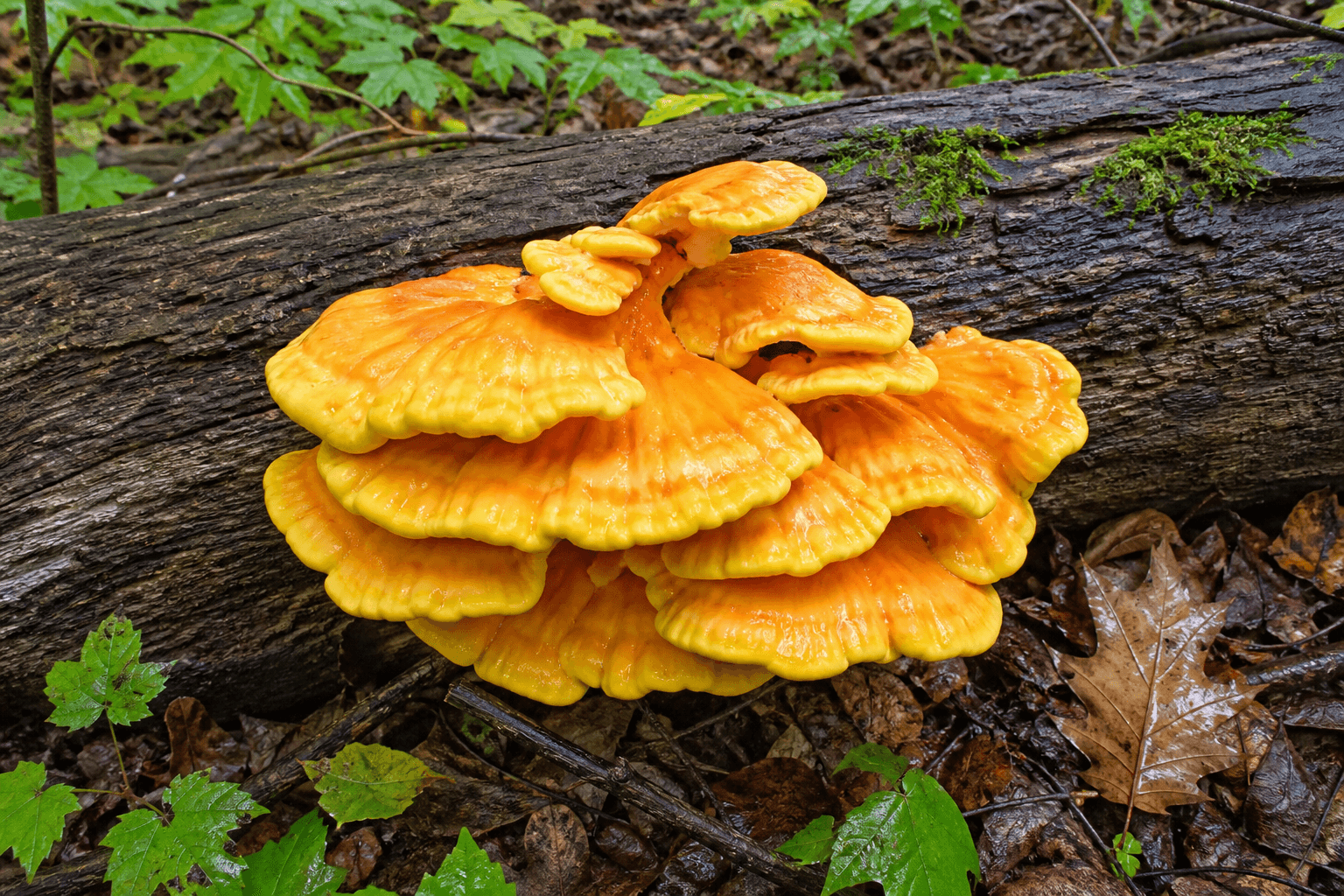
Stewardship work turned up something new this season: chicken of the woods (Laetiporus sp.) — stacked orange-yellow shelves on hardwood at Wesley Woods. It is the first time we have documented this species on the 0.6-acre lot.
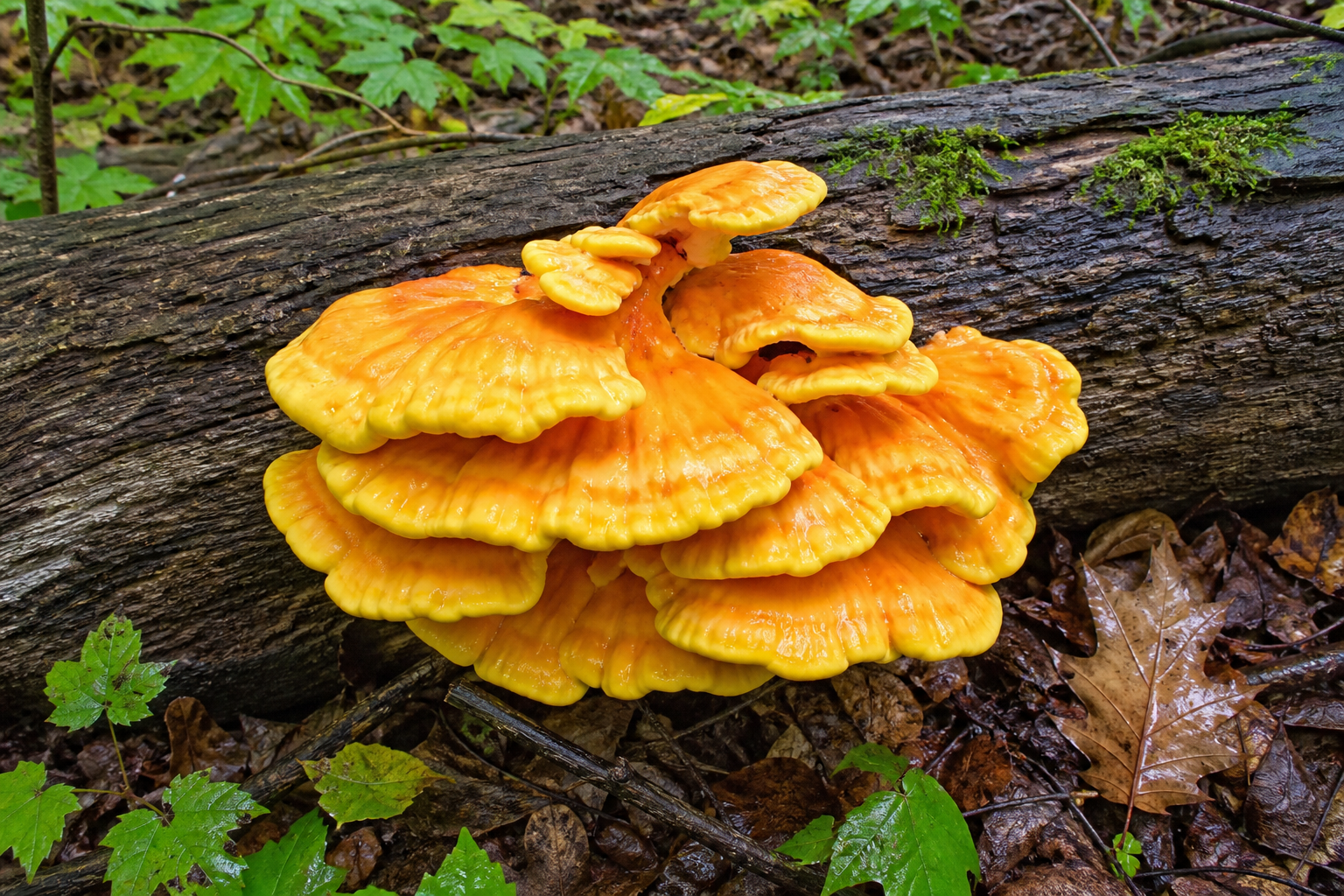
What we found
Chicken of the woods is a wood-decay fungus. It does not grow from soil like a meadow mushroom. It fruits from living or dead hardwood — here, oak and maple edge wood where moisture and organic matter meet.
Field marks we logged:
- Sulfur-orange to yellow overlapping shelves
- Soft, moist flesh when fresh — not woody like turkey tail
- No gills underneath — tiny pores instead
- Base on wood, not buried in dirt
Always confirm ID with a field guide or experienced forager before eating. Some people react to Laetiporus; never eat anything you are not sure of.
Overnight after raking
The fruiting bodies showed up within a day or two of raking heavy maple leaf mats in the same zone. That is not magic — it is timing.
Raking does three things fungi like:
- Exposes moist wood and leaf edges that were sealed under compacted duff
- Adds fresh leaf litter to compost edges — carbon and nitrogen for decomposers
- Raises humidity briefly at the soil surface after rain or morning dew
The mycelium was already there, threading through old logs and buried wood. Fruiting is the mushroom's reproductive stage — warm nights, humidity, and a disturbance often trigger a flush. Same pattern people see after storms or when a log is rolled.
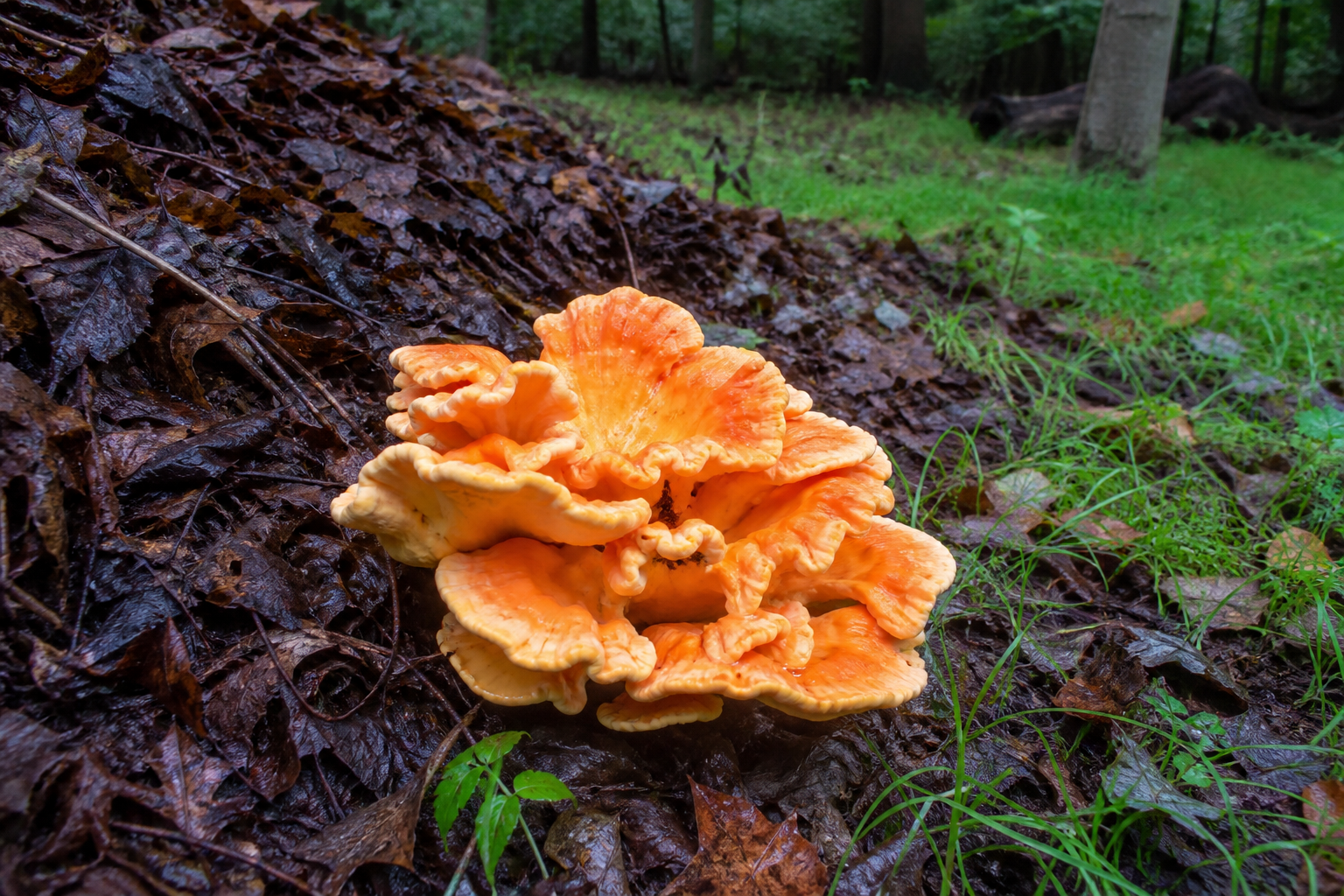
Leafy areas as fungus habitat
We leave most slope leaf cover alone — see leaf raking and composting. In active zones we rake to protect plantings and trails — including rooty stick-filled restoration sites.
Those edges become fungus corridors:
- Decaying maple leaves feed bacteria and fungi
- Dead and fallen wood holds long-term mycelium networks
- Topsoil building depends on this decay layer
Chicken of the woods is a visible sign that wood is breaking down and returning carbon and minerals to the sponge — not sitting as dry punk.
Nutrients back to animals
The mushroom is not the end of the line. It is a transfer station:
| Who benefits | How |
|---|---|
| Slugs and beetles | Feed on flesh and pores |
| Squirrels and deer | Nibble fresh shelves when available |
| Insect larvae | Live in decaying wood the fungus prepares |
| Robins and ground birds | More insects and worms where organic matter is active — see golden hour robins |
| Soil food web | Mycelium moves water and minerals; fruit bodies rot back into duff |
When a flush appears, something eats it — often within days. What is left becomes humus on the forest floor. That is the loop: leaves → fungi → animals → soil → trees.
Why we log new species
Every documented find updates the site species list for Wesley Woods — useful for Metroparks-style stewardship, education, and knowing what the land is becoming under the five-year plan.
If you walk the lot after raking, look at the wood, not just the trail. The orange shelves mean the underground network is working.