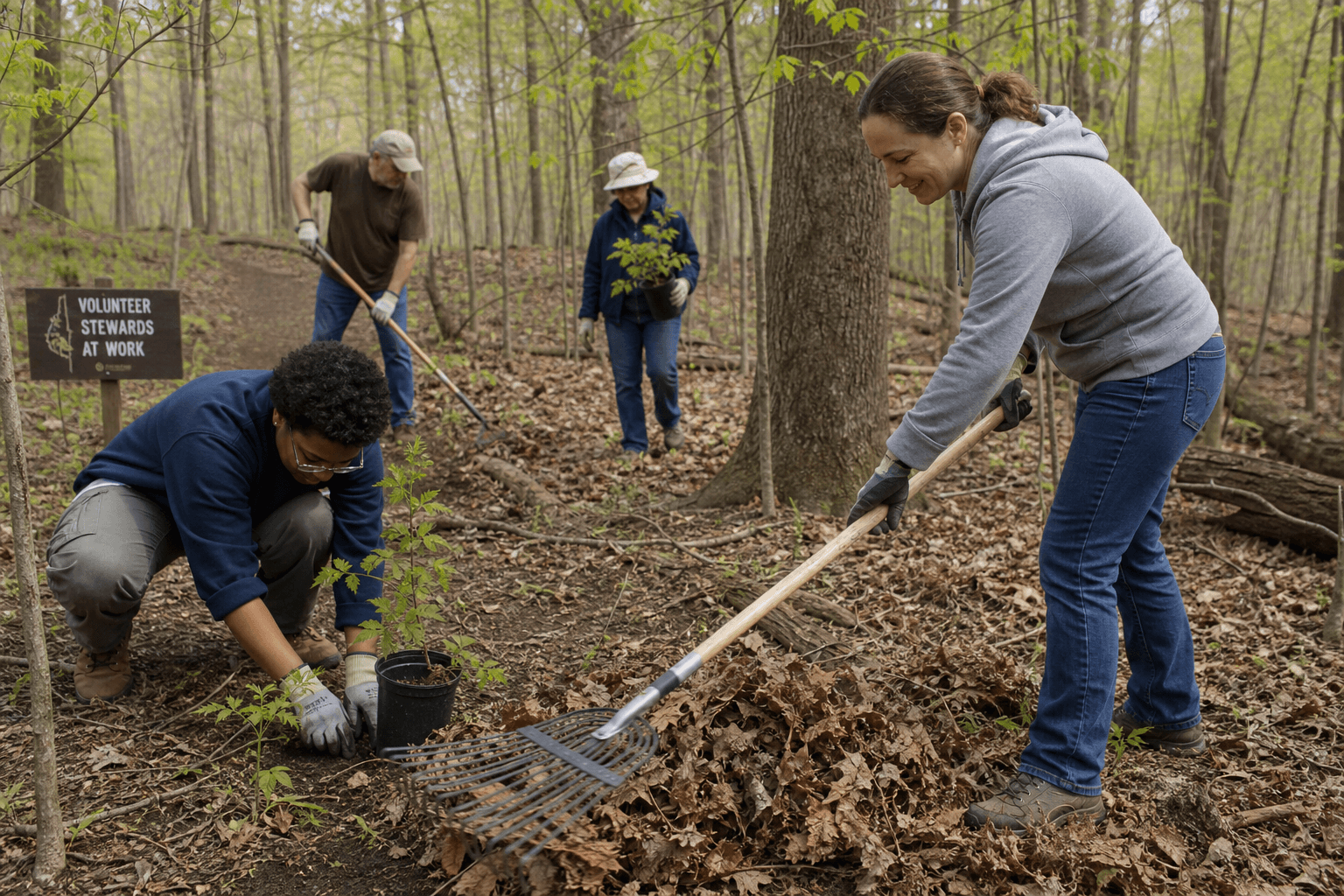
You do not need to own a park to think like a conservancy. Cleveland Metroparks and partner programs train citizens to monitor trails, pull invasives, plant natives, and document wildlife — the same jobs on a 0.6-acre private woodlot, at a different scale.
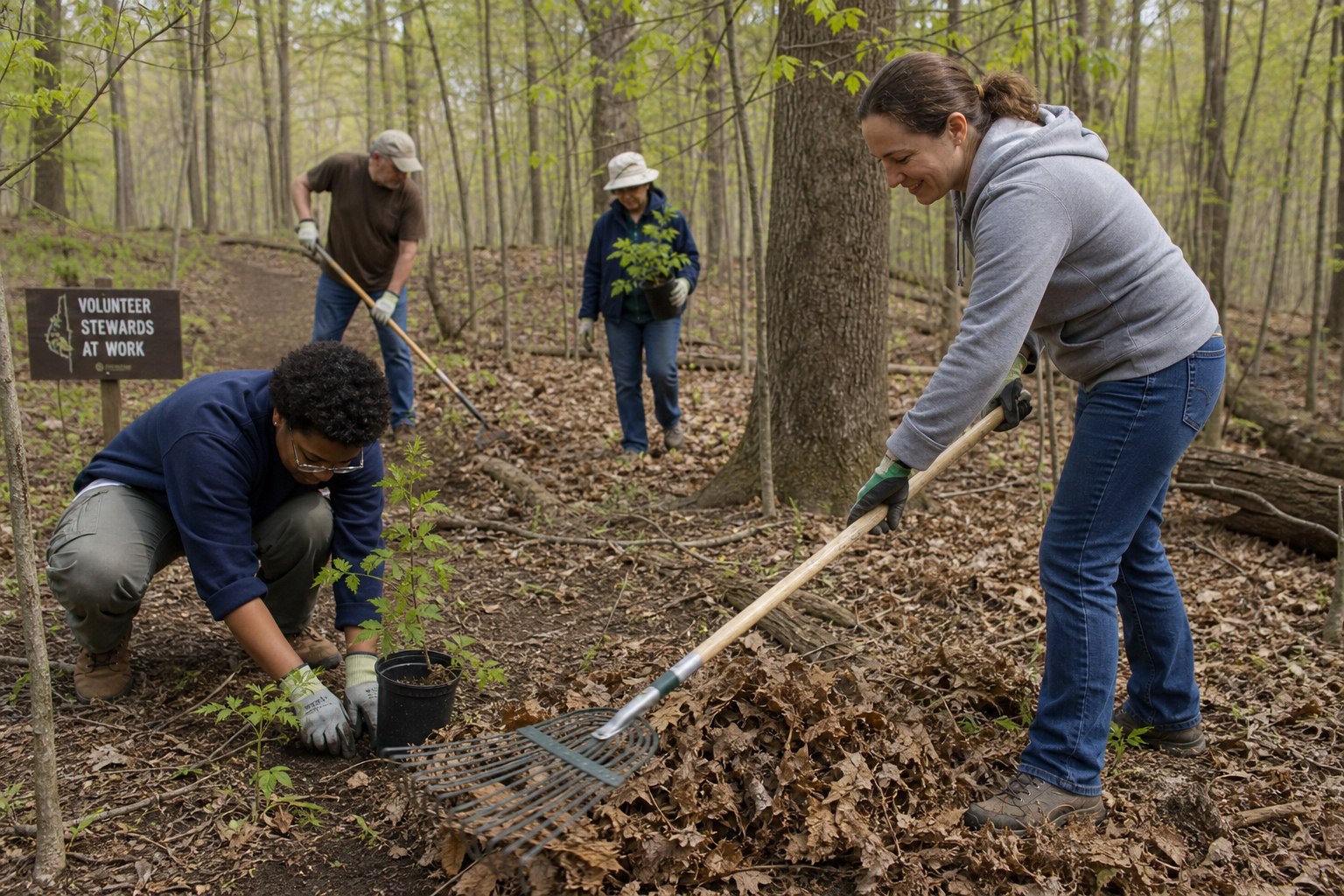
What Metroparks-style stewardship includes
- Invasive pulls — barberry, honeysuckle, garlic mustard — same species we hit in invasive clearing
- Trail maintenance — drainage, brush clearance, signage
- Water quality watches — creeks and ponds — parallels our wetland lily work
- Wildlife observation — eBird, iNaturalist, habitat logs — see fox den sanctuary
Citizen conservancies — the idea
A conservancy holds land or easements for public benefit. Citizen stewards do the hands-on work when budgets cannot cover every acre.
Private owners can mirror that model:
- Publish what you learn — these news articles
- Invite Inner Circle volunteers for limited work days — signup network
- Share data with regional programs when appropriate
- Do not treat private land as public park — permission and safety first
Alignment opportunities
| Metroparks focus | Wesley Woods parallel |
|---|---|
| Native plant recovery | Native Oaks, maple protection |
| Stream buffers | Creek and culvert margin |
| Education | Learn program articles and field guides |
| Tree stewardship | Tree City USA standards on private soil |
Regional parks cannot steward every backyard slope. Citizen-scale conservancy on private lots fills the gaps — same ethics, smaller boundary.