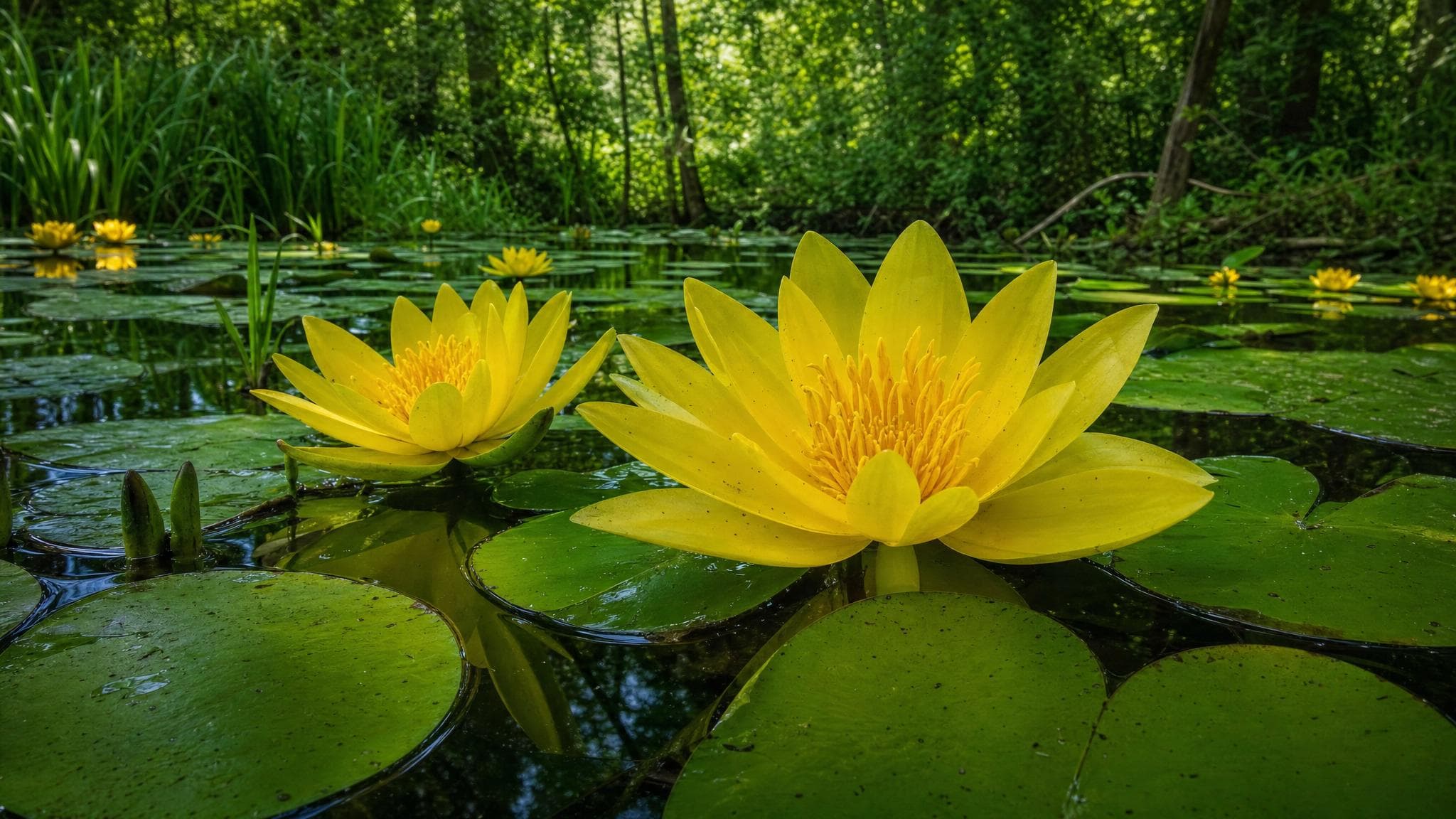
Of all the quiet surprises waiting at the Foundation project property in Strongsville, few have made as strong an impression on the restoration team as the wetland pond at the base of the wooded slope — and the explosion of yellow water lilies that now blanket its surface each summer.
The lilies didn't need any help getting there. Fed by a concrete culvert that channels water from upland sources into the low point of the property, the pond has developed into a thriving micro-wetland on its own terms, with the yellow lilies serving as both the pond's most visible feature and a reliable indicator of reasonably healthy water chemistry and depth stability.
Now, the Wesley Stump Family Foundation is formalizing what nature started — and the water lily project has been named the top restoration priority for Summer 2026.
"The pond is alive," said one Foundation team member. "The lilies are the proof. Our job this summer is to make sure that continues and expands — to protect what's working and build around it."
The summer 2026 lily initiative will focus on several specific goals: clearing encroaching vegetation around the pond's margins to allow more sunlight to reach the water surface, assessing the culvert inlet for any debris or flow restrictions, and expanding the lily coverage across currently open sections of the pond. The Foundation is also exploring the introduction of complementary native aquatic plants to diversify the wetland habitat and provide additional cover and food sources for frogs, turtles, herons, and other wildlife already using the site.
Upstream, the broader creek corridor that feeds the wetland is receiving parallel attention. Restoration workers have been removing debris accumulation, stabilizing eroding banks in key sections, and pulling invasive plant species that crowd out native streambank vegetation. The goal is a cleaner, more naturally functioning waterway from the upper property boundary all the way to the pond.
The garden area adjacent to the wetland is also part of the stewardship plan, with soil health and plant diversity improvements planned to create a gradual, ecologically sound transition zone between the cultivated garden space and the wilder wetland margin.
Foundation representatives emphasized that the creek and wetland are not just ecological features — they are the connective tissue of the entire property.
"Everything drains to the pond eventually," said a project leader. "If we get the water right, the rest of the property benefits. The lilies are the signal we're on the right track, and we intend to keep earning them."
Stewardship progress on the lily pond project will be documented throughout the summer season.