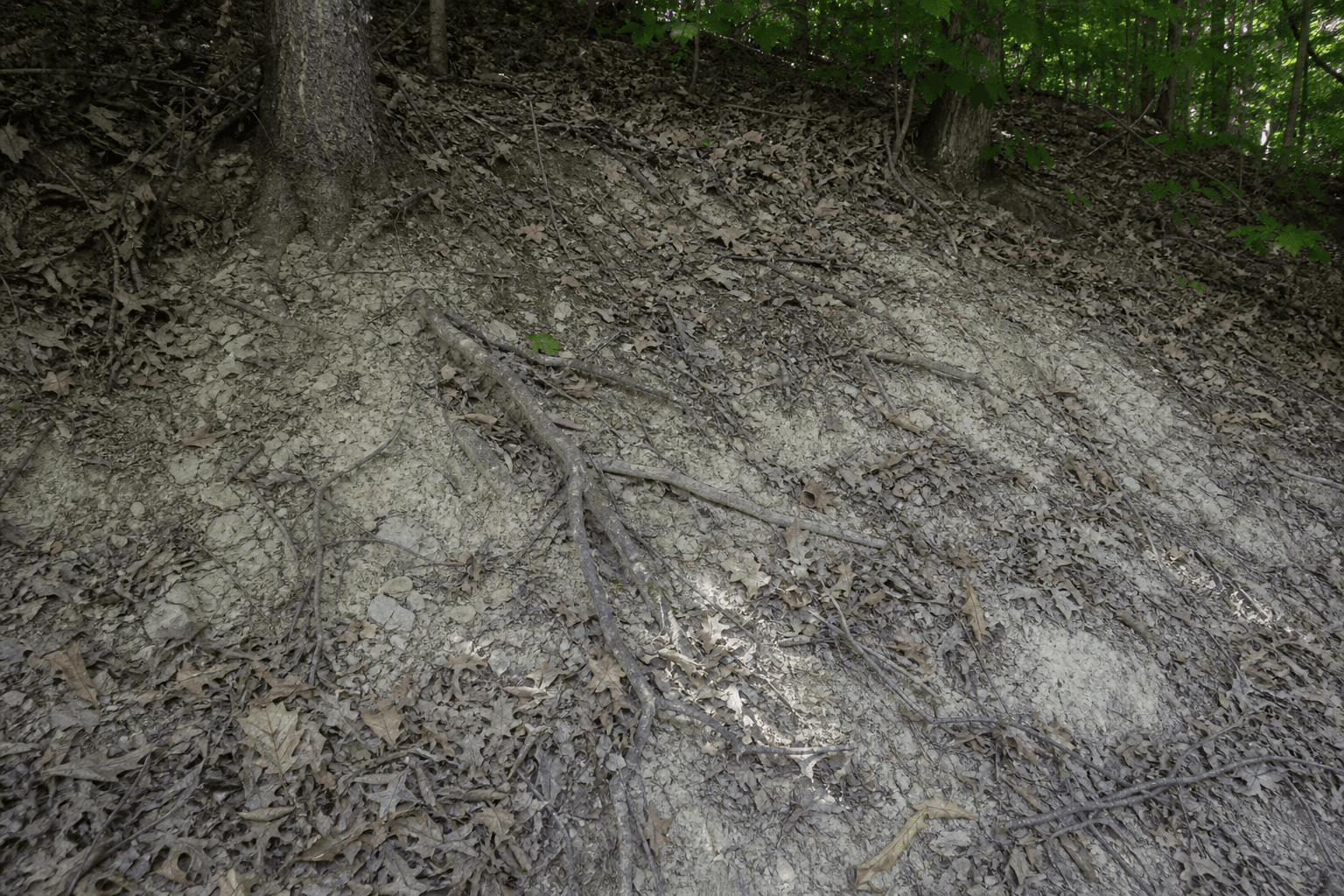
Kick the duff at Mill Hollow after a dry week and dust puffs up. That moment raises a fair question: is dry dirt in a forest good or bad?
Usually it is a signal, not a verdict.
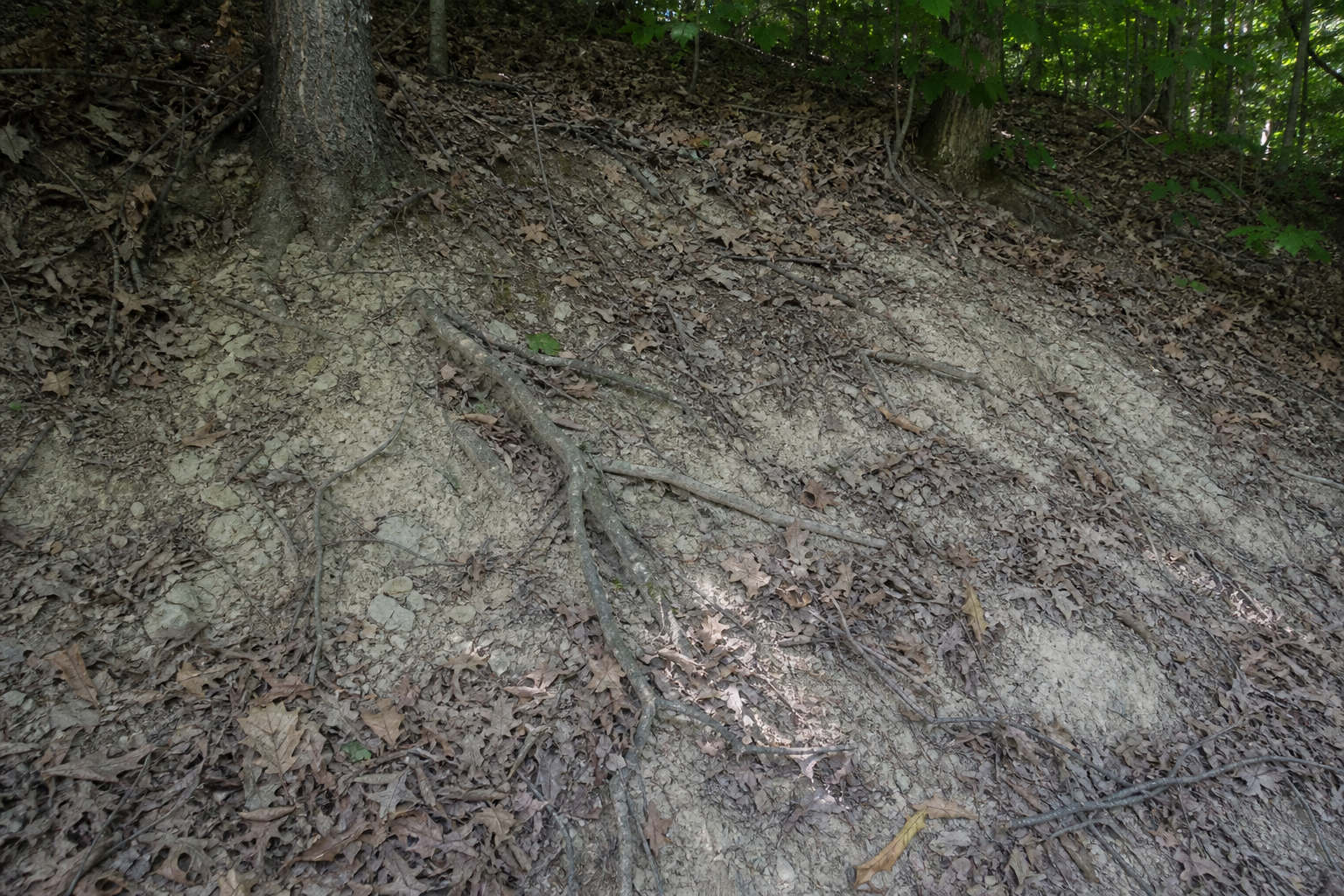
When dry soil is normal
Summer drought, south-facing slopes, and sandy pockets dry out fast. A thin dry crust on top while soil an inch down still holds moisture is common in Ohio woodlands.
When dry soil is a warning
Watch for these together:
- Topsoil loss — roots exposed, no dark organic layer
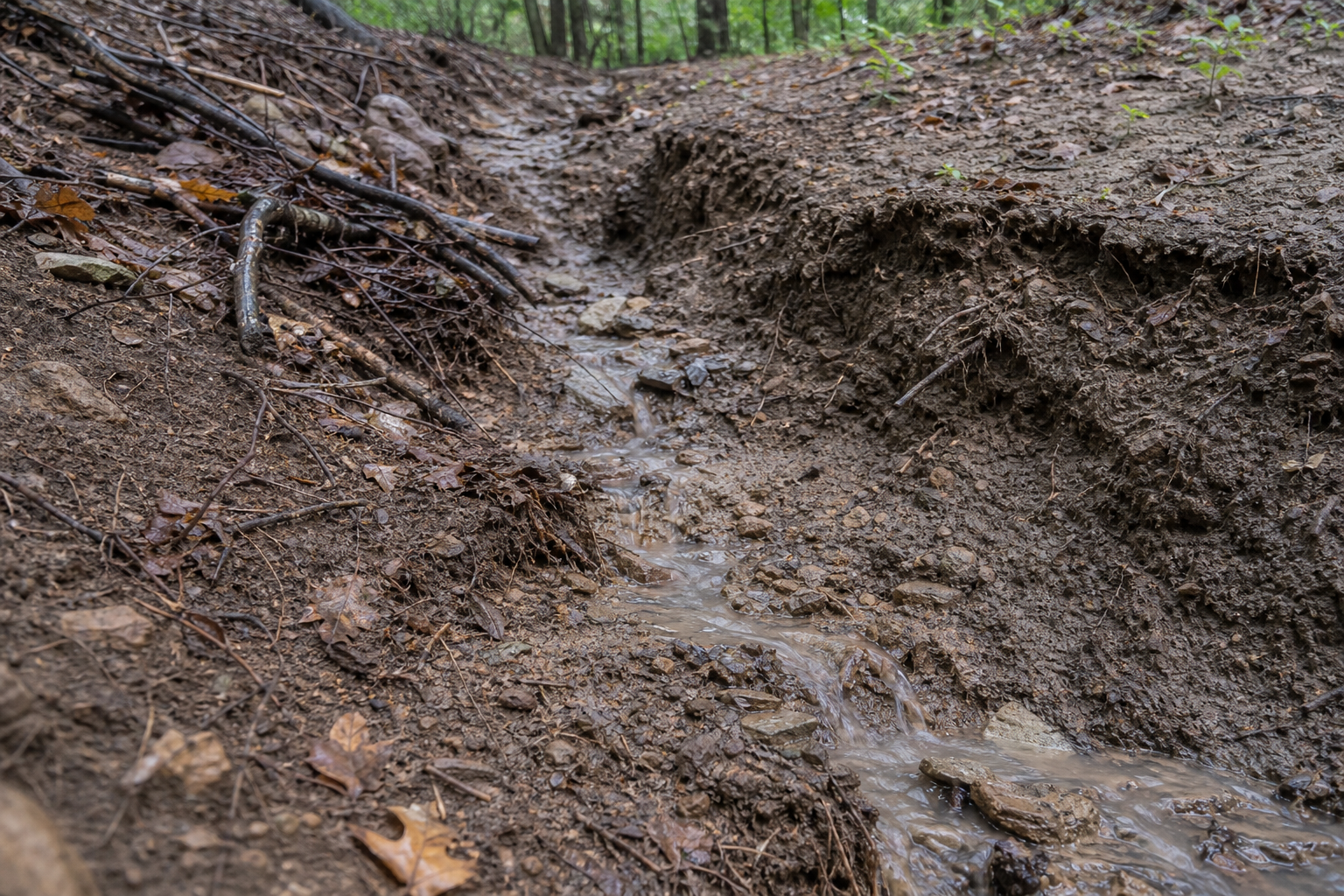
- Erosion lines — fine channels after rain where water ran instead of soaked in
- Bare patches that stay bare year after year
- Crust that repels water — rain beads and runs off
Recovery on site
At Wesley Woods we pair contour log barriers with on-site compost from raked leaves — slow water, rebuild organic matter, let fungi and worms return. Dry dirt often means the sponge is gone; compost and living cover put it back.
If a slope looks like desert between maples, start with observation, then match the fix to the signal — not the panic.