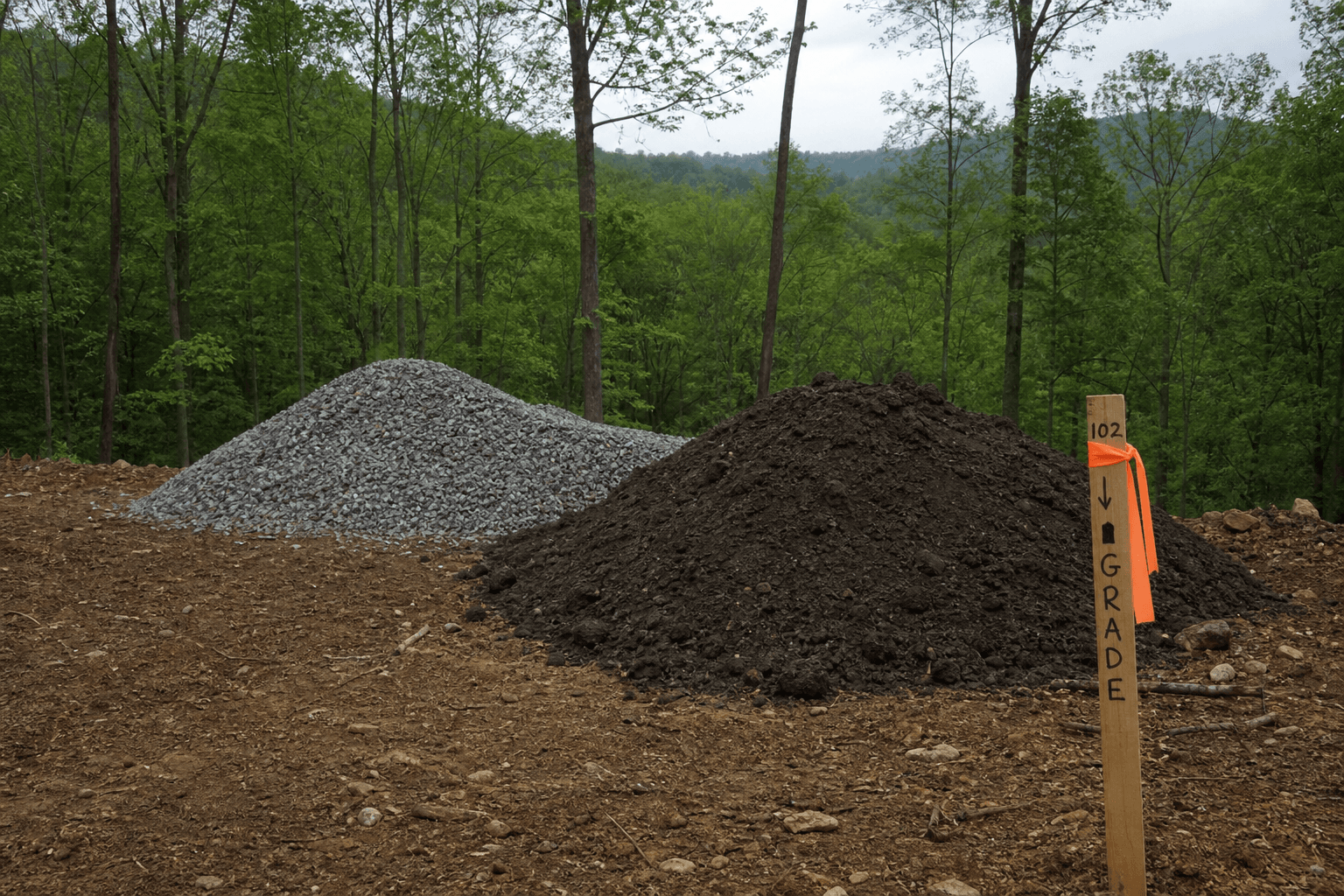
You marked a 4-foot grade change on the plan. Now you need one foot of fill in the low zone. How many yards? How many tons? Rock or dirt?
Hover or tap the circles on this image to view product details.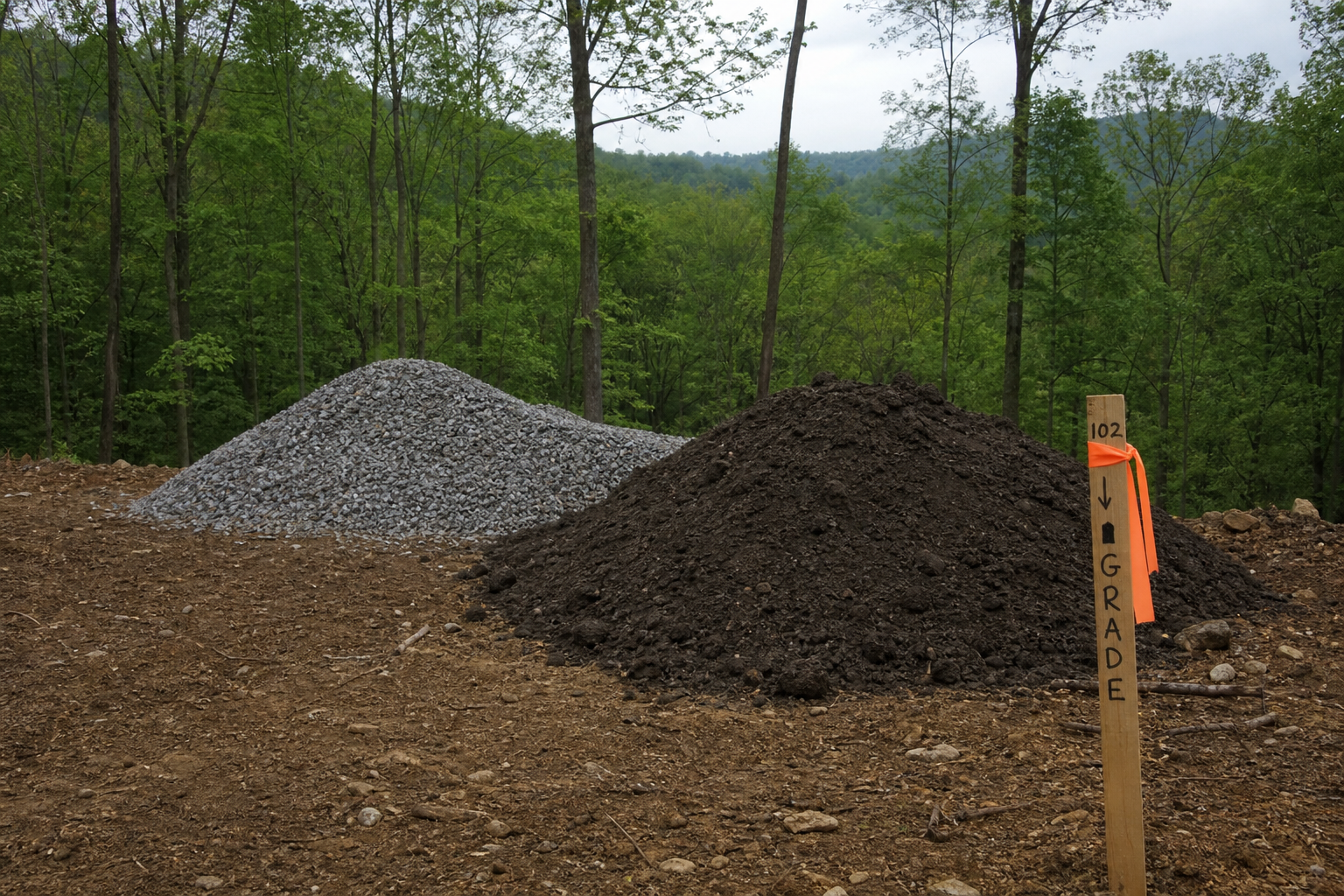
Volume first
For a simple pad (length × width × depth in feet), divide by 27 for cubic yards.
Example: 40 ft × 30 ft × 1 ft = 1,200 cu ft ÷ 27 ≈ 44.4 cubic yards
Add shrink/swell: compacted fill often needs 10–15% extra loose volume depending on material and moisture.
Rock versus dirt
| Material | Loose lb/cu ft (typical) | Notes |
|---|---|---|
| Common fill dirt | 90–110 | Compacts with moisture |
| Clean gravel / #57 | 95–105 | Drains well, less shrink |
| Limestone riprap | 100–120 | Heavier, armoring slopes |
Tons ≈ (cubic yards × 27 × density lb/cu ft) ÷ 2,000
44.4 yd³ of dirt at 100 lb/cu ft ≈ 60 tons loose before compaction.
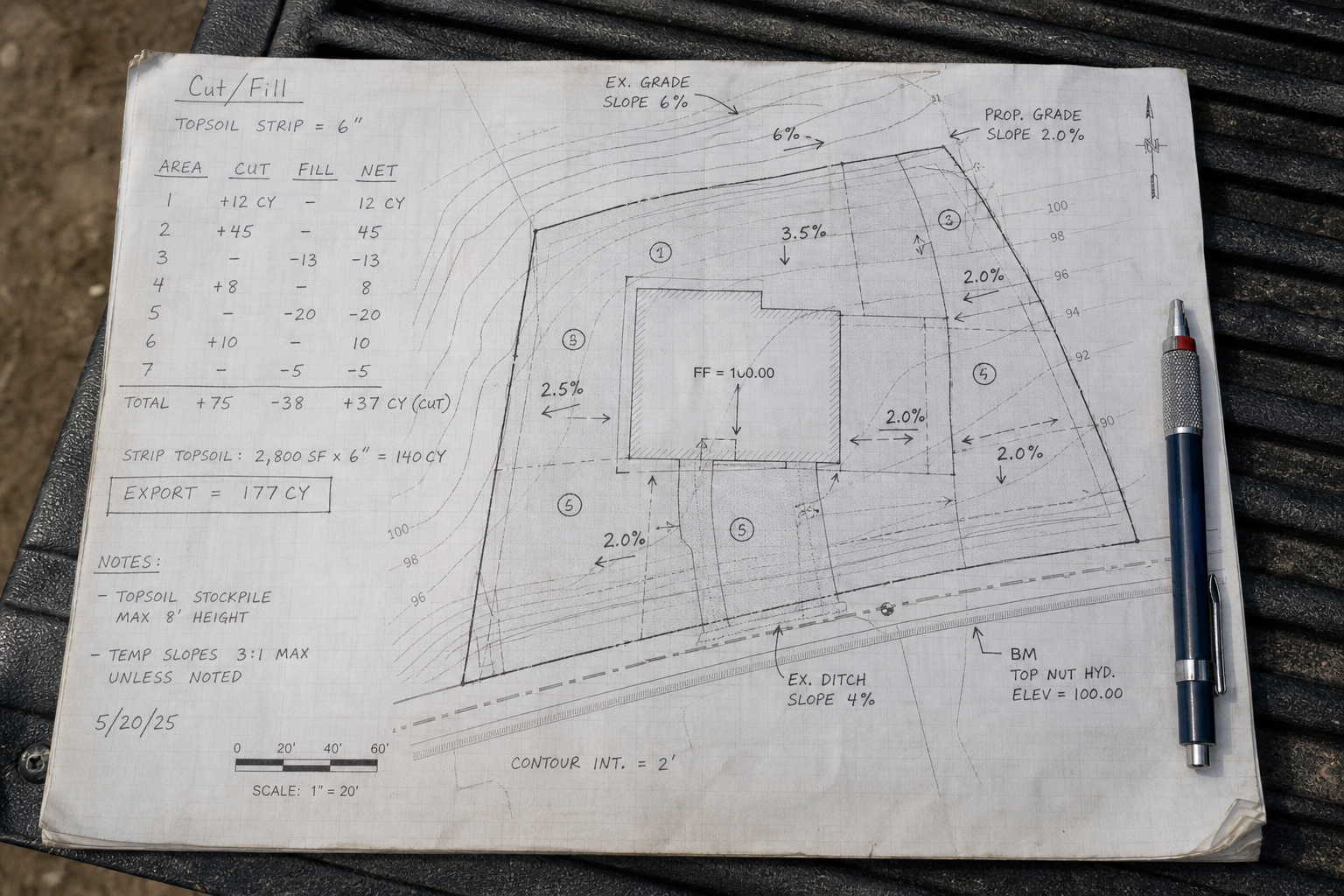
Slope check
On a 4-foot rise over run R, slope percent = (4 ÷ R) × 100. Steeper slopes need shorter bench lifts — do not place a full foot of loose fill on bare clay and walk away.
Order one truck at a time until your stakes agree with your tape. Math is cheap; regrading is not.