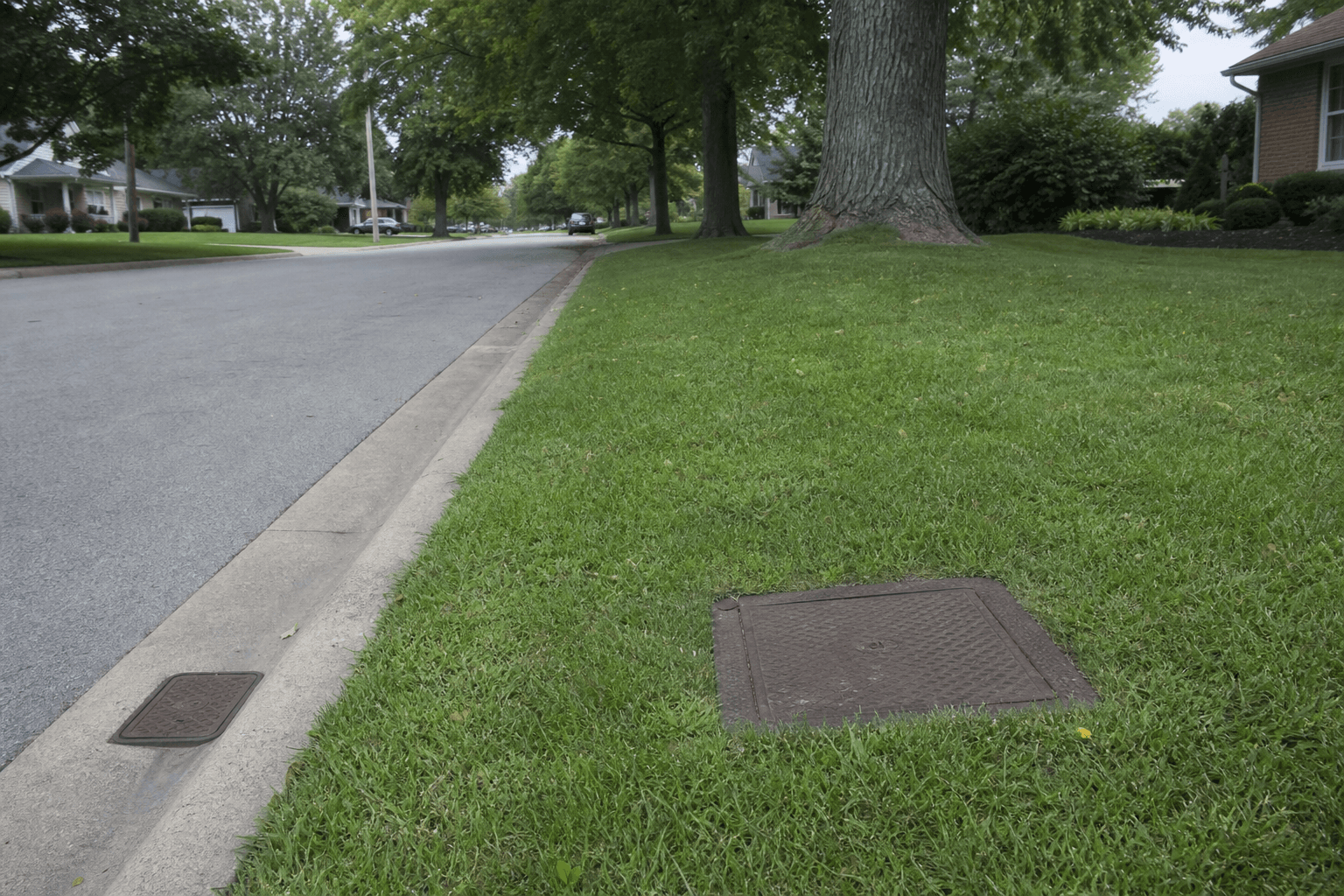
Walk a Strongsville street edge long enough and you will find them — small iron lids flush with the grass, stamped covers at the curb, brass caps set in concrete. Monument boxes and survey monuments are the quiet sentinels of the public right-of-way.
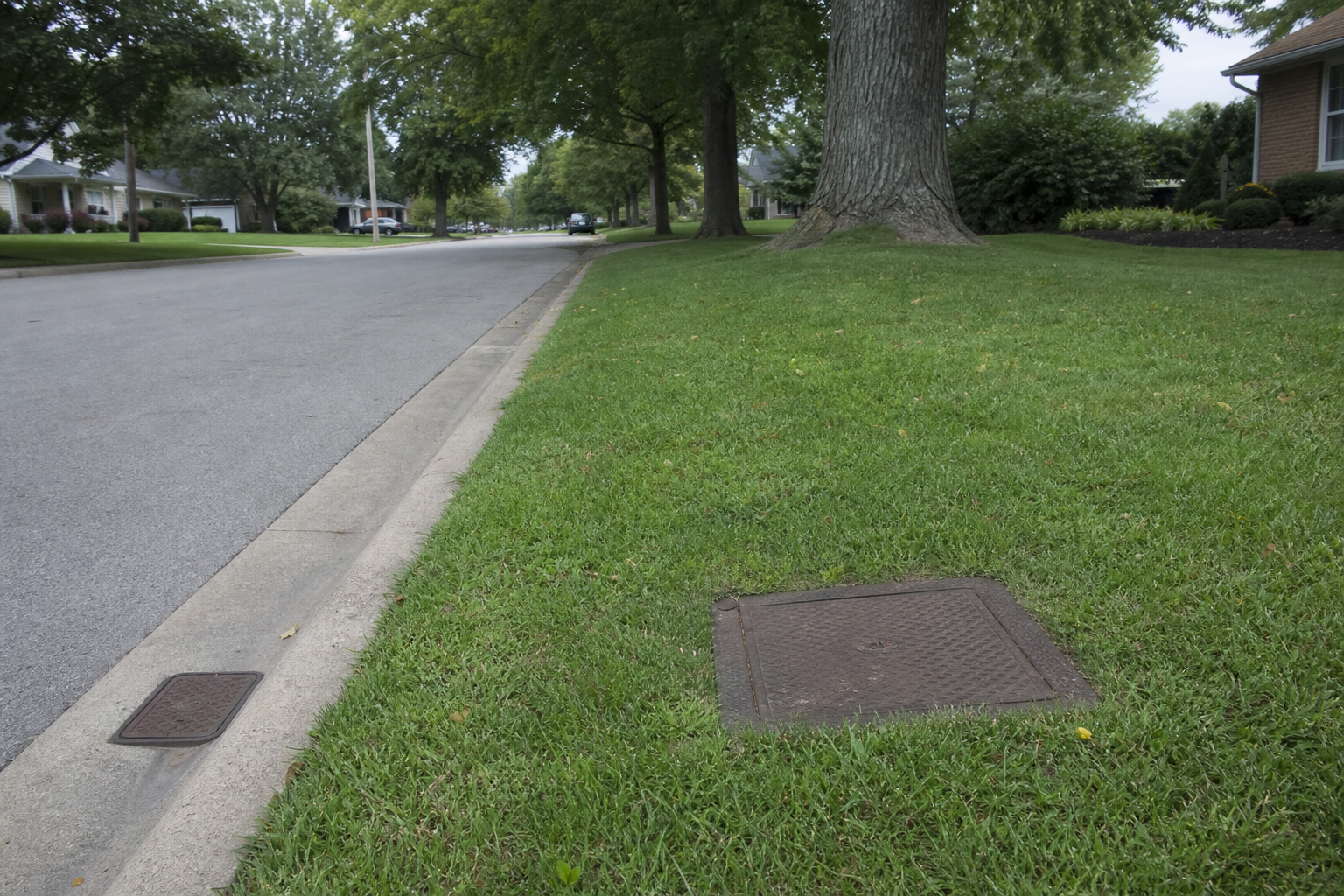
What you are looking at
A monument box usually protects an iron access point — a valve, junction, or survey reference tied to utility or plat geometry. A survey monument marks a corner or line from an original Townsend plat or later subdivision. Both belong to the ROW network, not your private lawn.
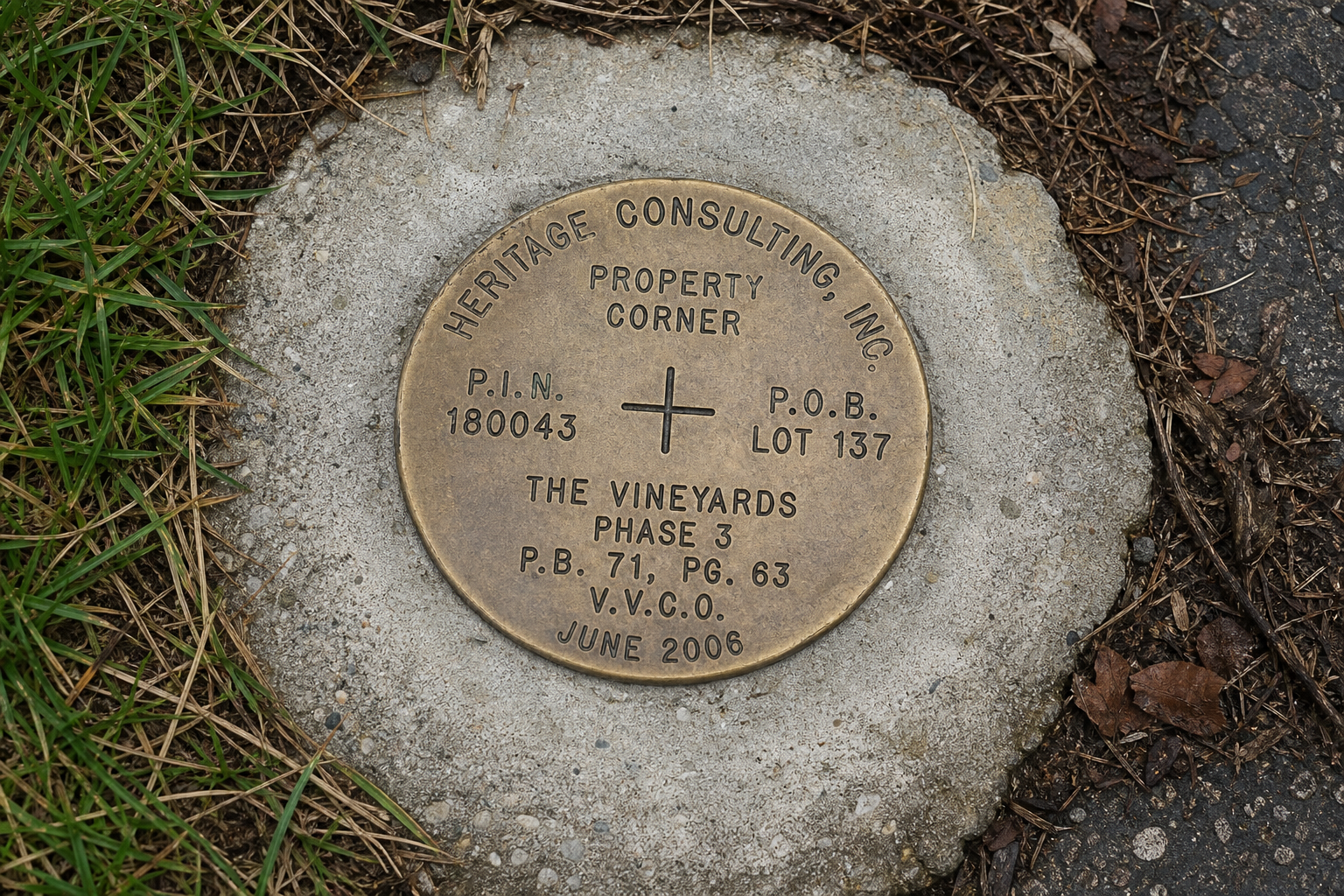
Why they matter
Before you grade, trench, or plant a tree near the curb:
- Call Ohio 811 before any dig — monuments and boxes are not always on the map you expect
- Do not bury or pave over a visible monument; moving one requires survey and city review
- ROW protection keeps drainage, utilities, and legal boundaries intact for the whole block
Working with the city
When a grading plan or drainage permit touches the ROW, the city expects you to show existing monuments and boxes on your site plan — the same workflow covered in our 360° photogrammetry and permit mapping article.
Treat these iron markers like neighbors who never speak but always know where the line is.