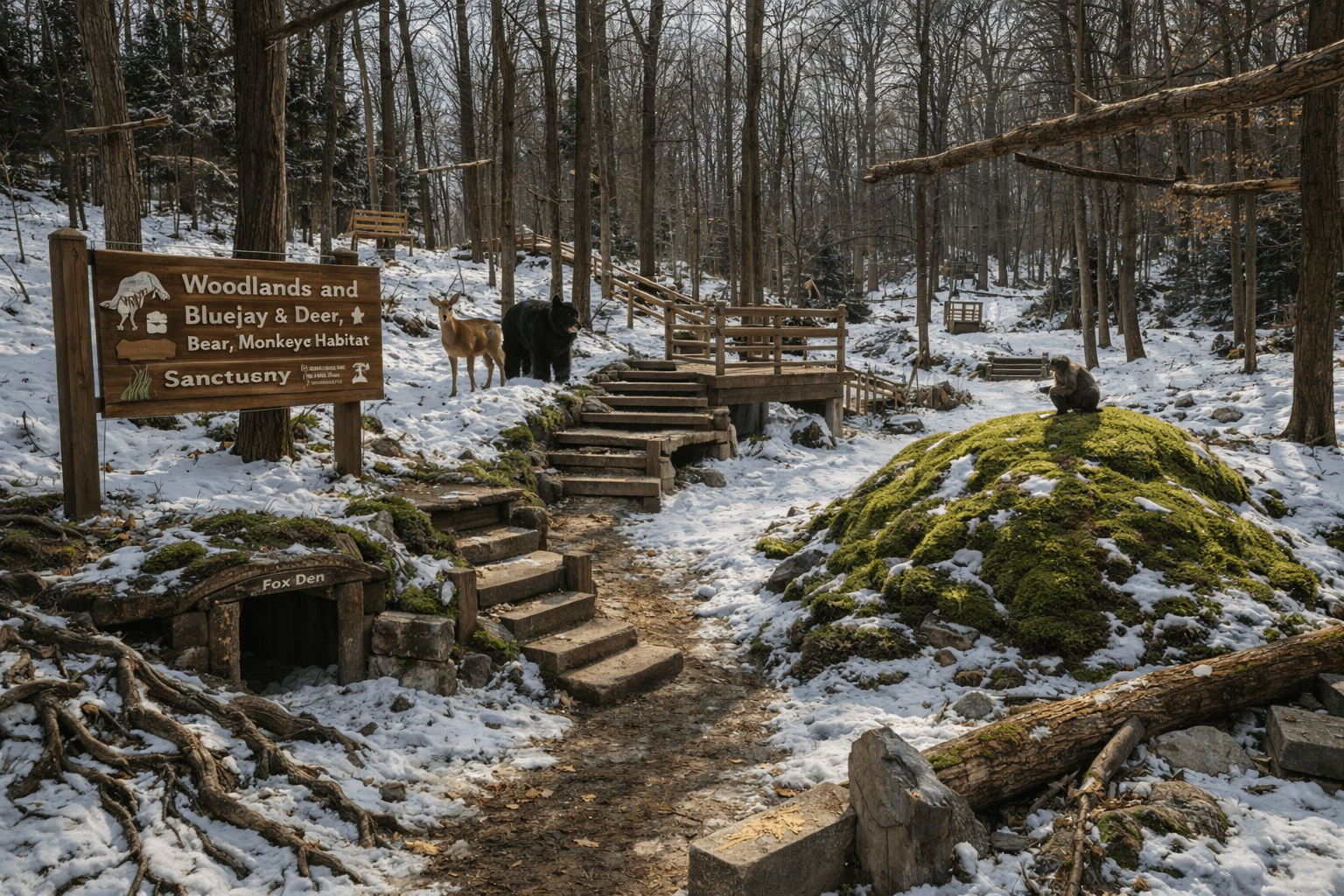
Wesley Family Foundation has launched a new Sanctuary program focused on creating viewing habitats for wild animals native to the metroparks region of Ohio. The Fox Den and Woodlands Habitat provides safe spaces for observation and learning about local wildlife in their natural environment.
The sanctuary features specialized viewing areas designed to attract and support specific species while allowing visitors to observe their behaviors and life cycles. The program emphasizes education and conservation, helping visitors understand the important roles these animals play in Ohio's woodland ecosystems.
One of the program's highlights is the Blue Jay and Butterfly Habitat, which creates environments specifically designed to attract these species. Visitors can observe blue jays throughout the seasons, learning about their nesting behaviors, feeding patterns, and social structures. The butterfly areas feature native plants that support various butterfly species through their complete life cycles, from caterpillar to adult.
The sanctuary also includes dedicated spaces for observing insects that play crucial roles in woodland ecosystems. The Praying Mantis, Wooly Bear, and Pine Beetle viewing areas help visitors understand how these insects contribute to forest health and biodiversity.
Praying mantises are important predators that help control pest populations. Wooly bear caterpillars, which transform into Isabella tiger moths, are indicators of seasonal changes and play roles in nutrient cycling. Pine beetles, while sometimes seen as pests, are actually important decomposers that help break down dead wood and return nutrients to the soil.
The Fox Den area provides a unique opportunity to learn about fox habitats and behaviors. The constructed den entrance allows for safe observation while respecting the animals' need for privacy and security. Visitors can learn about fox family structures, hunting patterns, and their role in maintaining healthy ecosystems.
"These viewing habitats serve multiple purposes," explained a sanctuary coordinator. "They support wildlife conservation, provide educational opportunities, and help people develop deeper connections with the natural world around them. When people can observe these animals up close, they develop a greater appreciation for the complexity and beauty of our local ecosystems."
The sanctuary connects to our Ground and Nourish programs, emphasizing the interconnectedness of habitat, food sources, and wildlife health. Native plants throughout the sanctuary provide food and shelter for the featured species, demonstrating how thoughtful land stewardship supports diverse wildlife populations.
The program welcomes visitors, volunteers, and educational groups interested in learning about Ohio's native wildlife. Regular programming includes guided observation sessions, educational talks, and opportunities to participate in habitat maintenance and improvement work.
The Fox Den and Woodlands Habitat Sanctuary represents our commitment to creating spaces where people can learn about, appreciate, and contribute to the health of local ecosystems.