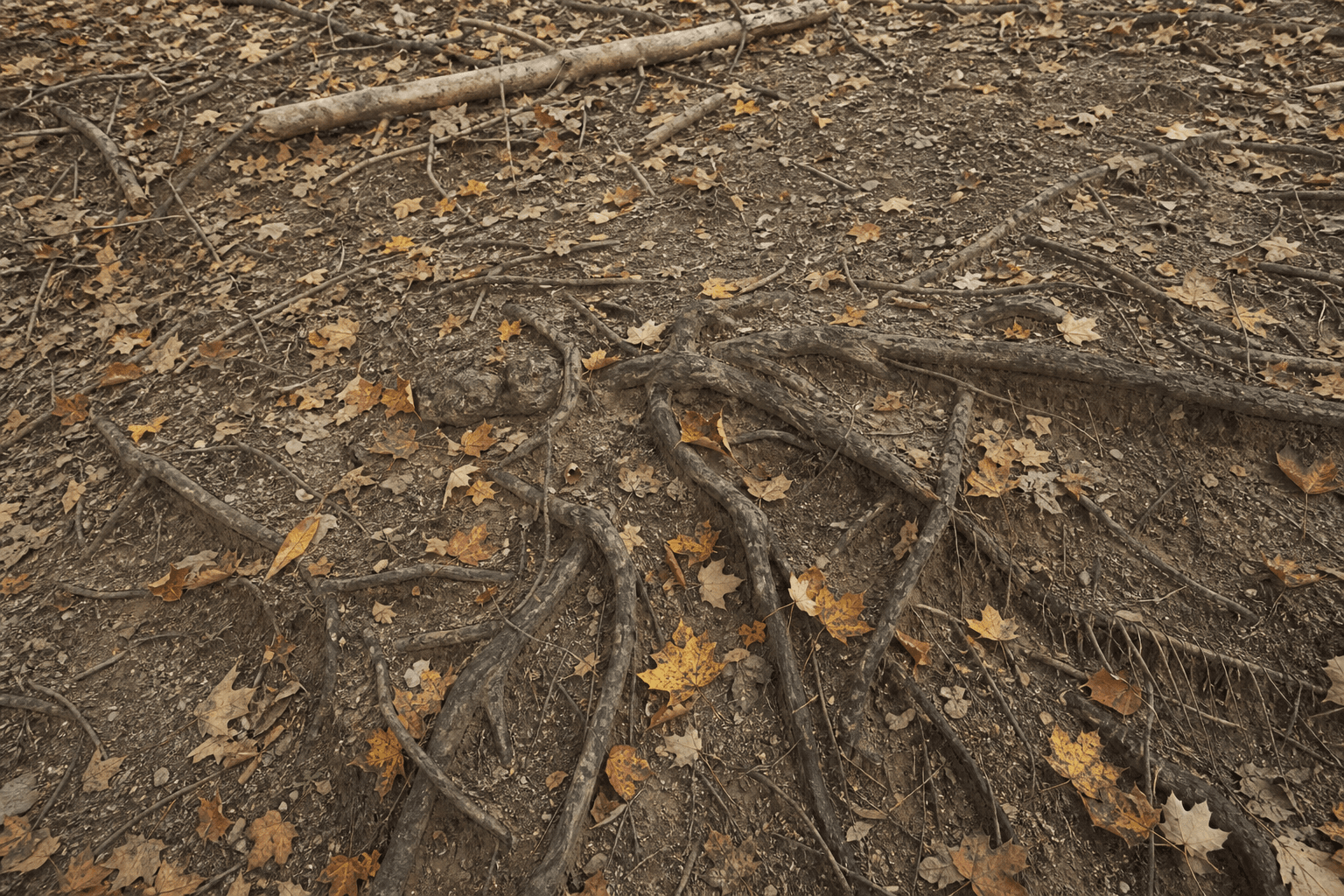
Restoration lots are not lawn. Roots poke up, sticks wedge between maples, and a dense leaf pack smothers everything you just planted. The wrong tool makes it worse.
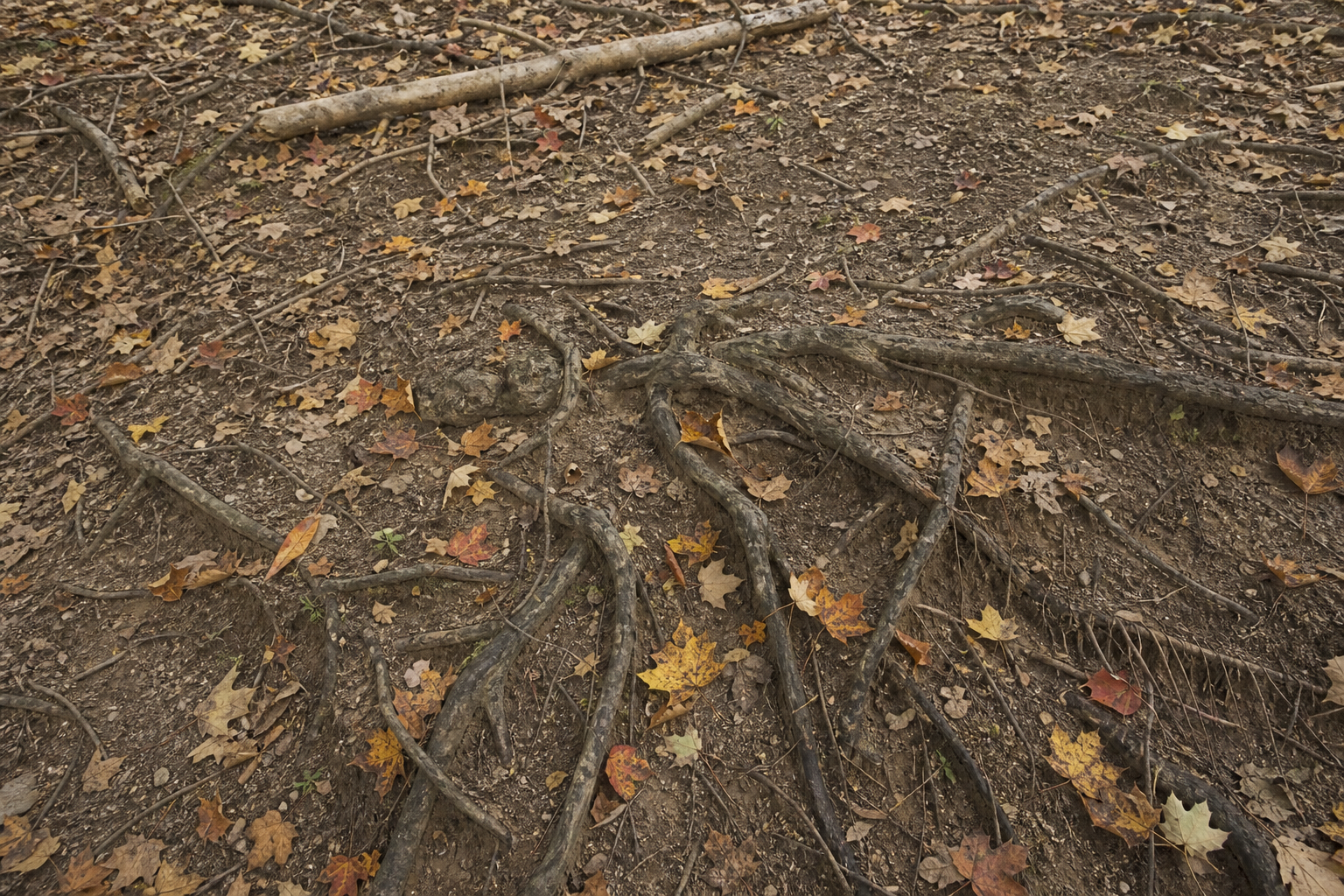
Skip the tiller
Tillers on rooty, stick-filled ground:
- Cut feeder roots and damage tree flare zones
- Bury sticks that become trip hazards and decay voids
- Stir up weed seeds you did not need
Tools that work
| Tool | Best for |
|---|---|
| Wide poly leaf rake | Open glades, trail edges |
| Narrow thatch rake | Pulling mats off plantings without grabbing stems |
| Hand grabbers / pitchfork | Stick piles and wire-like vine debris |
| Tarps | Dragging volumes to compost without repeated wheelbarrow trips |
Hover or tap the circles on this image to view product details.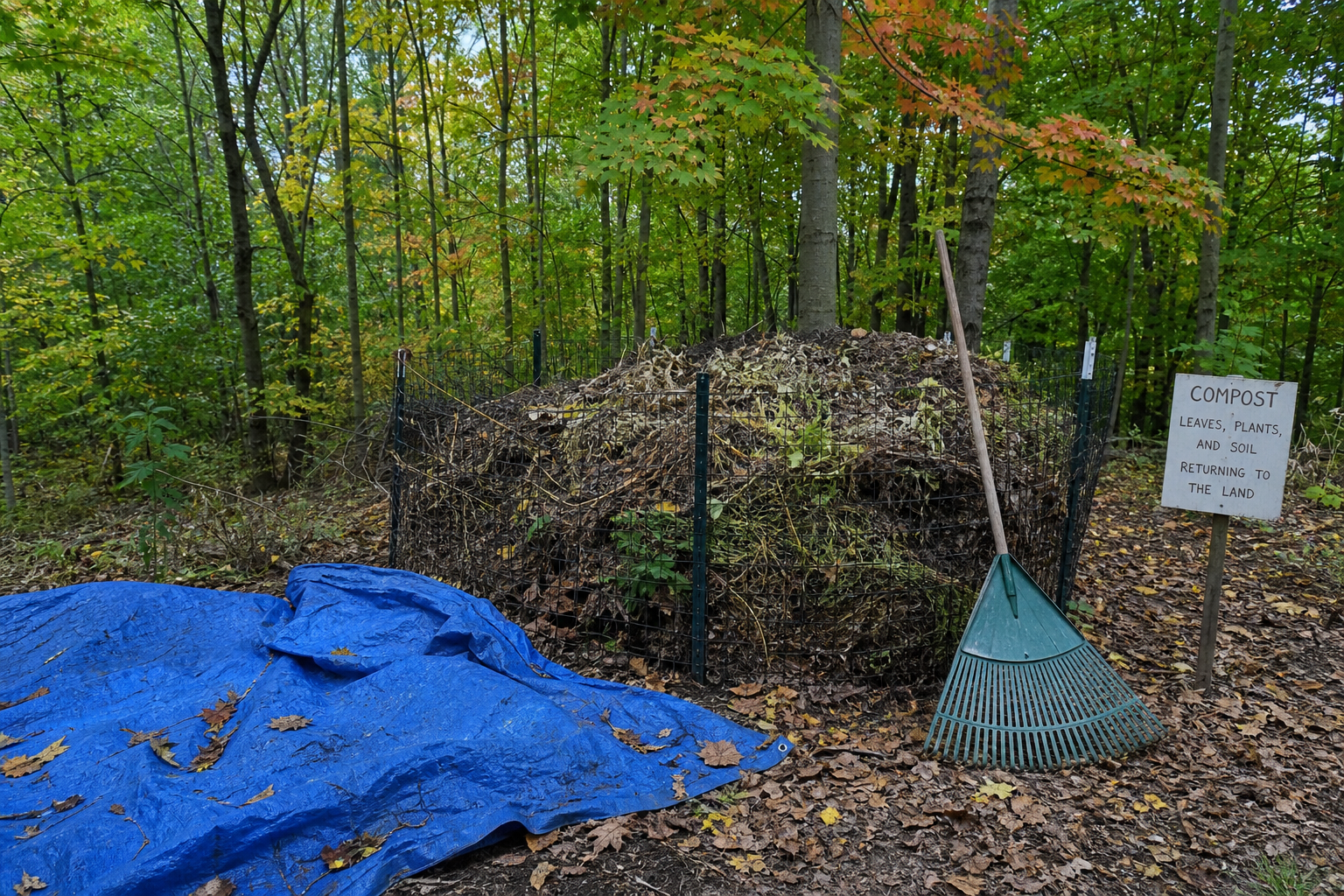
Low-impact workflow
- Clear trails and planting rings first — safety and visibility
- Leave 1–2 inches of duff on undisturbed slope
- Haul sticks to brush pile or chipping area, not into compost core
- Mix leaves with green nitrogen (invasive pullings) for hot on-site compost — same method as our leaf composting guide
Large-volume woodland challenges need patience, not horsepower. Your back and the roots will both thank you.