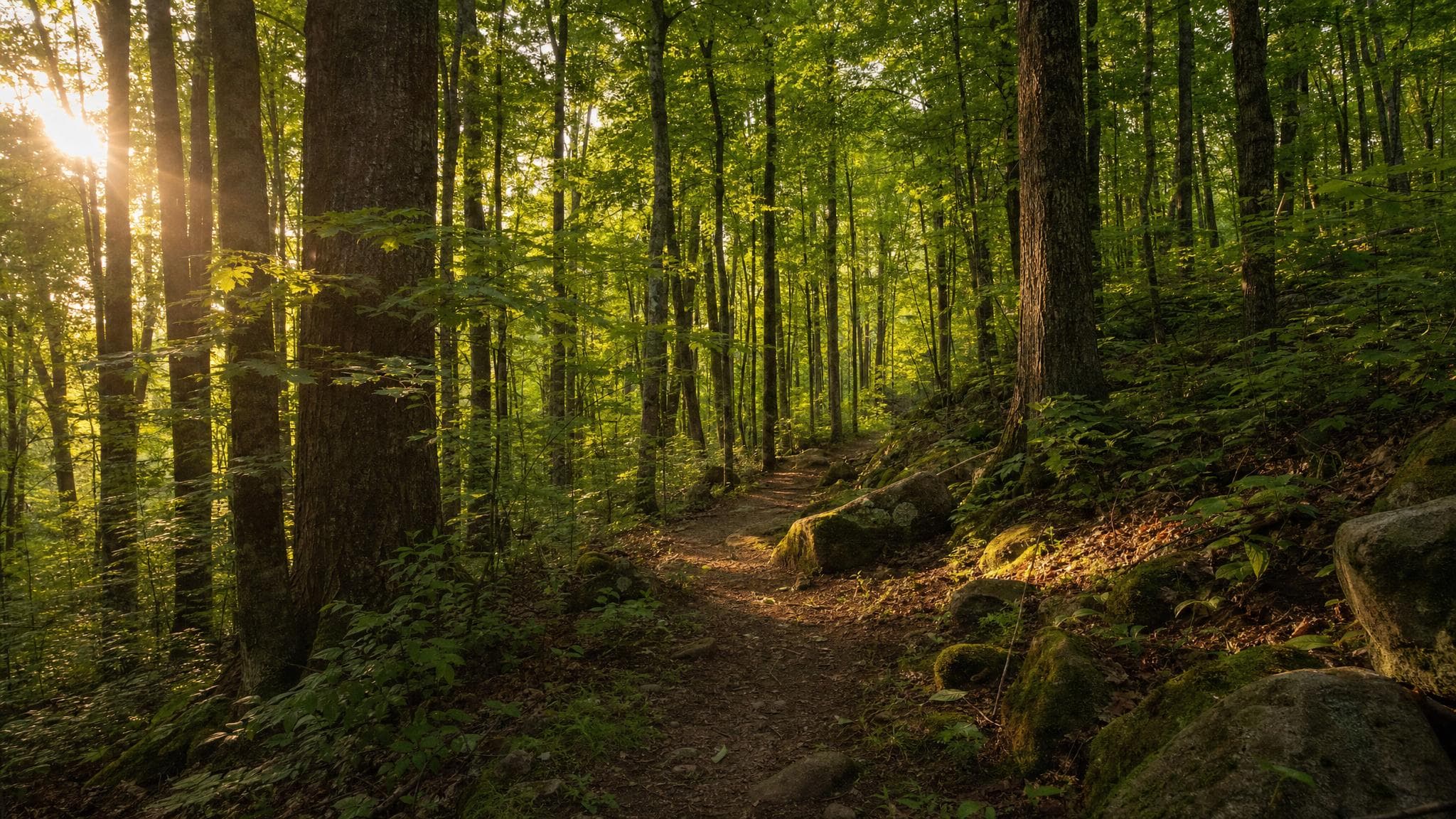
A mature Sugar Maple drops a significant amount of leaves each fall. Multiply that by dozens of trees on a half-acre wooded lot and you have a serious volume of organic material to manage. At Wesley Woods in Strongsville, leaf management is an active part of the Foundation's seasonal stewardship — done deliberately, with specific goals in mind, and in a way that serves the land without becoming a nuisance.
Why Raking Matters on a Wooded Property
The instinct to leave all leaves in place — "nature's mulch" — is well-meaning but incomplete. On an actively managed private property like Wesley Woods, where trails are being maintained, native plantings are being established, and the land is in active ecological transition, leaf management is a real stewardship task.
Heavy, compacted leaf mats — particularly from maple — can smother establishing native ground-layer plants, create persistent wet conditions that favor fungal pressure on young plantings, block drainage in low points, and allow tick populations to overwinter in dense habitat at work areas on the property.
How We Rake
The Foundation rakes with purpose, not perfection. The goal is not a leaf-free landscape — it is a managed one.
Trail surfaces are cleared completely. Wet leaves on a soft-surface trail become a slip hazard and accelerate erosion. Cleared trail surfaces also make it easier to identify drainage problems and new invasive encroachment along the margins.
Native planting zones are raked to remove heavy accumulated material that would smother low-growing plants. A light leaf layer (1–2 inches) is left in place as natural mulch; the excess moves to designated composting areas.
The wooded slope away from active planting zones is largely left as-is. Leaves on an undisturbed woodland slope are doing their ecological work: feeding fungi, building organic matter, sheltering overwintering insects.
Low drainage points along the creek margin are cleared to keep water moving freely through the property.
Composting Without Becoming a Nuisance
Leaf volume on a wooded property is significant. The Foundation composts all raked material on-site, in designated areas designed to handle volume without creating odor, pest, or drainage problems.
Location. Compost areas at Wesley Woods are located in the interior of the property, not near the street or property lines. Areas are on well-drained ground — not in the wet zone near the creek — so decomposing material does not become waterlogged.
Hot composting for speed and cleanliness. A hot compost pile, properly managed, reaches internal temperatures of 130–160°F — hot enough to kill most weed seeds and pathogens, and hot enough to break down material quickly without significant odor. The key is carbon-to-nitrogen ratio: leaves are high in carbon and need a nitrogen source to activate. At Wesley Woods, the nitrogen source is green plant material from invasive species removal — the pulled vines, cut shrubs, and cleared brush that stewardship work generates. Mixing these two waste streams produces a functional, active compost pile.
Turning and moisture. The Foundation turns piles on a regular schedule — approximately every two to three weeks during active decomposition. A pile that is not turned becomes anaerobic, and an anaerobic pile is the source of the unpleasant odors that give composting a bad reputation in residential areas. A turned, aerobic pile smells like soil, not like decay.
Finished compost use. Finished compost from the leaf piles is used back on the property: mulching native plantings, improving soil in cleared areas being replanted, and top-dressing compacted areas along the trail edges. Nothing leaves the property as waste.
What we do not compost. The Foundation does not compost invasive plant material that has gone to seed, diseased plant material, animal waste, or food waste. These go into sealed bags for municipal disposal or are burned on site where conditions allow. Keeping the compost stream clean prevents the pile from becoming a pest attractant or a vector for spreading invasive species.
A Note on Scale and Neighbors
Wesley Woods is a private stewardship property. The composting and leaf management operations are internal — sized for the volume of material the property generates and located to avoid impact on adjacent landowners. No material is stockpiled near property lines. No burning is conducted without appropriate conditions and awareness of fire safety requirements.
Leaf management on a wooded property is just maintenance — the same kind of work any careful landowner does, scaled to the land. Done right, it is invisible to everyone outside the fence.