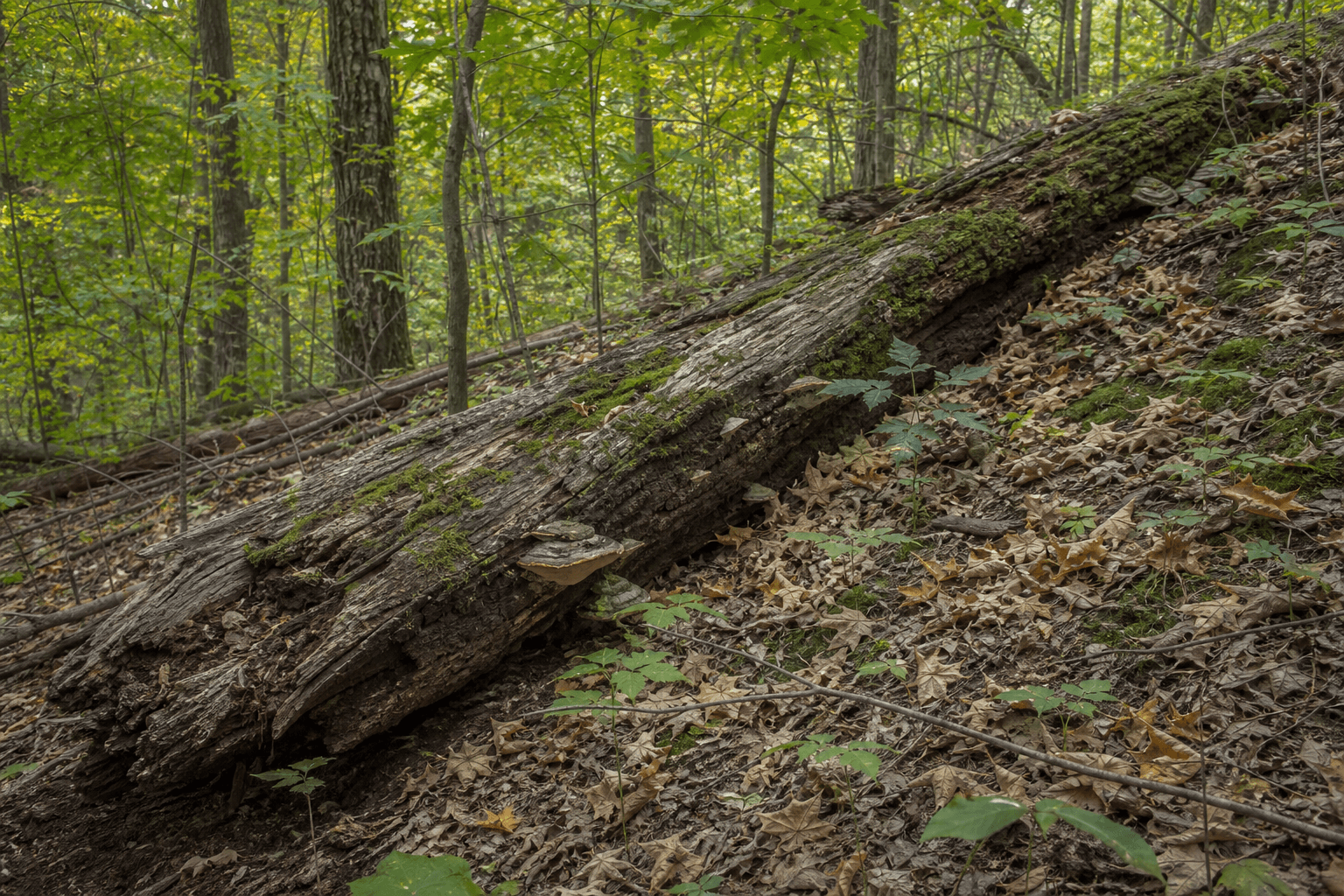
Dead wood is not waste. It is habitat, moisture, and future soil. On a managed lot, the job is deciding where it stays and where it goes.
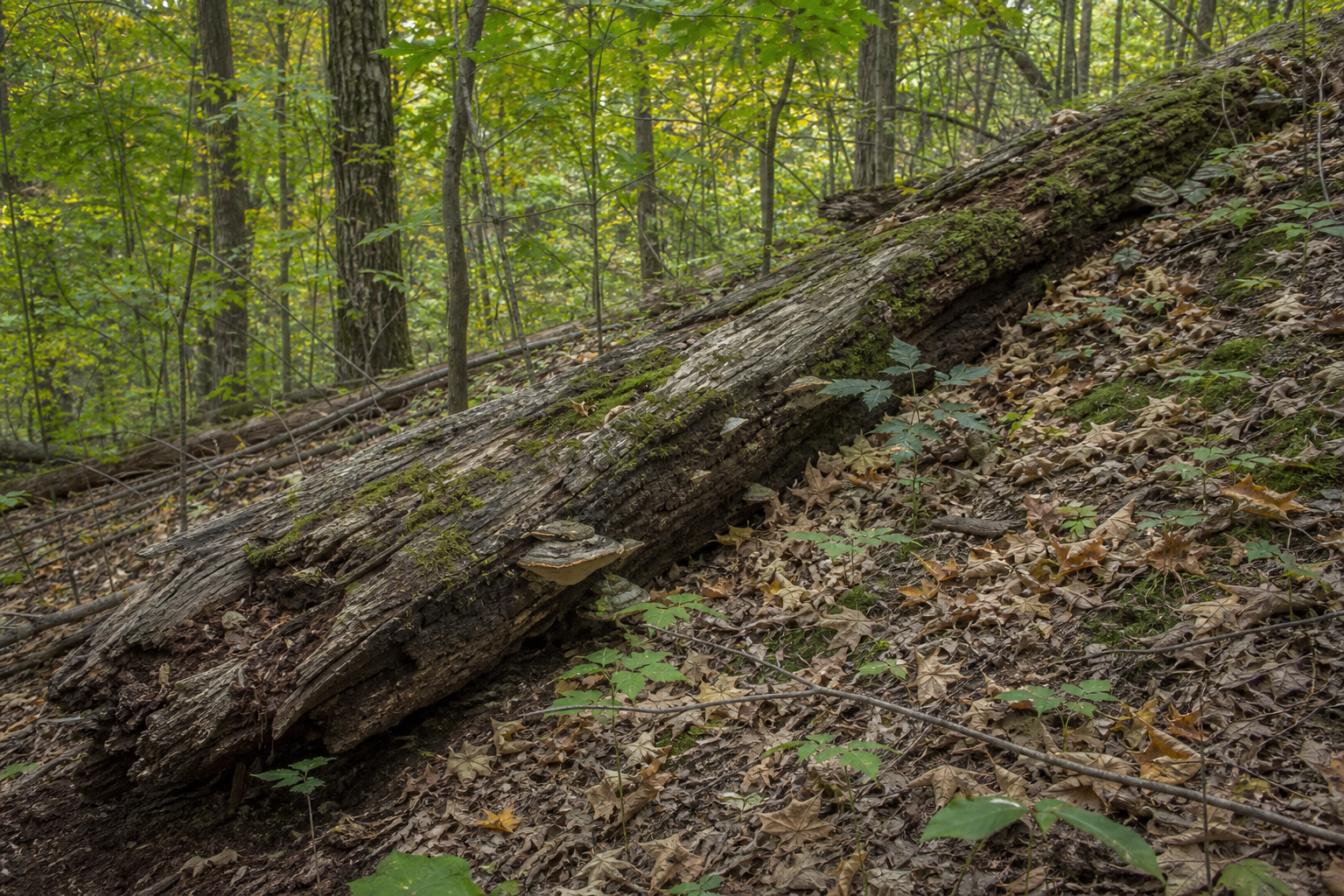
Leave it when
- The log sits off trail, on contour, slowing runoff
- Snags are stable and away from paths and structures
- Decay supports fungi, salamanders, and cavity nesters
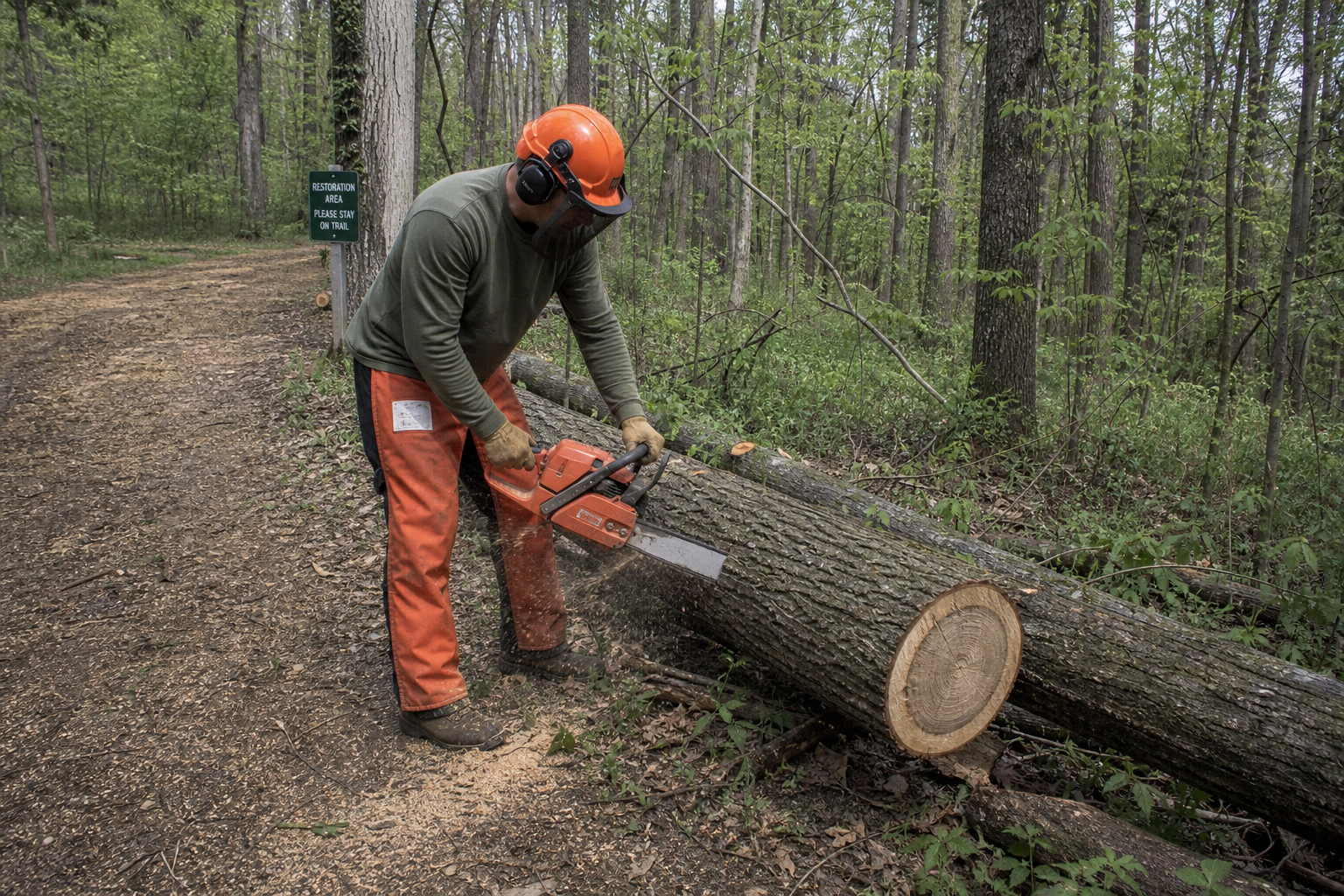
Move it when
- It blocks access or drainage
- It threatens structures, fences, or trail users
- It will roll in the next storm — stake, section, or repurpose as contour barriers
Practical rule
If a visitor would trip on it or a storm would send it downhill, address it. Otherwise let decay do the long work.
Good stewardship uses dead wood twice — first as habitat, then as soil.