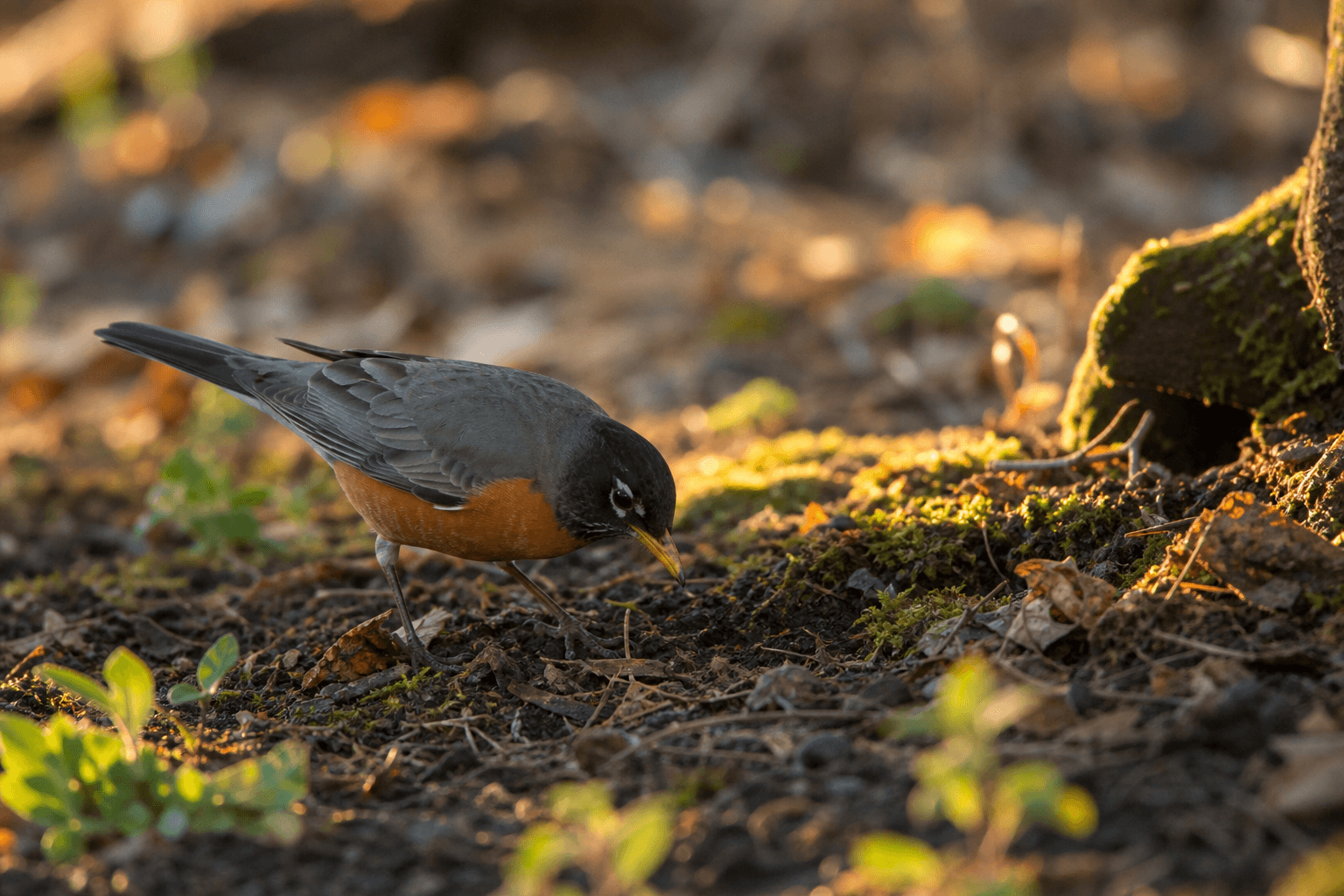
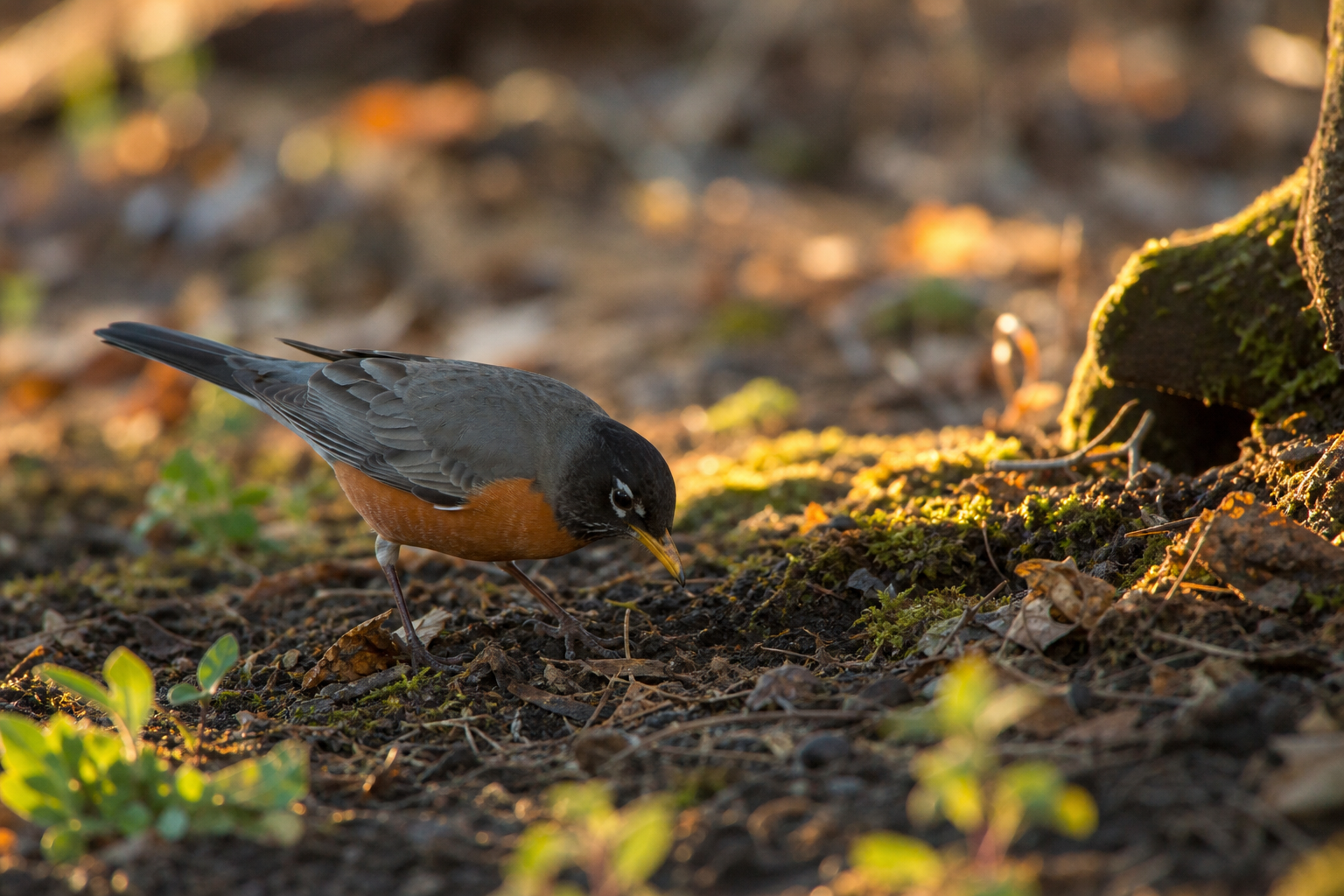
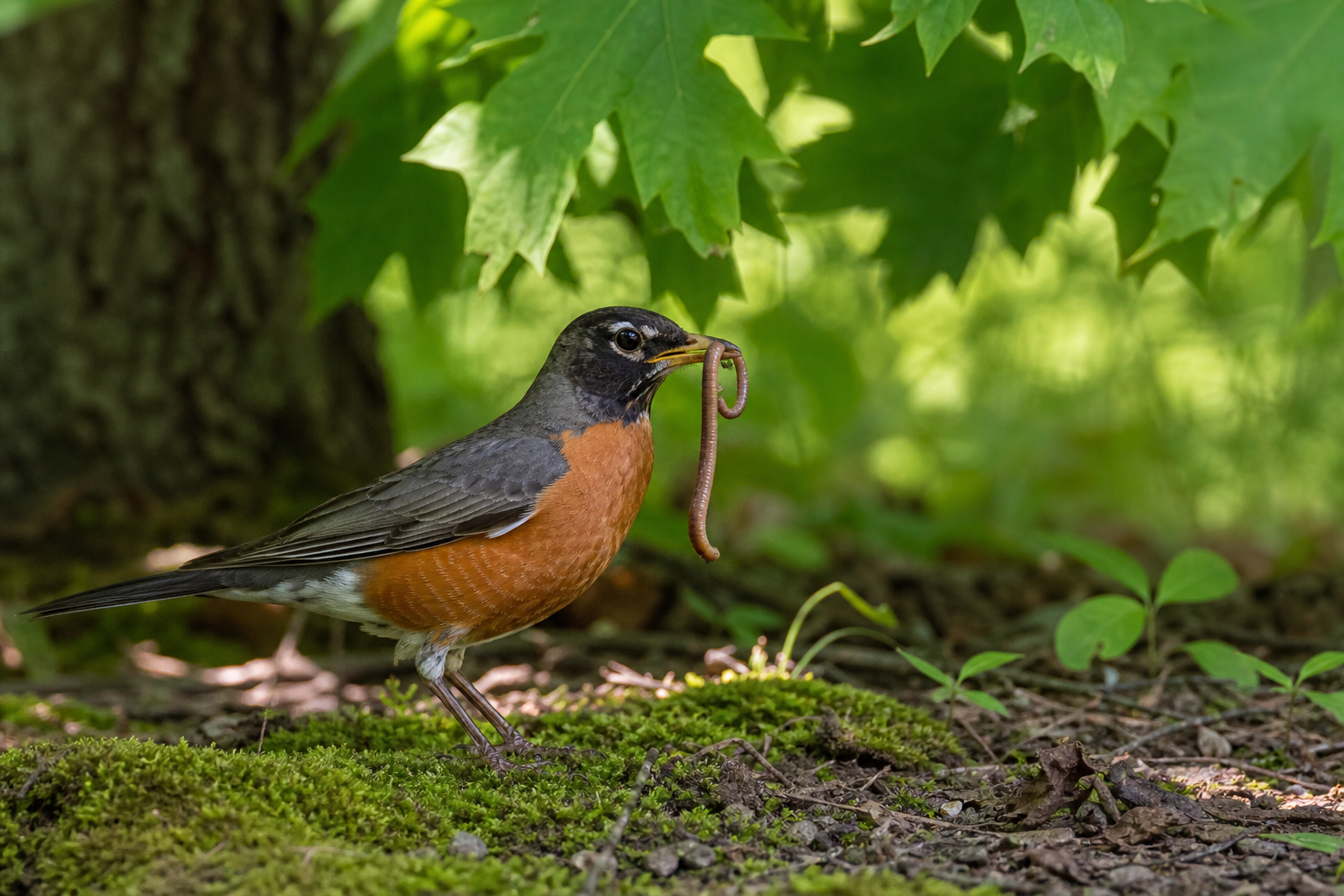
Stand still in Wesley Woods at golden hour and the floor comes alive. An American robin runs, stops, cocks its head, pulls a worm from soft earth — then repeats.
What the behavior tells you
Robins hunt by sight and vibration. When you see steady foraging:
- Earthworms and grubs are present — good aeration and organic matter
- Soil is not compacted to concrete in that patch
- Predator pressure is normal — robins would not feed openly if danger were constant
Golden light observation
Low sun makes worm casts and movement easier for birds — and for you. Note:
- How many robins share one glade
- Whether they favor mulched edges vs. bare dry zones
- If fledglings follow adults in late spring — a sign of successful brood habitat
Habitat moments
This is not decoration. Robin activity tracks the same soil health we chase with leaf compost and erosion control. A quiet woods with no ground birds after rain may mean the sponge and food web need help.
Bring coffee. Watch the lawn between the trees. The robins are doing a site assessment for free.