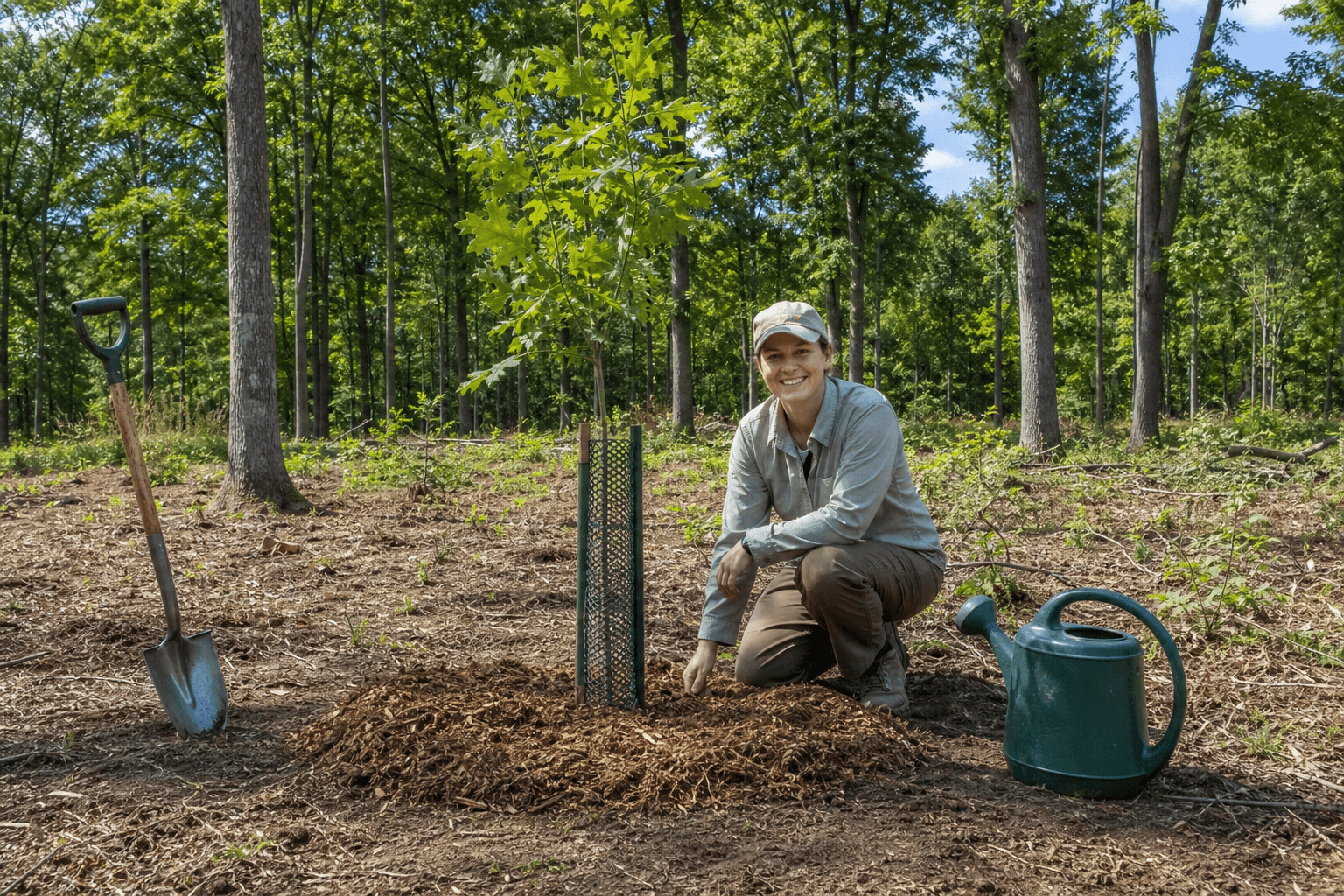
Ohio oaks are slow, heavy, and long-lived. That is the whole point. On a maple-dominated lot like Wesley Woods, bringing oaks back means thinking in decades, not seasons — but the first fifteen years still tell you a lot.
How tall can an Ohio oak grow?
In forest conditions, common natives reach rough mature heights:
| Species | Typical mature height |
|---|---|
| White oak | 60–80 ft, sometimes taller in deep soil |
| Northern red oak | 60–90 ft |
| Pin oak | 50–70 ft |
| Bur oak | 60–80 ft, wide crown |
| Black oak | 50–60 ft |
Open-grown trees are often shorter and wider — more spread, less straight trunk. Under maple shade, seedlings stay smaller longer.
Oaks outlive the people who plant them. A good site can carry a tree 200 years or more.
After 15 years — height and caliper
No two sites match, but in full sun with decent soil on a Strongsville lot:
- Height: often 12–20 ft for red oak group; white oak may be 10–18 ft — slower but sturdier
- Caliper (trunk diameter at 4½ ft): commonly 1½–3 inches, sometimes 4 inches on fast red oak in the open
- In heavy maple shade: half that is normal — the tree is waiting for a light gap
Caliper is what nurseries and city tree preservation plans often measure. Six inches dbh is where many rules start caring about removal permits.
Fifteen years is still youth. You are building root mass and trunk taper, not finished shade yet.
How to spot an oak sapling
You are looking at leaves, buds, and what is on the ground.
Leaves
- Alternate on the stem — one leaf per node, staggered (not maple's opposite pairs)
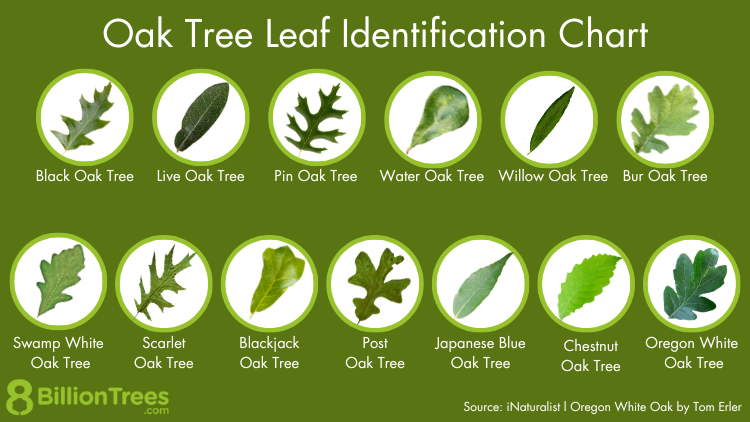
- Lobed — rounded lobes = white oak group; pointed bristle tips = red oak group
- See oak tree ID and acorn ID
Stem and buds
- Often stout for its height — oaks feel woody early
- Terminal bud may look clustered or scaly compared to maple
Ground clues
- Cap or nut nearby from last fall
- In our Native Oaks tilling story, thousands of acorns came up in dark rich soil — seedlings may follow where nuts already sat
Not an oak: opposite leaves, compound leaves, or smooth unlobed saplings with cherry-like bark.
Potting a sapling
Best for nuts you sprouted or small whips dug carefully.
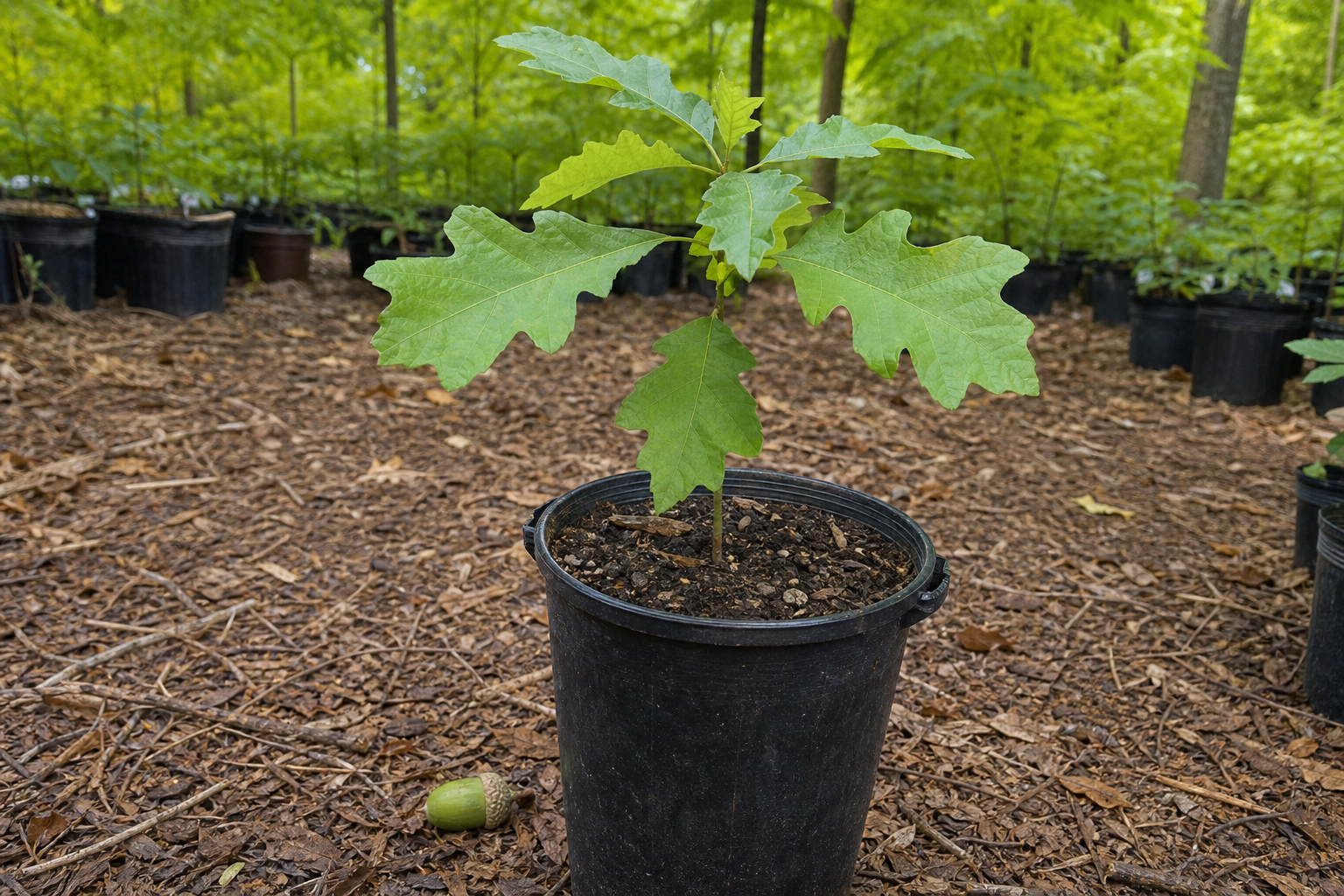
- Use a deep pot — oaks want a taproot. Minimum 12 inches deep for a first-year seedling; tree pots or deep nursery containers beat shallow trays
- Drainage holes — oaks hate soggy roots
- Soil — loose potting mix + a little native garden soil; not straight clay
- One seedling per pot — do not crowd
- Sun — full sun on a patio or clearing edge
- Water when top inch dries — steady, not constant flood
- Time limit — 1–2 seasons max in a pot. Oaks stall or circle roots if held too long
If roots spiral the bottom, tease or trim before field planting — do not plant a tight root ball unchanged.
When it outgrows the pot — field planting
Move when:
- Height passes 18–24 inches with a stiff stem, or
- Roots hit pot walls, or
- Second spring arrives and you still have it in plastic
Steps
- Pick sun — the maple clearing you pruned is ideal early; oaks tolerate later shade as they rise
- Dig a hole 2–3× the root ball width, only as deep as the root mass — do not bury the flare
- Break up the hole sides so roots can spread
- Plant at the same depth it grew in the pot
- Water in — soak once, mulch 2–3 inches in a donut, not against the trunk
- Tree guard or fence first years — deer browse kills more oak seedlings than drought
- Stake only if loose in wind; remove stakes after one year
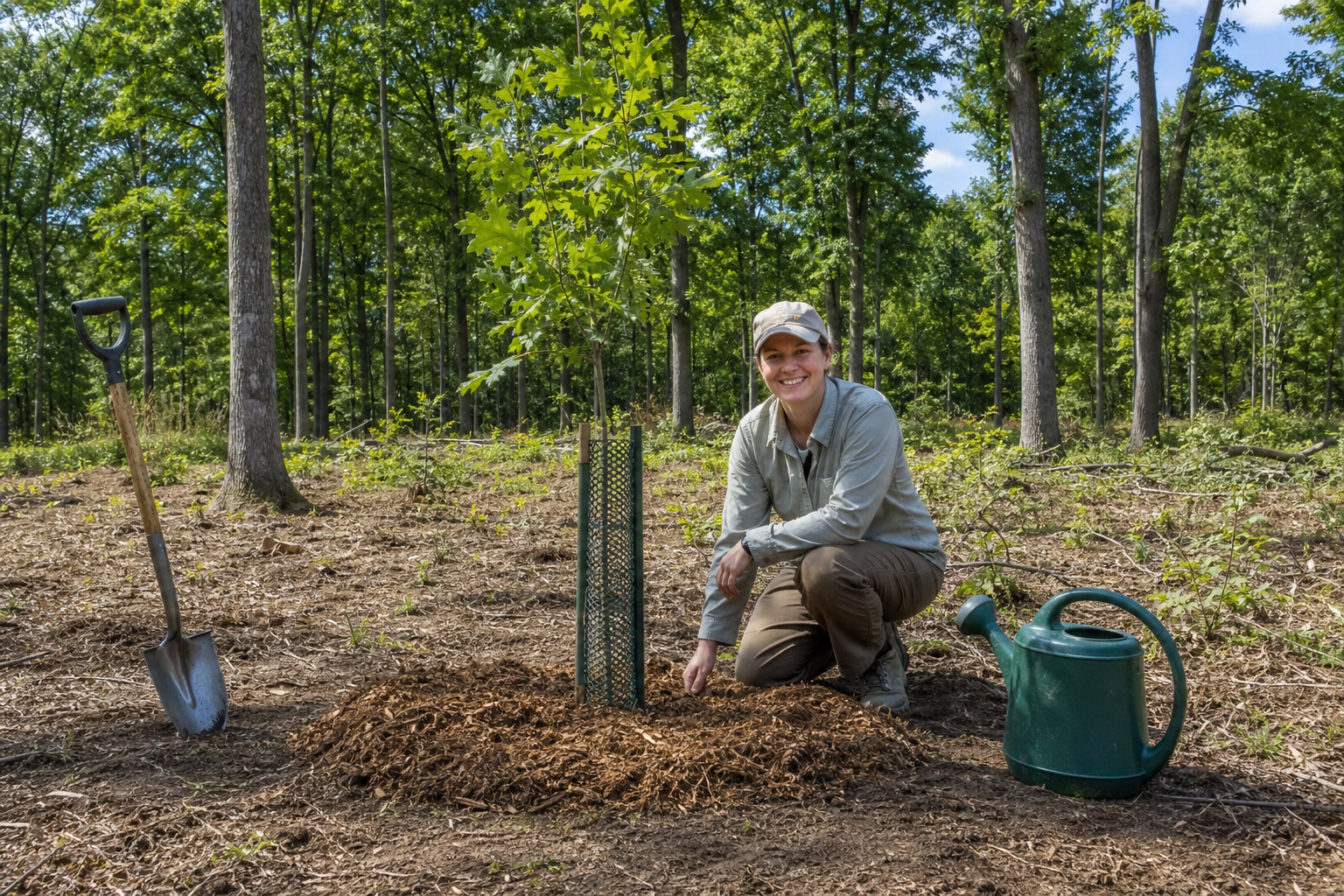
Best timing: early spring before leaf-out, or fall after leaves drop and soil stays workable.
The value of one oak
Ecology — acorns feed deer, turkeys, squirrels, and dozens of species; canopy adds nest sites maples alone do not provide
Property — mature oaks raise perceived land value and shade quality; they signal stewardship
Stormwater — deep roots and large canopy intercept rain — aligns with Tree City USA goals
Carbon and time — an oak planted today is infrastructure your grandchildren inherit
Rules — at six inches caliper, city forestry may track the tree on grading and preservation plans — worth documenting where you plant
On this lot — diversity beside maple reduces single-species risk; oaks handle dry years differently than maples
A fifteen-year oak is not finished. It is proof you started. Pot the good ones, plant them in the sun you opened, protect them from browse, and let Ohio time do the rest.