On a maple-dominated lot like Wesley Woods, oaks can feel invisible until you look for them. They grow slower, live longer, and leave different clues on the ground. In Northeast Ohio, white oak, red oak, pin oak, bur oak, and black oak are the names you will hear most.
Start with the leaf
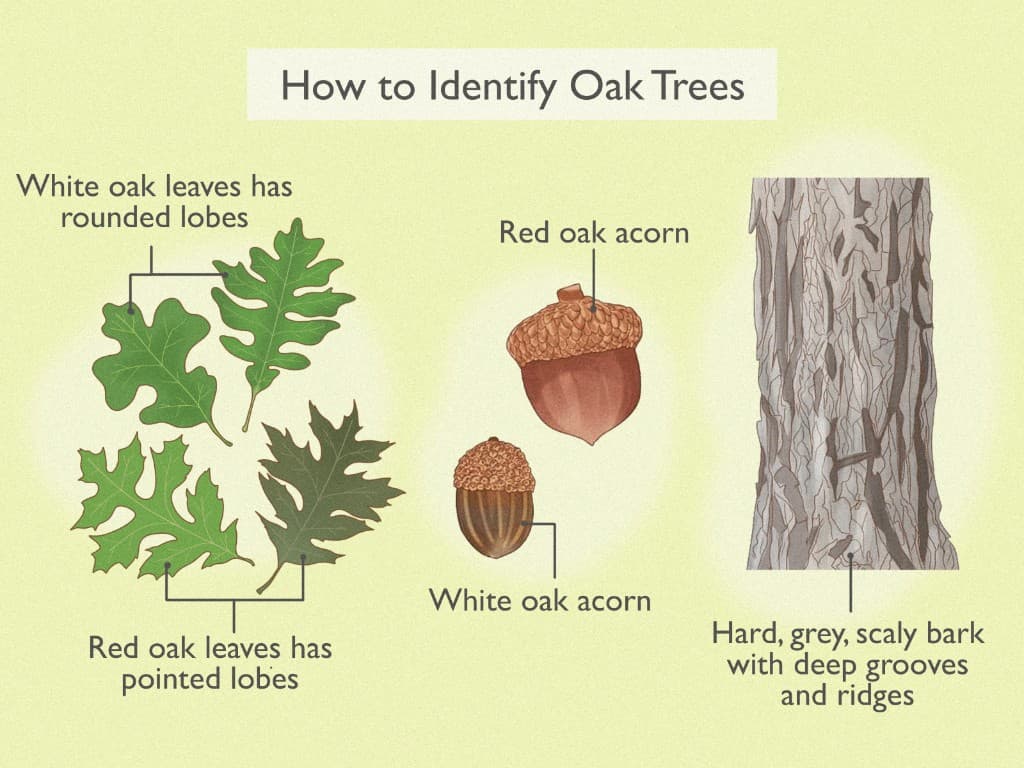
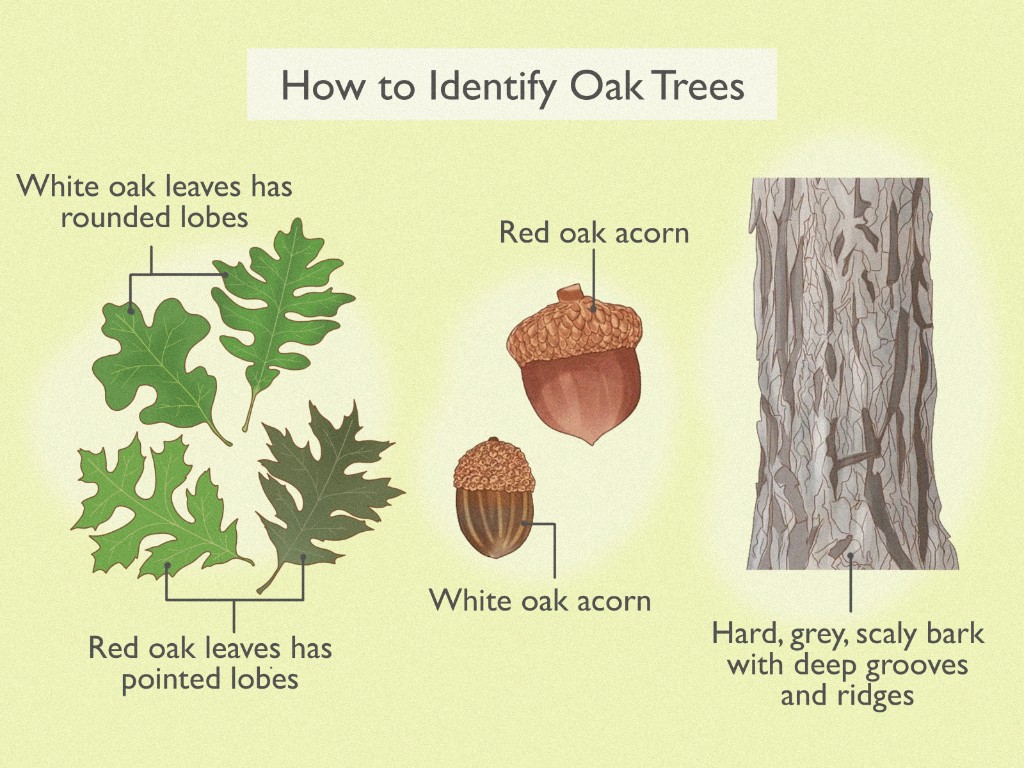
White oak group — lobes are rounded, tips are soft, no bristles at the end. The leaf feels wide and balanced in your hand.
Red oak group — lobes are pointed with bristle tips. Sinuses between lobes often cut deeper. Scarlet oak, pin oak, and black oak all sit in this camp.
If you only remember one rule: rounded = white oak group, pointed = red oak group.
Match the acorn
Leaves lie. Acorns confirm.
- White oak acorn — smaller, often striped, cap is bowl-shaped and covers more of the nut
- Red oak acorn — larger, cap is shallow and flat, like a beret on top
See our acorn identification guide for the common types on the ground in Strongsville.
Read the bark
Mature oak bark is hard, grey, and deeply furrowed — vertical ridges that do not peel in papery sheets like birch or sycamore. Young oaks still look smooth; do not judge a sapling by old-tree bark photos.
Ohio species on one chart
Pin oak leaves are deeply cut. Bur oak leaves look wide with a funny narrow lower half. Willow oak leaves look nothing like a classic oak — long and narrow. Post oak often shows a cross shape.
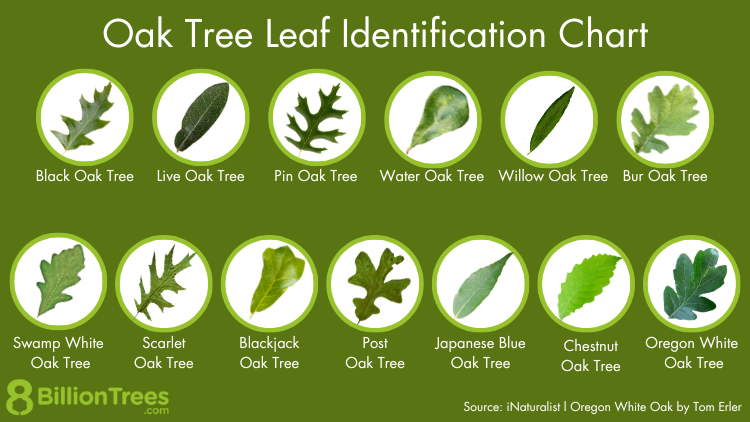
On our lot you may not have all thirteen. You will see white oak and red oak group trees if acorns are on the ground — something upstream is producing them.
Quick field steps
- Pick up a leaf — rounded or pointed lobes?
- Find an acorn — cap shape tells the group
- Look up — alternate branching, heavy wood, high canopy when mature
- Mark the spot on your site plan or tree survey if the tree is six inches or wider
Good ID changes stewardship. Oaks get different root protection than maples. You do not prune them like fast-growing colonizers. You plan around them for decades.
That is enough to walk the woods with confidence — leaf in hand, acorn in pocket, bark on the trunk confirming what you already suspect.