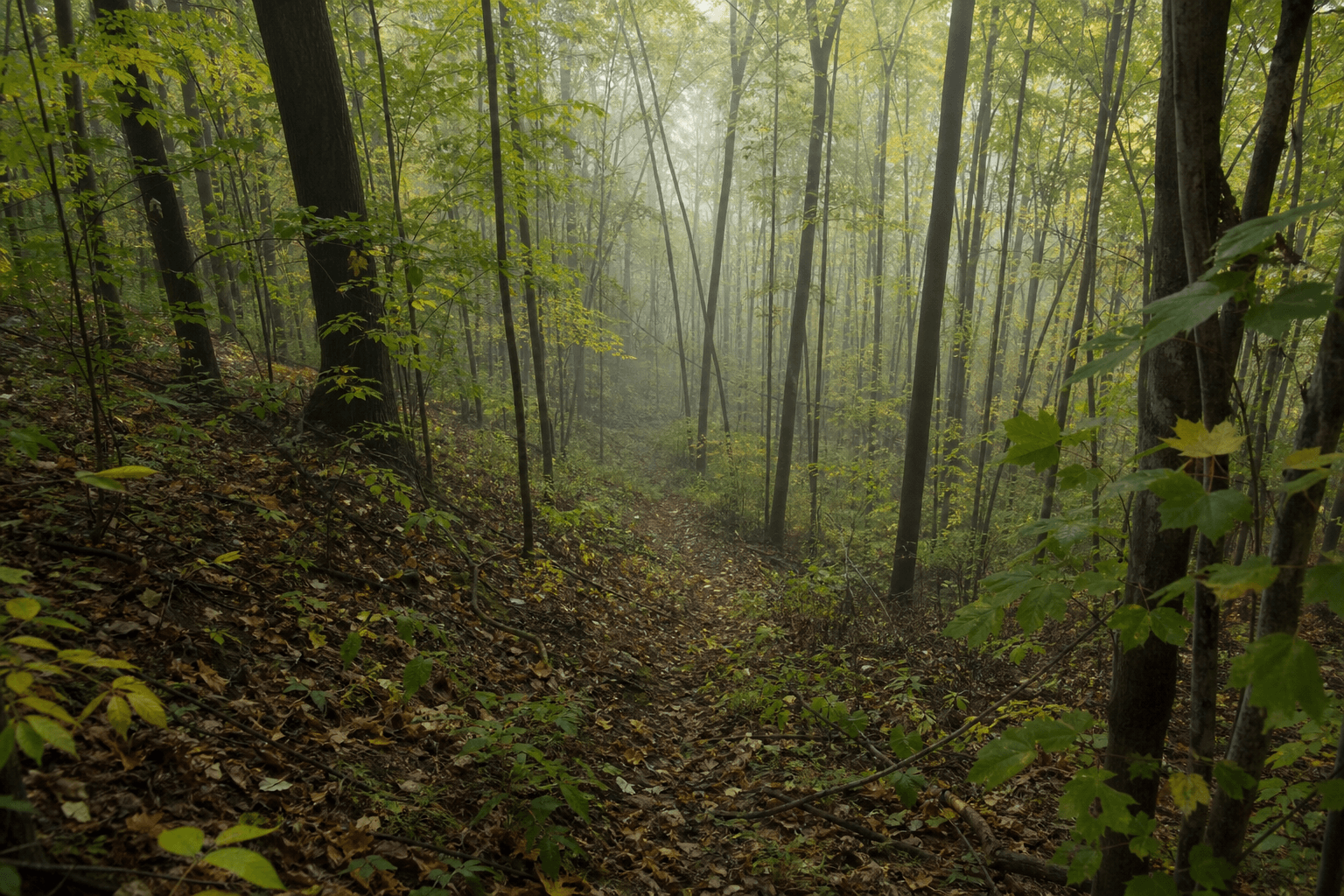
The back slopes at Wesley Woods are not flat. They drop on a steep gradient — the same 20-foot change described in the log wall and deer habitat work. Deer have used this ground for years. They can handle the grade. People struggle. That is fine. This corridor was always theirs first.
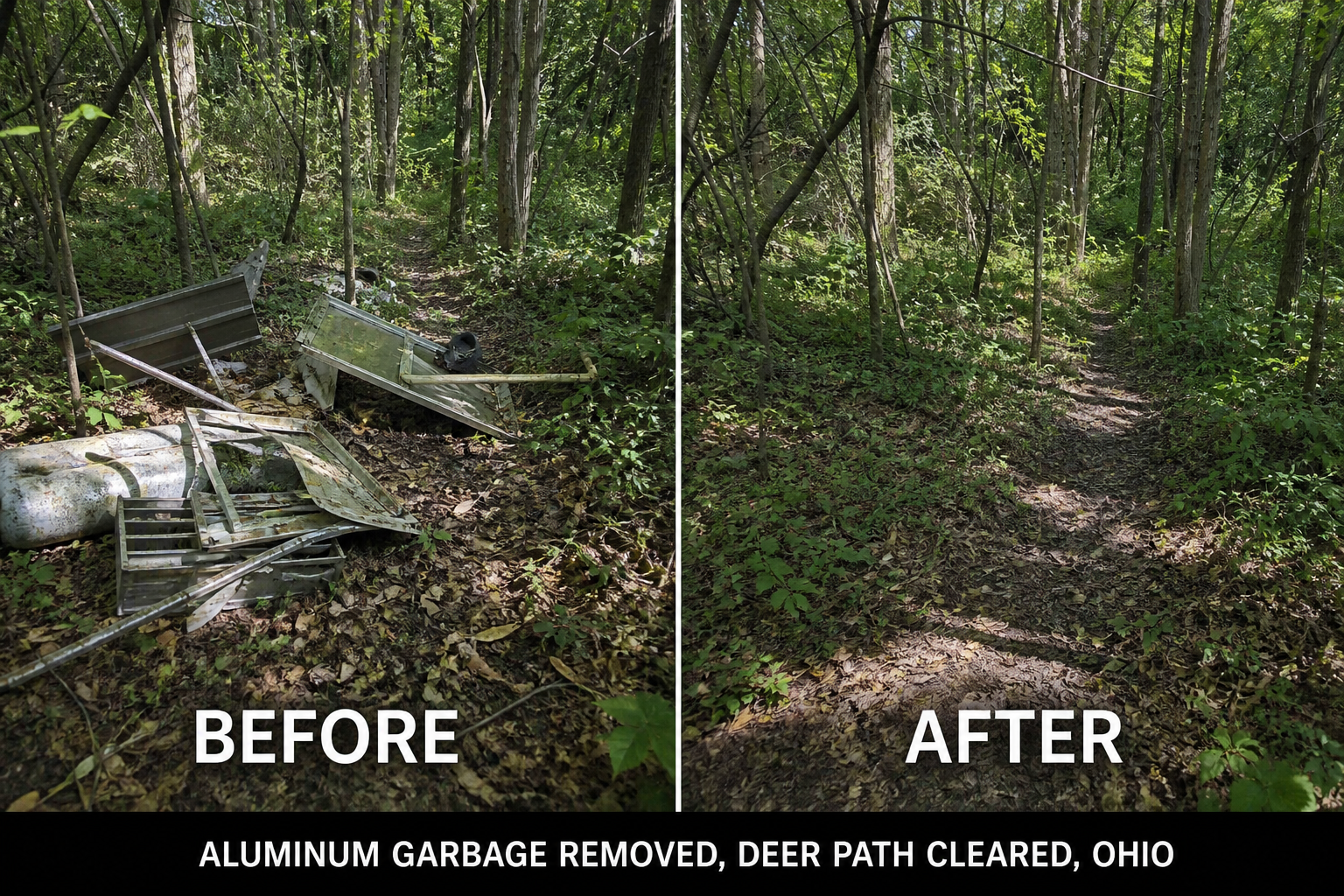
What they could not handle was aluminum garbage wedged across a natural travel line — scrap metal, bent sheet, and junk that had no business on a woodland trail.
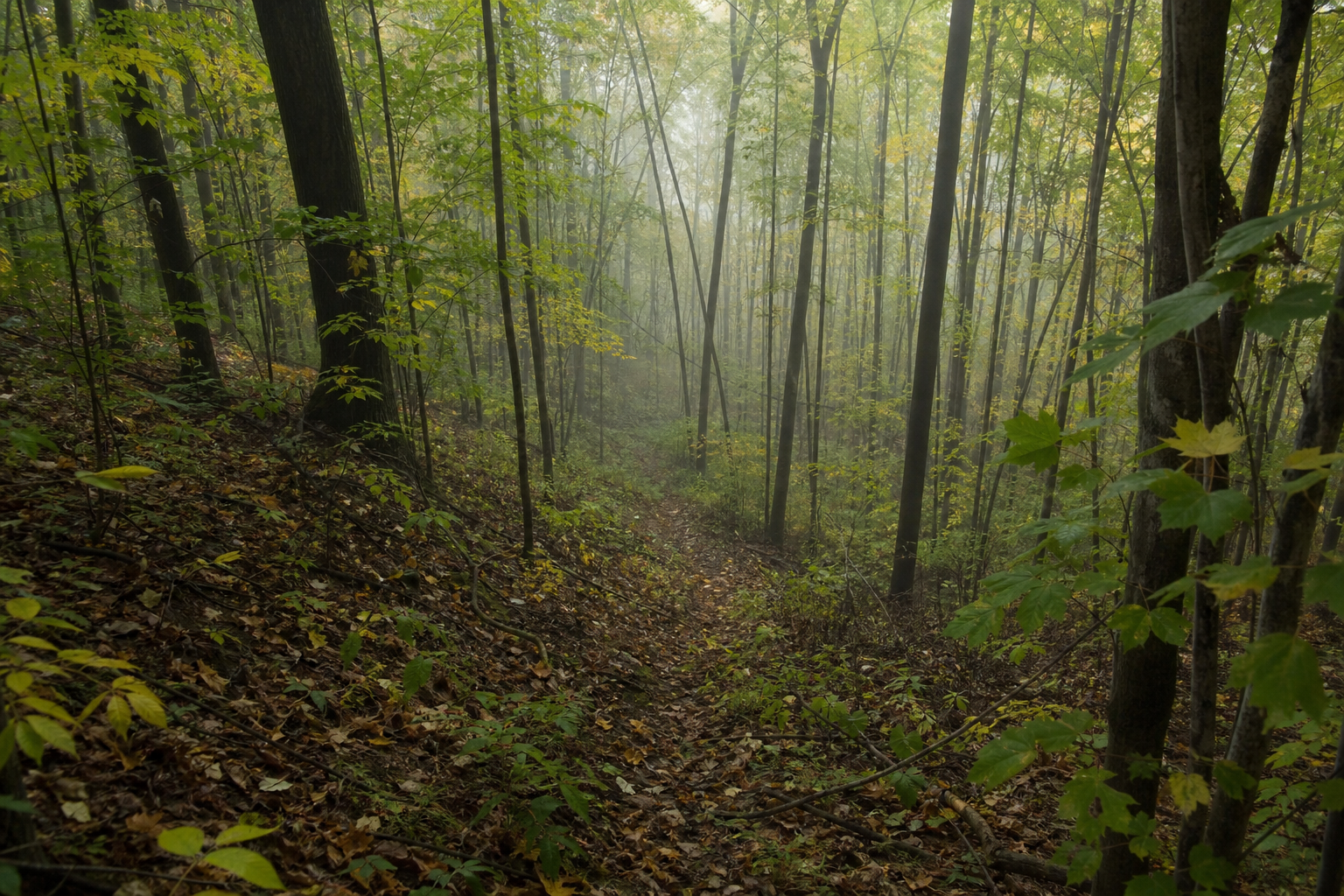
What was blocking the trail
Along the deer path — parallel to but separate from the human walking trail — volunteers found:
- Aluminum scrap — siding, flashing, and mixed sheet metal
- Buried edges that could cut hooves or snag legs
- Narrow choke points where deer had to detour into thick brush
Deer will walk steep ground. They will not push through sharp metal if an easier route exists — and the detour was pushing them into erosion-prone side slopes and away from the valley creek crossing.
What we did
- Removed all aluminum and mixed metal from the trail corridor
- Hauled scrap off-site for recycling — not piled in habitat edges
- Reopened the natural tread — no paving, no gravel, just cleared earth and duff
- Left brush edges for cover — deer use edge habitat; we did not strip the whole slope
- Flagged the line for future monitoring with trail cameras and walk-through checks
Why this matters
A blocked deer trail is not a small problem:
- Travel corridors connect bedding, browse, and water — see deer safety and behavior
- Garbage on slopes accelerates erosion when animals cut new paths
- Certified habitat only works if the animals can actually move through it
The Foundation's job here is not to build a deer highway. It is to get human junk out of the way and let the existing route work again.
Watching for return
We are in a wait-and-see phase:
- Tracks in soft soil after rain — hoof prints on the reopened tread
- Browse lines on dogwood and native clover plantings along the slope
- Camera passes at dawn and dusk — same windows deer use on woodland streets
- Fewer detour paths cutting new scars into the hillside
No guarantees. Deer move with food, pressure, and season. But the blockage is gone. The gradient was never the problem. The aluminum was.
If you volunteer on slope work, treat the deer trail like infrastructure: do not store materials on it, do not park scrap there, and call out metal the way you would call out barbed wire on a public path.
The back slope is steep. The corridor is open again. Now we let the woods answer.