For most of its history, the steep, heavily wooded slope at the heart of the Foundation project property in Strongsville was more obstacle than asset — a 25-foot drop thick with brush, fallen timber, and unstable footing that made routine maintenance difficult and anything resembling a nature walk essentially impossible.
That's changing. Over the past several months, the Wesley Stump Family Foundation has been quietly transforming the hillside into a functional, navigable landscape, one handcrafted structure at a time.
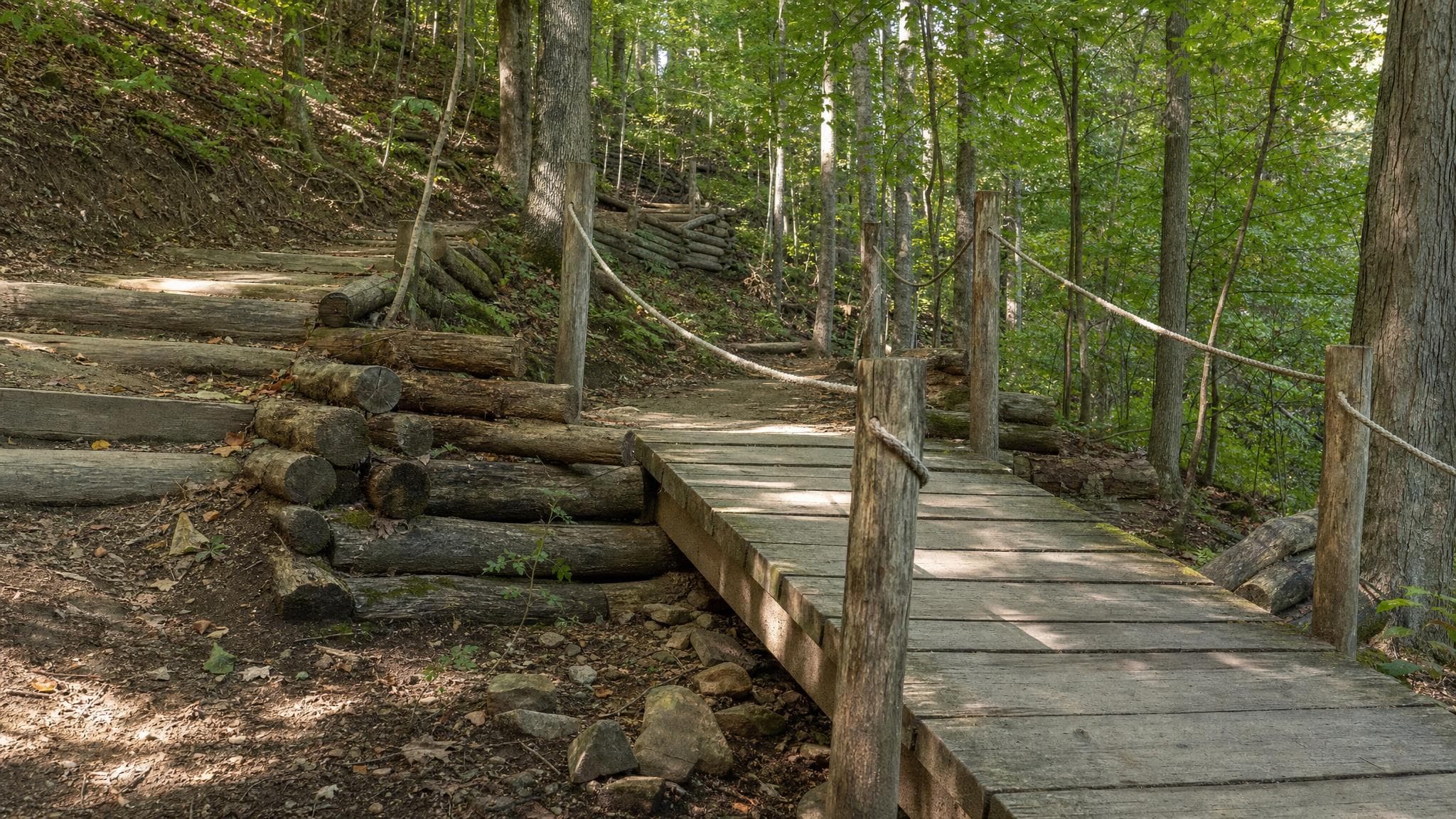
The centerpiece of the effort is a system of two-foot-wide dirt walking trails that now trace the slope in measured, manageable grades. The trails were designed not just for aesthetics but for practical erosion control — a critical concern on a hillside that sees significant runoff during Ohio's wet springs. To reinforce the path edges and prevent soil migration, volunteers installed low log retaining walls using timber harvested directly from fallen trees already present on the property.
"Nothing came from a box," said one trail builder who spent several weekends on the project. "Every retaining log, every support — it was already here. We just gave it a new purpose."
The same philosophy guided the construction of a simple log bridge that now spans a narrow drainage channel on the lower section of the slope, allowing foot traffic to cross without disturbing the streambank or stepping through the wet area. The bridge is intentionally rustic — two parallel logs, topped with split sections, notched and fitted — but it's sturdy, level, and exactly what the space needed.
Perhaps the most charming addition to the trail system is a bench positioned near the mid-slope rest point, crafted from a single six-inch-diameter maple log harvested on site. The bench sits at a natural overlook and offers a clear view of the lower creek and garden area — a reward for the climb.
For maintenance workers, the improved access changes the practical calculus of caring for the property. Carrying tools up and down a 25-foot unimproved slope is physically demanding and potentially hazardous; the new trail system makes that work safer and more efficient year-round.
Twine handrails — strung between anchor posts at key intervals along the steepest sections — provide an added safety measure for anyone navigating the trail in wet or icy conditions.
The improvements are functional first — making it possible to reach every part of the property safely, carry tools up and down the hillside efficiently, and perform stewardship work year-round without hazard.
"You can't steward something you can't reach," said a Foundation spokesperson.