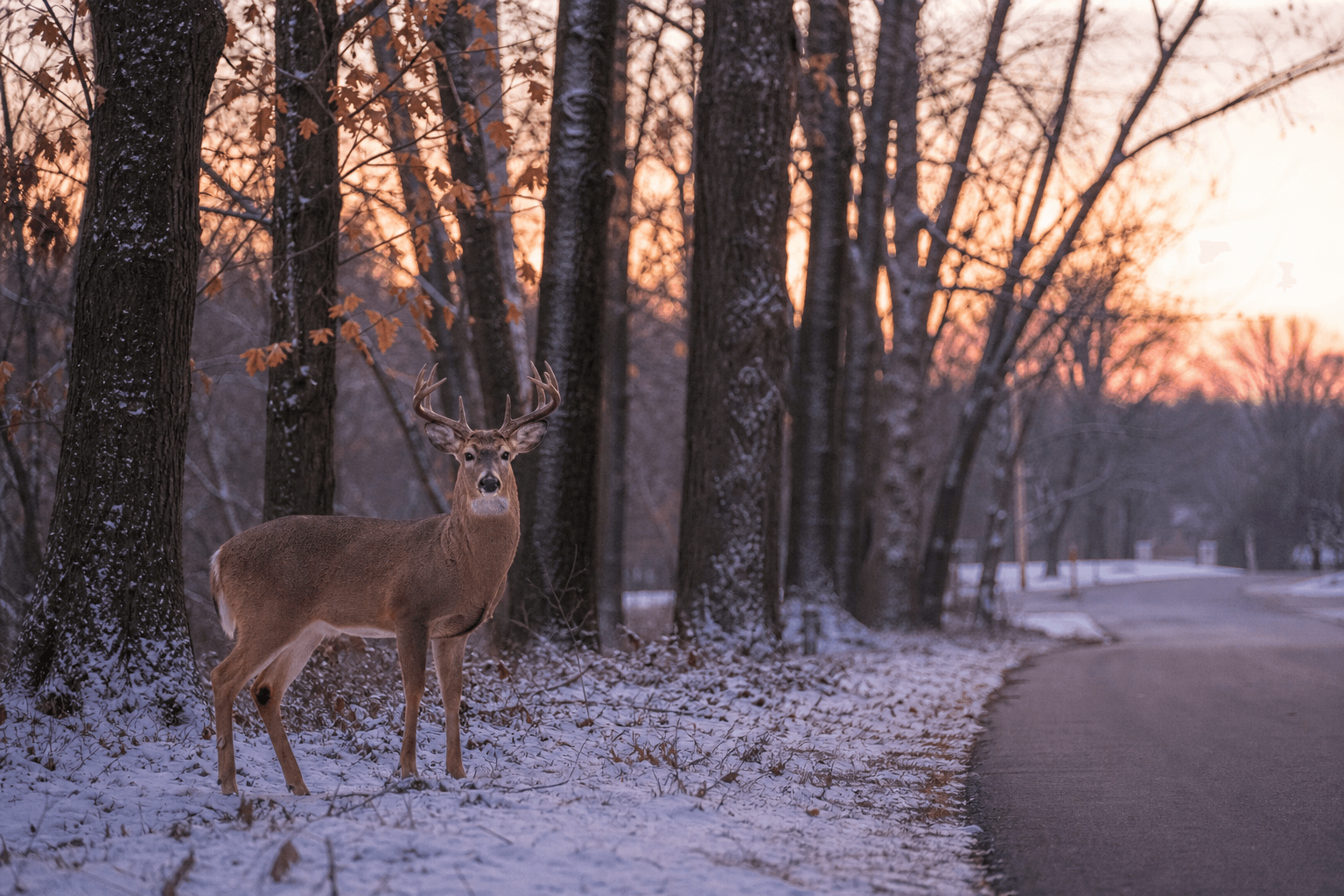
There is no mystery about deer in Ohio. You see them in the woods. You see them in the front yard. You see them standing in the road at dusk while your headlights wash over brown fur and white tail flags. They are big animals — adults can exceed 150 pounds — and there are a lot of them.
That combination deserves respect, not fear and not romance. White-tailed deer are one of the best parts of living near woodland. They are also one of the main reasons to slow down on neighborhood streets after sunset.
Deer on the land
At Maple Wesley Woods, deer are part of the design — not an accident. The Foundation's log wall, shed, and deer habitat work treats them as neighbors worth planning around.
When you hear a deer in the woods
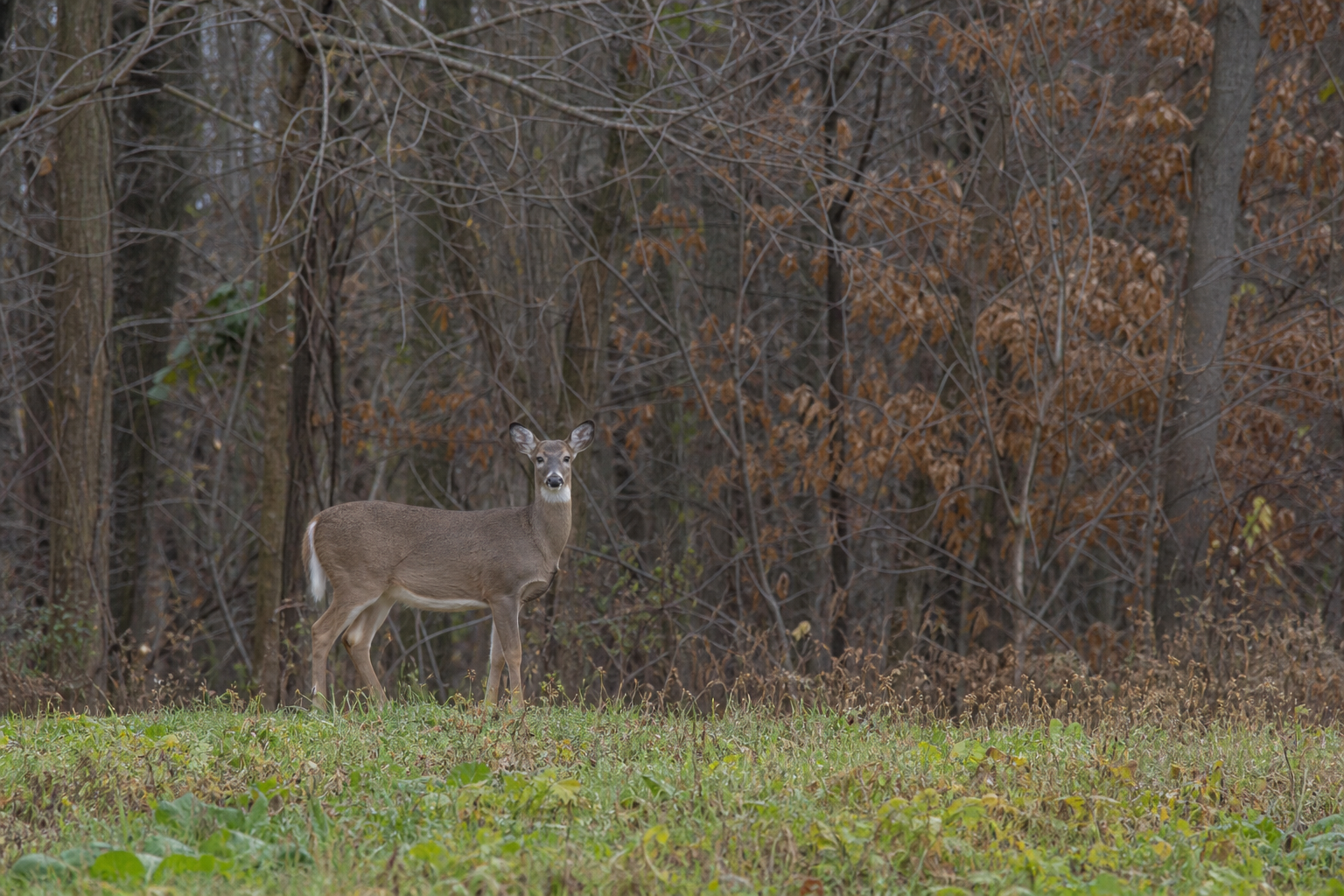
A snort, stomp, or sudden crash in the brush stops most people cold. That is the right reaction — stop and look around. Loud deer sounds often mean an animal knows you are there, not that it is on top of you. Deer are usually farther away than they sound, especially in leaf litter and hollows.
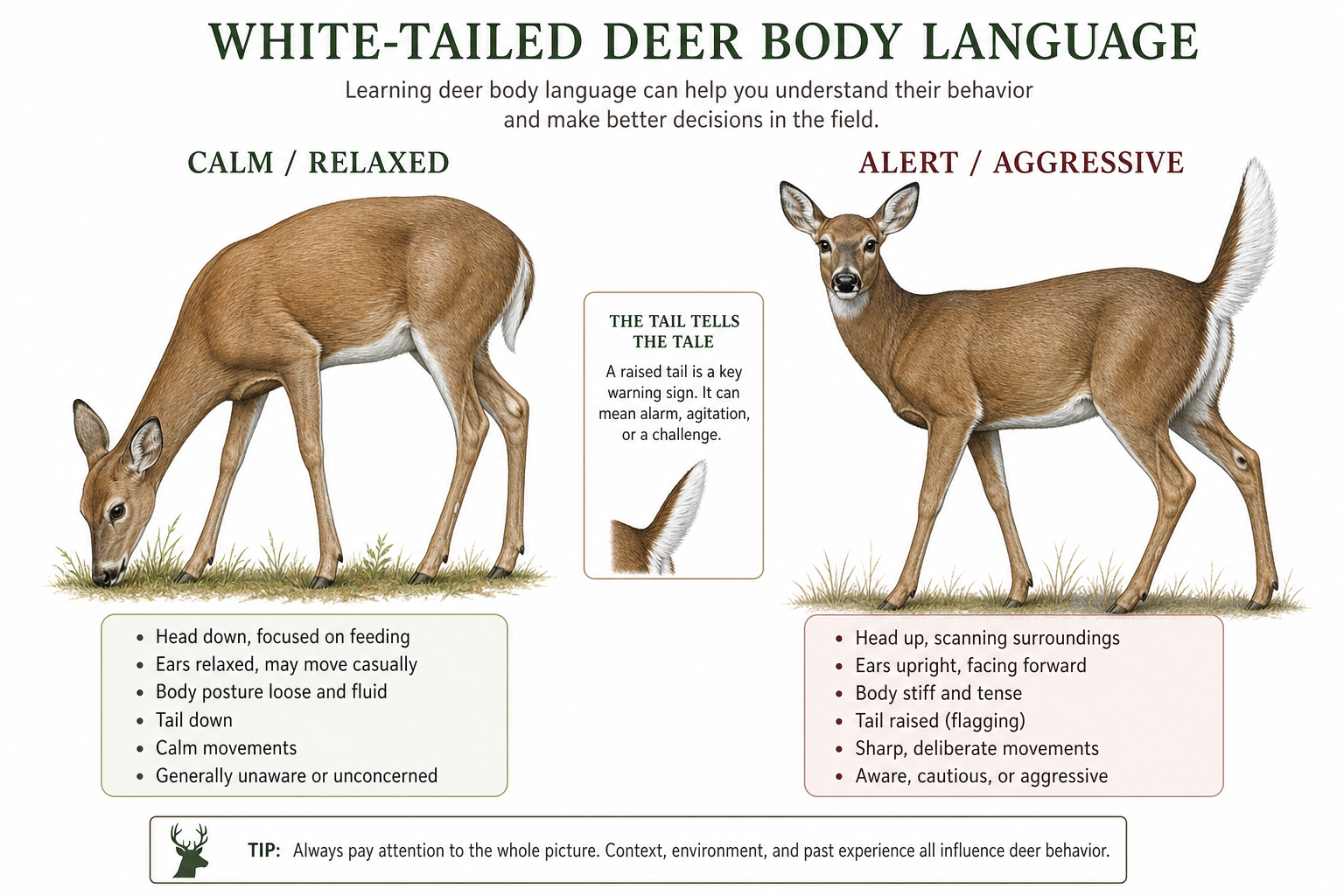
Scan slowly:
- Ears forward, head up — checking what you are
- Head down, grazing — eating nearby, low urgency if you keep distance
- Stiff body, flattened ears, hair raised on rump — stress or aggression; back away
- Foot stomp repeated, snort, false charge — you are too close; leave calmly
On foot in the woods:
- Give deer space — especially does with fawns in late spring and summer
- Rut season (roughly October through December) brings bolder buck behavior; widen your buffer
- If a deer stamps or snorts, back away slowly — you are too close
- Keep dogs leashed near woodland edges
Deer on the streets
Suburban Strongsville and surrounding communities sit inside serious deer range. Roads cut through travel corridors deer have used for generations. Your street is not separate from the woods. It is part of the map.
Driving:
- Slow at dawn and dusk — peak movement times
- Scan road edges, not just the center line
- If you see one deer cross, expect more — they often travel in groups
- Brake smoothly; swerving can cause a worse crash than hitting a deer at controlled speed
- Use high beams when legal on rural roads, but dip them for oncoming traffic
A deer collision is violent and expensive. Worse, it injures or kills an animal that did exactly what deer do: cross open ground between cover patches.
Why they feel special — especially around Christmas
Deer are not mythical. They are just present in a way that fits the season. First snow, bare maples, breath in cold air, and a doe picking her way along the tree line — that image lands harder in December. Around Christmas, when families drive home late from gatherings and woods edge up against porch lights, deer become part of the neighborhood story.
There is nothing fake about that. Ohio winter strips the landscape down. Deer stay. They move quietly between yard and ravine. Kids point from car windows. Adults slow down without being told. That is the good version of sharing space with wildlife.
Population reality
Ohio's white-tailed deer numbers are high by historical standards. That means:
- More garden browsing and landscape damage complaints
- More road strikes
- More reason for habitat planning instead of random feeding
- More need for drivers to expect deer every trip, not just once a season
High numbers do not make deer pests. They make management and caution normal — like checking tire pressure before a winter trip.
Safety without losing the wonder
You can hold both ideas at once:
- Deer are worth protecting as a core woodland creature
- Deer are hazardous on roads and stressful when cornered
The Foundation's approach is observation, habitat, and calm distance — the same ethic behind our broader sanctuary and wildlife work. Enjoy them from the window. Brake for them on Mill Hollow Lane. Do not try to make pets of them.
If you walk Wesley Woods at dusk and a deer freezes in the maple shadow, stop. Let it decide. Nine times out of ten it drifts off without drama — big, quiet, and gone into the trees like it was never there.
That is the whole point. Deer belong here. We belong here too. Safety is how we keep sharing the same ground.