Wesley Family Foundation is developing the wooded hillside slope at Wesley Woods in Strongsville with a set of low-impact, nature-integrated improvements: a log retaining wall, a small portable shed, a walking path, a bicycle charging station, a running water fountain, and a bench — all set within a certified white-tailed deer habitat on a slope with a 20-foot natural elevation change.
This is the back slope of the vacant Wesley Woods lot, accessed via the walking trail that begins near the street-facing covered EV station and winds into the maple and hardwood canopy. The improvements here are designed to be entirely human-powered, ecologically sound, and visually indistinguishable from the natural landscape.
The 4-Foot Log Retaining Wall
The hillside drops sharply — a natural grade change of approximately 20 feet across the rear slope. Without soil stabilization, this slope is vulnerable to erosion and runoff, especially during Ohio's seasonal freeze-thaw cycles.
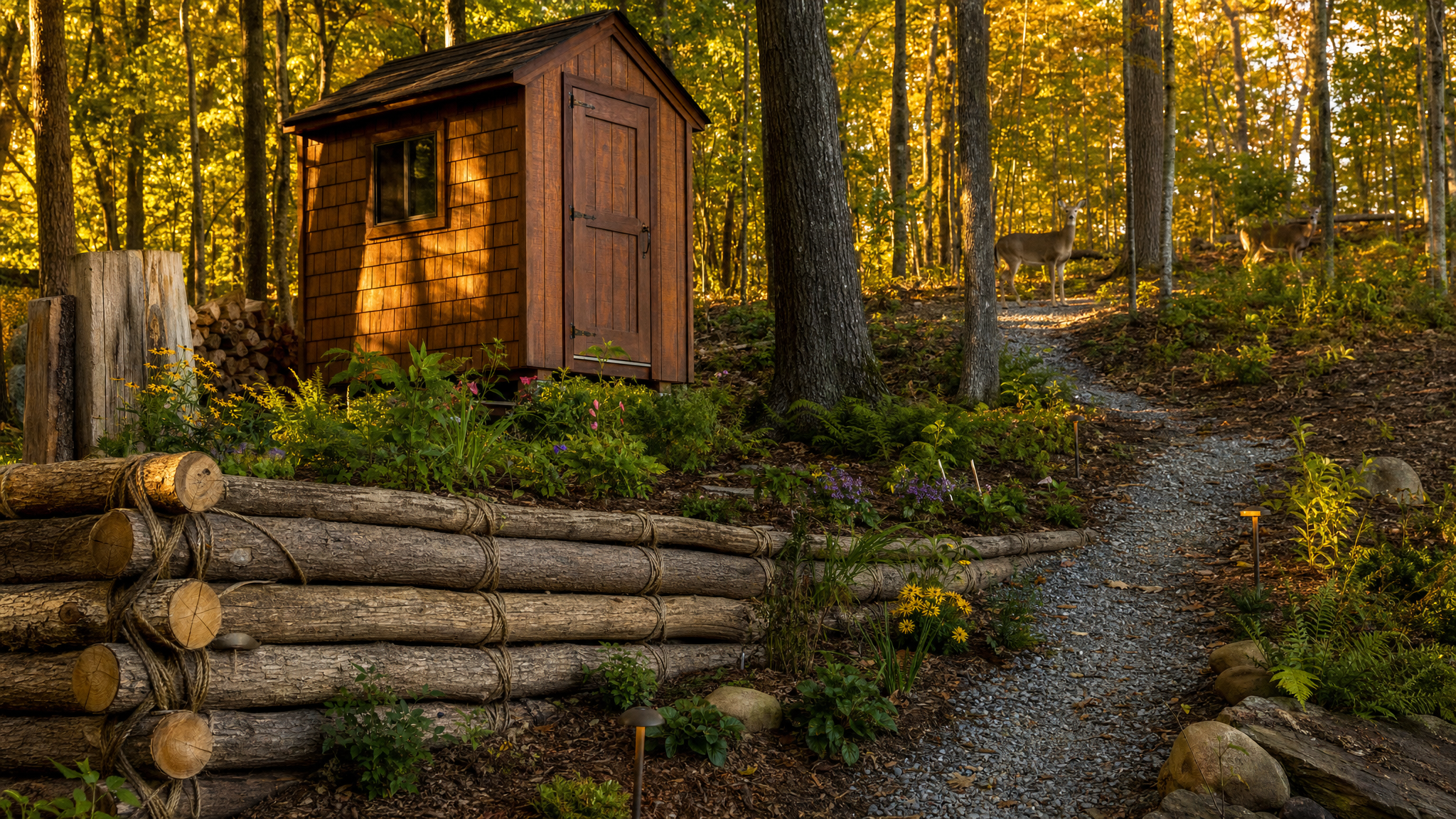
The foundation is constructing a 4-foot log retaining wall using harvested natural timber, assembled with traditional log-and-twine lashing techniques. No concrete. No synthetic materials.
The wall design uses:
- Horizontal log courses — stacked timber logs, each 8–10 inches in diameter, laid horizontally across the slope face
- Natural twine lashing at the joints and corners to bind the structure
- Timber deadman anchors buried perpendicular into the hillside to prevent overturning under soil pressure
- Gravel drainage fill behind the wall face to relieve hydrostatic pressure and direct water downhill cleanly
The result is a tiered terrace cut into the slope — stable, draining, and completely natural in appearance. The wall holds the hillside while creating a level platform for the shed and garden above it.
Clean Water Through: The Valley Creek Crossing
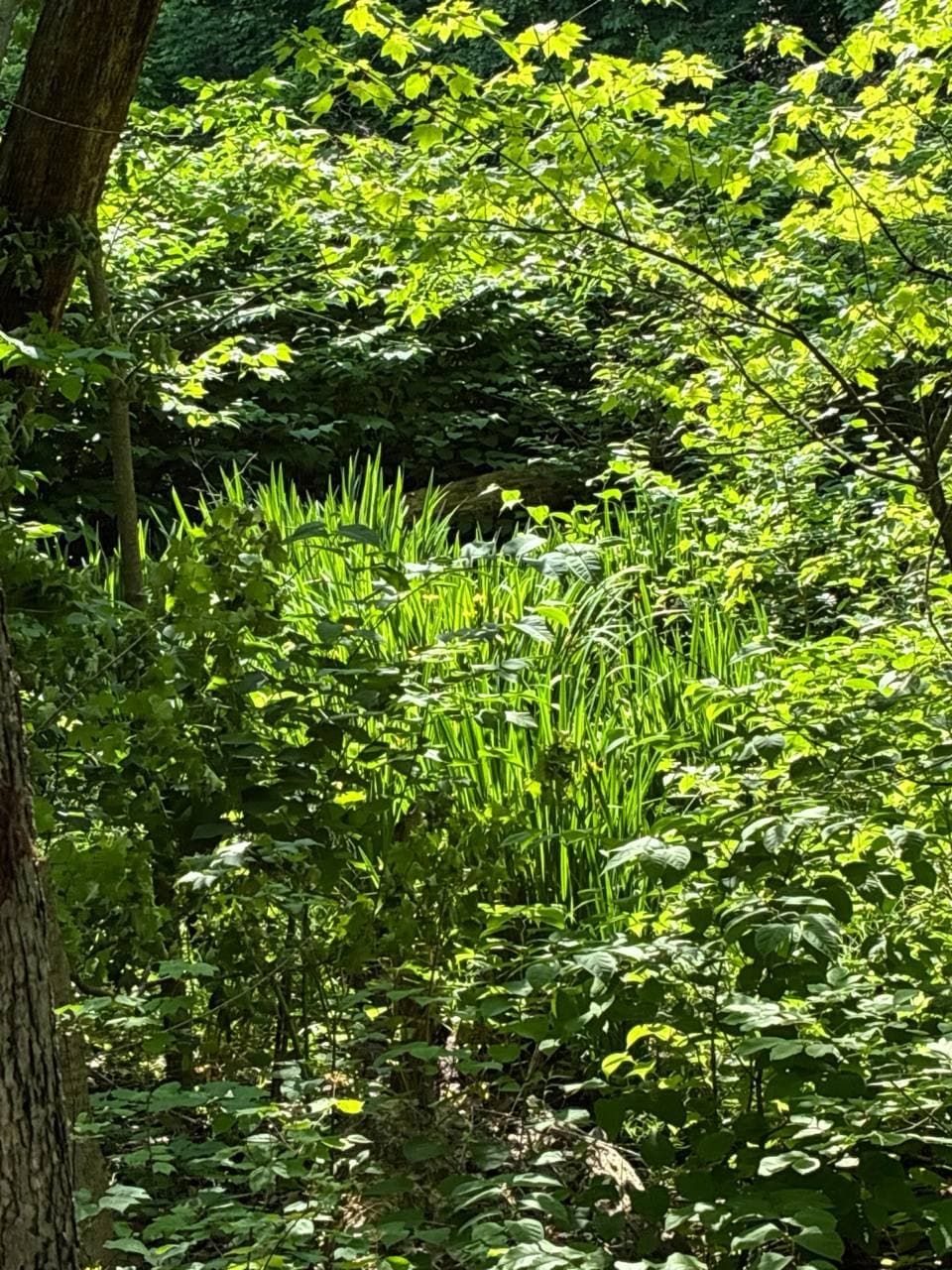
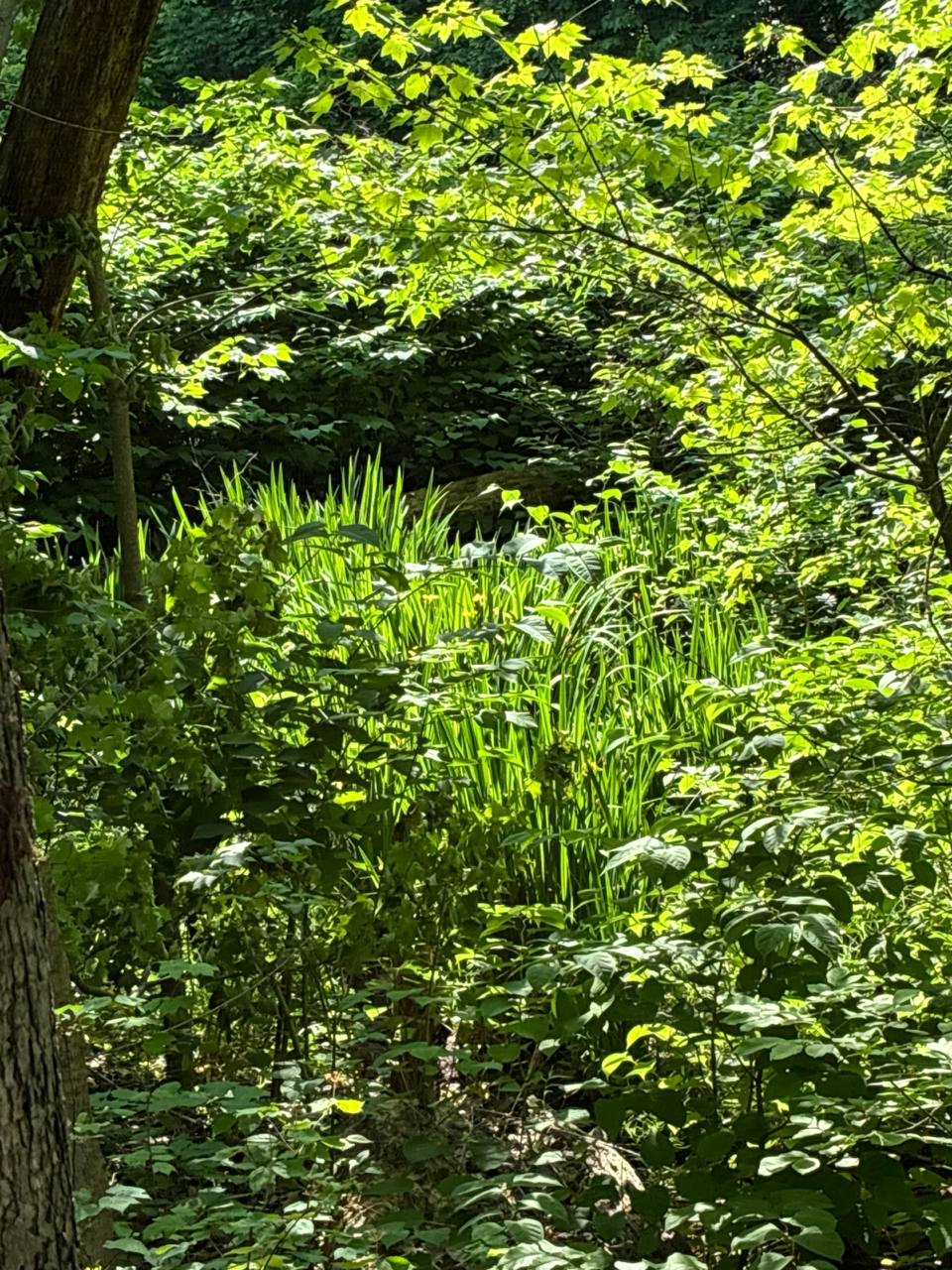
At the base of the slope, a natural valley line and intermittent stream form a seasonal drainage channel — a small valley creek that carries water across the lot during rain events. Rather than culvert it underground, the foundation is bridging it naturally.
The water system already exists on this property. The photo below shows the current state of the natural water feature at the base of the slope — dense cattails, iris, and wetland grasses filling the valley floor beneath the maple canopy. This is not a designed water feature. It grew here because this is where the water wants to be.
The creek crossing uses:
- Two large horizontal log stringers spanning the channel, set on stone footings on either bank
- Timber decking planks laid across the stringers to form a walkable bridge surface
- Natural twine and timber lashing securing the deck planks to the stringers
- Flat stone channel armor on the creek bottom beneath the bridge to prevent scour
This is a log-and-timber walking bridge — traversable by foot, visually beautiful, and completely consistent with the certified deer habitat character of the slope. Water moves through the valley naturally; the path crosses above it cleanly. The cattails and wetland grasses are left undisturbed — they are doing exactly what they should be doing.
The clean water architecture of the entire slope is designed so drainage runs front-to-back: from the street-side property, across the level terrace, and down through the valley creek at the back — never pooling, never saturating the wall.
Small Portable Shed
Above the log retaining wall, a small portable shed sits on the level terrace created by the wall. The shed is:
- Portable and relocatable — no permanent foundation, sits on timber blocking or gravel pad above grade
- Cedar or treated wood construction — weather-resistant, natural appearance, appropriate for a woodland setting
- Small footprint — 8×10 feet or smaller, storing trail tools, stewardship supplies, and seasonal equipment
- Screened from the street by the hillside grade and maple canopy
The shed enables active stewardship: tools, mulch, native plant starts, and supplies stored on-site rather than hauled in for every work visit. It is the functional heart of the slope's maintenance infrastructure.
Walking Path Up the Slope
A natural-surface walking path connects the street-facing trail head to the shed terrace and the amenities above. The path:
- Follows the natural contour of the hillside in a gentle switchback
- Uses wood chip or packed earth surface — permeable, no paving
- Is edged with timber log borders (6×6 pressure-treated or black locust) to define the path and reduce erosion
- Crosses the valley creek via the log-and-timber bridge
- Arrives at the terrace level where the shed, bicycle charger, fountain, and bench are located
The path is accessible on foot — not designed for vehicles or bicycles. It is a walking trail through a certified wildlife habitat, designed to feel like an extension of the Metroparks trail network that borders the property.
Bicycle Charging Station
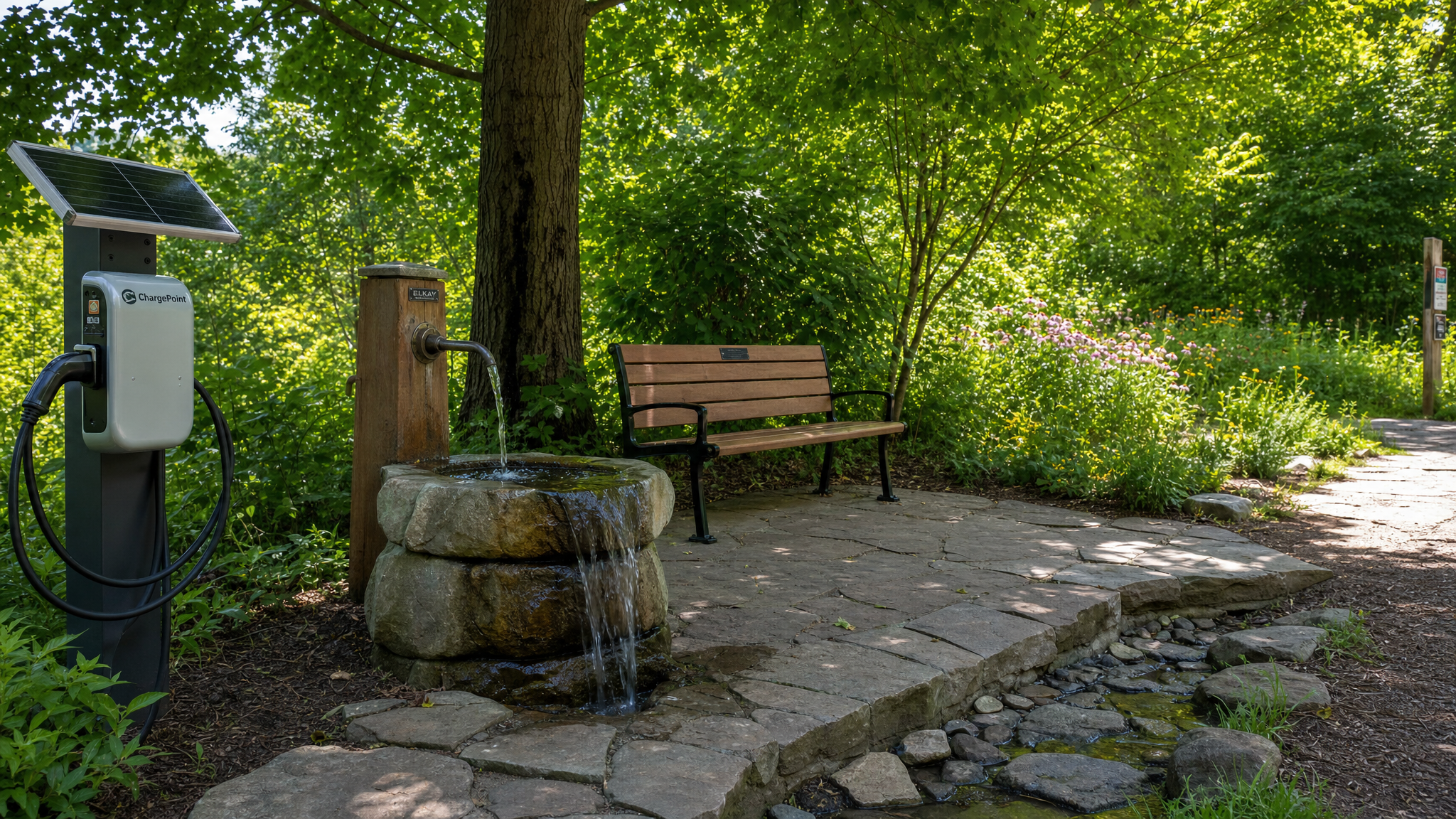
This is not a car charging station. This is a dedicated bicycle ChargePoint — a compact, solar-assisted charging station designed specifically for e-bikes and personal light electric vehicles.
The station:
- Charges electric bicycles and e-scooters only (standard USB-C and 110V outlets)
- Is solar-assisted — a small rooftop panel on the shed feeds a battery pack that powers the charging outlets
- Is mounted to the shed exterior or a nearby timber post, keeping it integrated with the natural setting
- Provides two charging ports — enough for a cyclist to rest and recharge during a trail ride
The bicycle ChargePoint reflects the foundation's pedestrian and non-motorized access philosophy. This slope is for walkers, runners, cyclists on foot, and wildlife — not cars.
Running Water Fountain
A running water fountain is installed on the terrace near the bench. The fountain:
- Draws from a small gravity-fed or solar-pumped cistern filled via rainwater collection from the shed roof
- Provides a constant trickle of clean, filtered drinking water — a genuine flowing fountain, not a push-button dispenser
- Features a natural stone basin with overflow directed into a planted drainage garden
- Includes a lower pet-height bowl for dogs and wildlife access
The water architecture here is intentional: rainwater is collected, filtered, and returned to the landscape as usable water and then directed into a planted garden. The cycle is closed — nothing wasted, nothing lost.
The Bench
A hand-hewn wooden bench sits on the terrace beside the fountain. Built from a single split log on timber legs, it faces the hillside and the deer habitat below. From the bench, a visitor can:
- Watch deer on the trail below
- Observe the valley creek and the timber bridge
- Hear the fountain running
- Rest in the shade of the maple canopy
The bench is the still point of Wesley Woods — the place where all the work resolves into a moment of quiet.
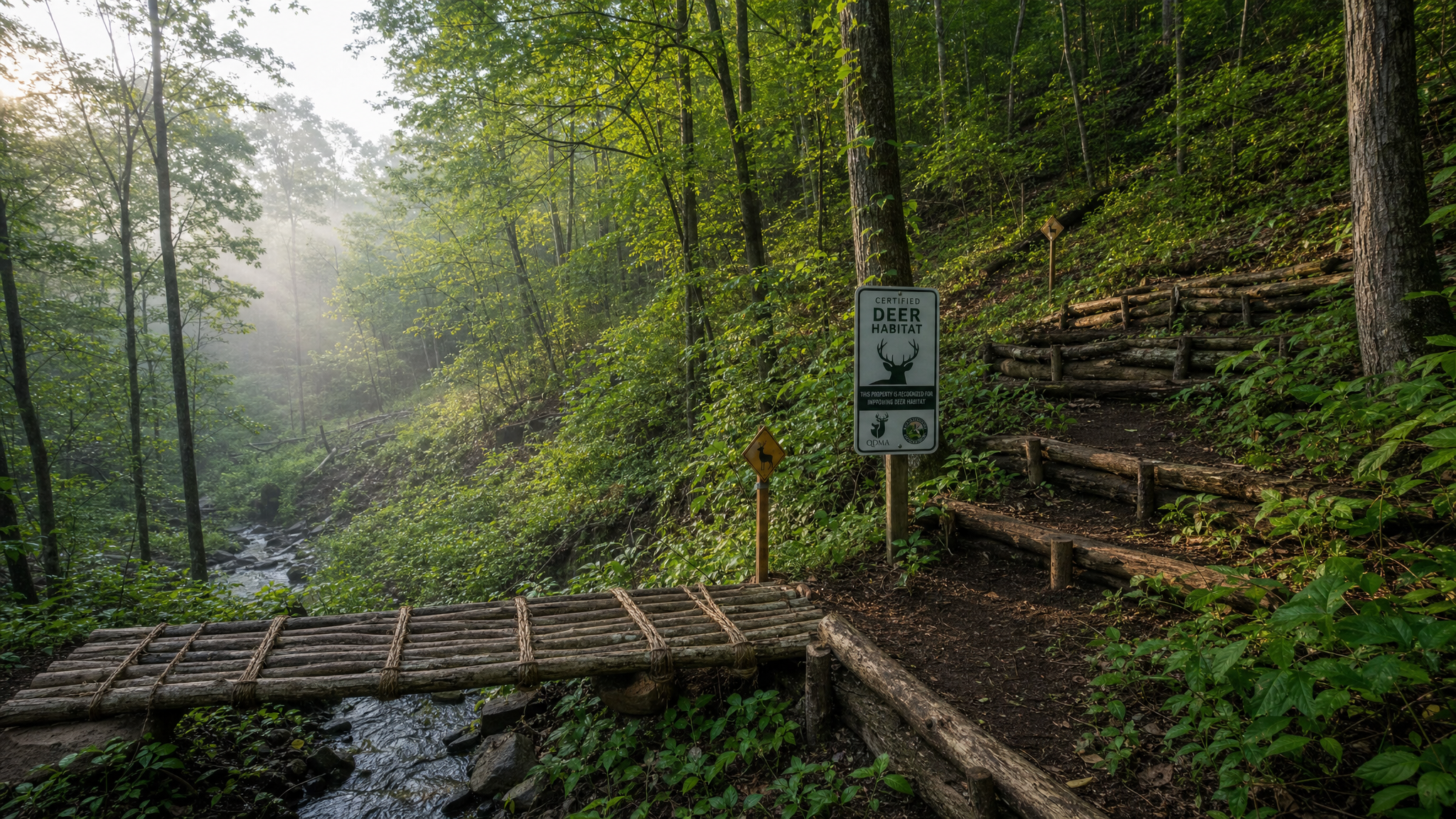
Certified Deer Habitat: The Slope as Wildlife Corridor
The entire slope — from the valley creek at the base to the terrace at the top — is being developed as a certified white-tailed deer habitat, consistent with the National Wildlife Federation Certified Wildlife Habitat program and similar designations.
The slope already functions as a natural deer trail, with the 20-foot elevation change creating ideal travel cover between the wooded hilltop and the valley floor. The foundation is formalizing this by:
- Planting native deer browse species along the slope: wild bergamot, Ohio goldenrod, native clovers, and dogwood shrubs that deer actively feed on
- Maintaining the deer trail path as an unobstructed natural corridor through the slope
- Leaving downed wood and brush piles at the slope edges for small animal cover — these also support deer that use brush edges for bedding
- Installing a certified habitat sign at the property line acknowledging the slope as designated wildlife habitat
The deer trail runs roughly parallel to the human walking path but remains separate — wildlife and people sharing the slope without direct interference.
The Garden
Along the log retaining wall and on the level terrace, a native garden is planted in the disturbed soil created during wall and path construction. The garden includes:
- Spring ephemerals: trillium, wild geranium, bloodroot — native woodland floor species
- Pollinator plants: native wild bergamot, purple coneflower, black-eyed Susan
- Deer-resistant border plantings: aromatic herbs and native ferns along the path edge to discourage deer from browsing in the garden while preserving them in the habitat zone
- Native grasses along the terrace edge for soft, natural visual framing
The garden is not manicured. It is planted and then largely left to naturalize — a managed wild garden that adds color, habitat value, and ecological function to the slope.
Drainage Design
Drainage is architecture. Every element of this slope is designed around clean water movement:
- Gravel drainage layer behind the retaining wall — carries groundwater seeping through the hillside to a collection point at the wall base
- Swale along the uphill side of the walking path — a shallow channel that intercepts surface runoff and directs it away from the path
- Valley creek crossing bridge — water moves through the natural creek channel unimpeded; the path crosses above it
- Cistern overflow garden — fountain overflow drains into a small planted bioswale that absorbs and filters the water before returning it to the soil
- Timber edging on the path — prevents soil from washing onto the walking surface
The slope sheds water cleanly from front to back, protecting both the wall and the adjacent properties.
Summary: What Wesley Woods Slope Becomes
The vacant lot slope at Wesley Woods is being transformed into:
- A certified deer habitat on a 20-foot natural slope
- A valley creek timber crossing for the walking path
- A 4-foot log retaining wall with native garden
- A small portable shed for stewardship tools
- A walking path through the slope and woods
- A bicycle charging station for e-bikes
- A running water fountain with natural stone basin
- A hand-hewn bench facing the deer habitat
All of it hand-built, low-impact, and ecologically integrated. No paving. No cars. No concrete. Just a wooded slope made useful, beautiful, and alive.