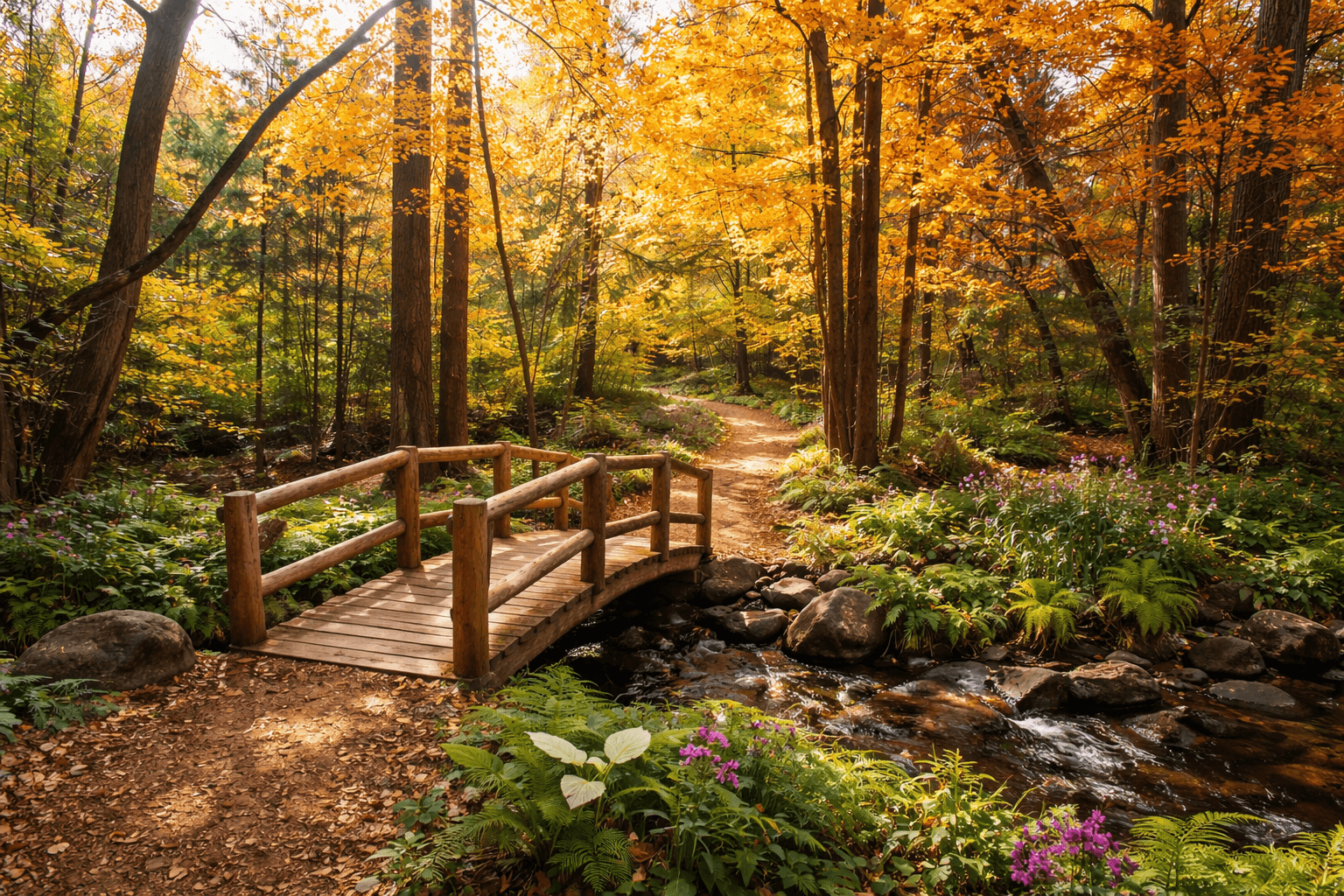
Ohio does not have endless wilderness. It has remnants — a wet woods in a metropark, an old beech stand on a land trust parcel, a creek buffer someone refused to mow.
Wesley Woods at 0.6 acres is one of those private remnants-in-progress.

What remnants look like today
- Old-growth pockets — often 5–20 acres, rarely larger; beech, maple, oak on protected slopes
- Wetland scraps — cattail and lily ponds fed by culverts and tile like our water lily work
- Steep wooded lots developers skipped — too slope, too wet, too many maples to bulldoze cheaply
Why small private projects matter
| Public land | Private stewardship |
|---|---|
| Broad access, big budgets | Gap-filling between parcels |
| Rules and permits at scale | Fast experiments — clay bowls, oak trials, trail hand-build |
| Cannot be everywhere | Neighborhood seed source for natives |
One cared-for lot:
- Filters stormwater before it hits the storm drain
- Holds acorn and maple seed locally
- Models Tree City values on private soil — Tree City USA
- Aligns with citizen conservancy spirit — Metroparks stewardship
The honest scale
You will not restore the pre-colonial forest on half an acre. You will keep a living slice — maples, wetland, paths, oaks returning — that would otherwise become mulch and turf.
Small is not trivial. It is how regional ecology survives in a suburban county.