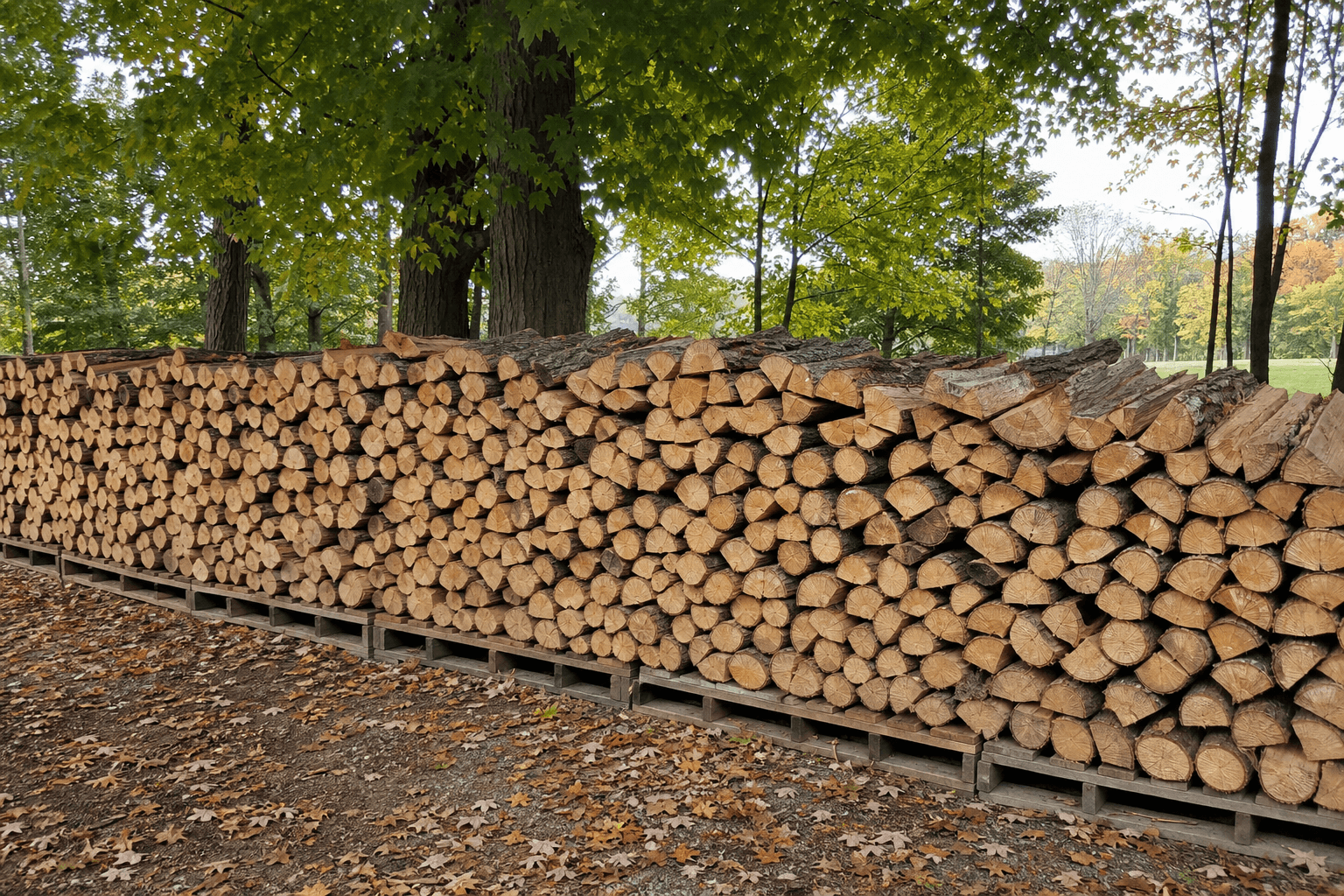
Fresh-cut wood is green wood — full of moisture. It hisses in the fire, builds creosote, and throws sparks. Seasoned wood is what you want: split, stacked, aired, and dry enough to burn clean.
On a stewardship lot like Wesley Woods, firewood often comes from the same cleanup that feeds dead and fallen wood management. Seasoning is the step between cut and burn.
How long does it take?
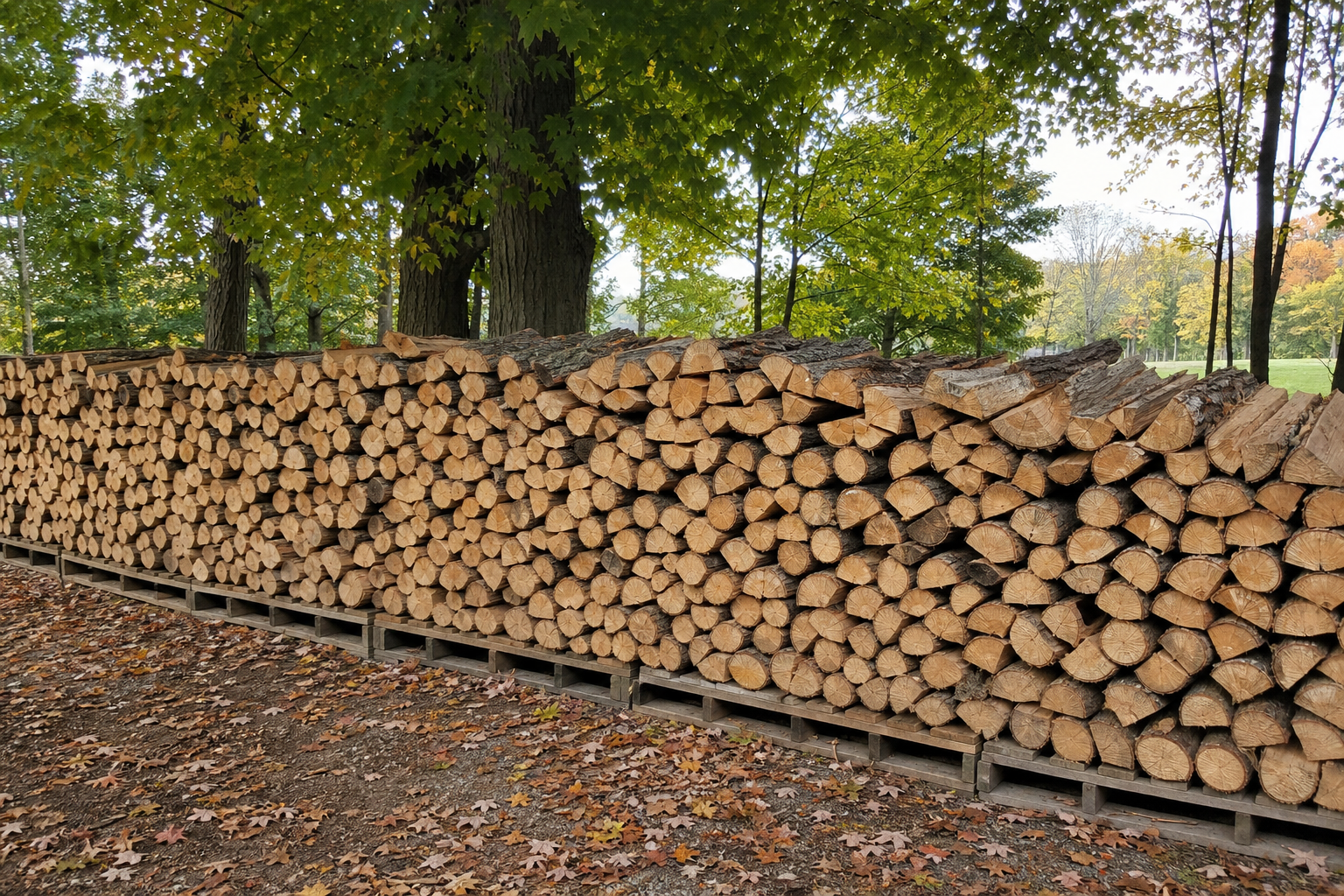
Hardwood in Ohio — oak, maple, hickory — usually needs 6 to 12 months after splitting. Softwood dries faster but burns faster too. A log left whole can take two years or more.
Rule of thumb: split this season, burn next winter.
Stack it right
- Split to length — 16 inches fits most fire rings and stoves
- Split to width — thinner pieces dry faster
- Cut ends out — bark side up or down, but expose end grain to the air
- Raise off ground — pallets, rails, or stones; never sit wood in mud
- Cover the top only — a tarp or roof over the stack; leave sides open
- Single rows beat tight cubes for airflow
How to know it is dry
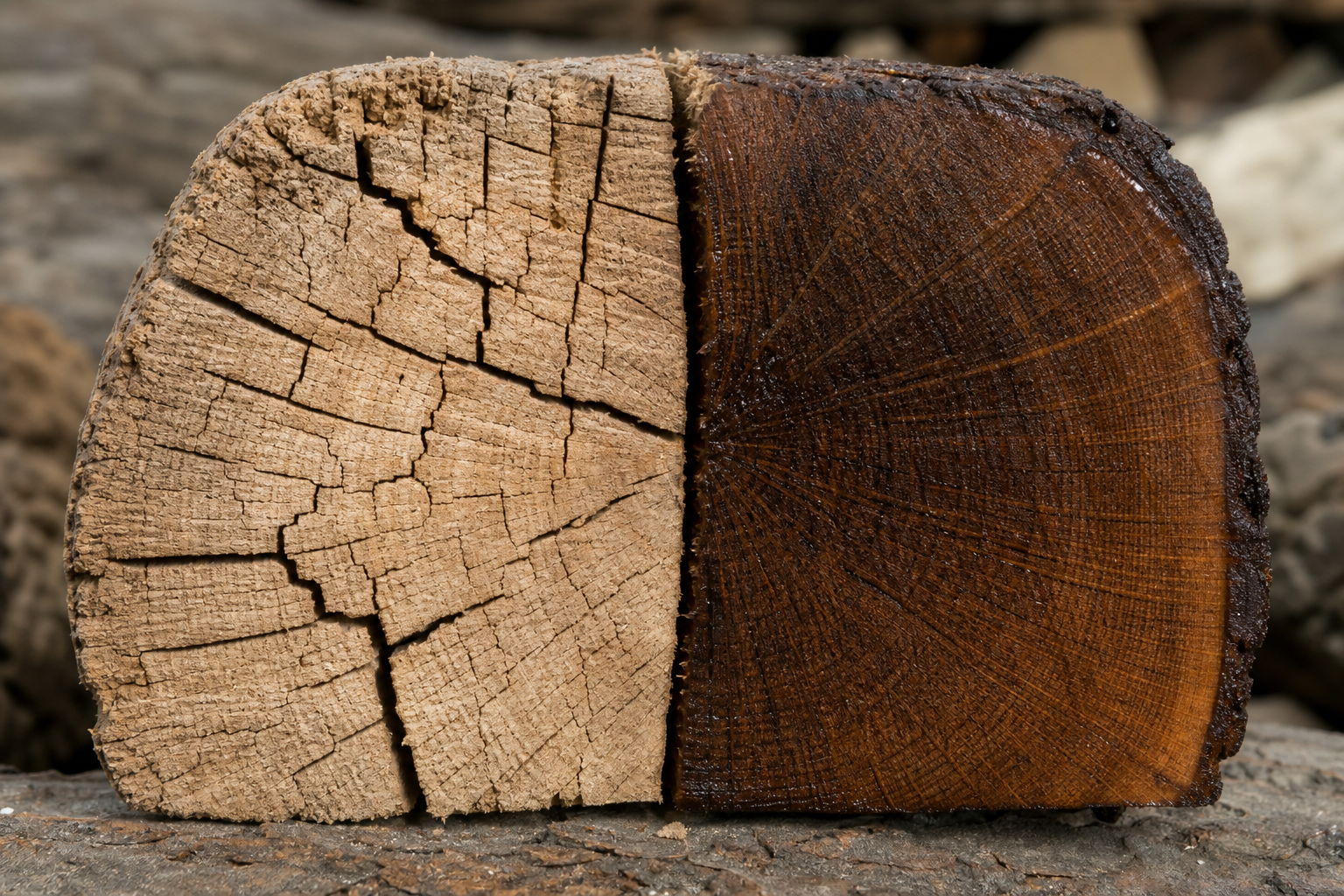
- End grain checks and cracks
- Dark color, lighter weight in your hand
- Two pieces knock together — sharp crack, not a dull thud
- Bark slips or falls off easily on some species
Below 20% moisture is the target for home heating. Campfire wood can be a little higher if you are burning small and hot in an open ring — but never burn sopping green logs in a closed space.
Where to stack on site
Keep stacks away from structures, off trails, and outside root zones of trees you are protecting. Face the row toward the prevailing wind if you can. Do not bury stacks in the wet creek margin.
Seasoned wood is stored energy. Stack it like you mean to use it — neat, dry, and ready when the fire ring is cleared and the campfire safety checklist is in hand.