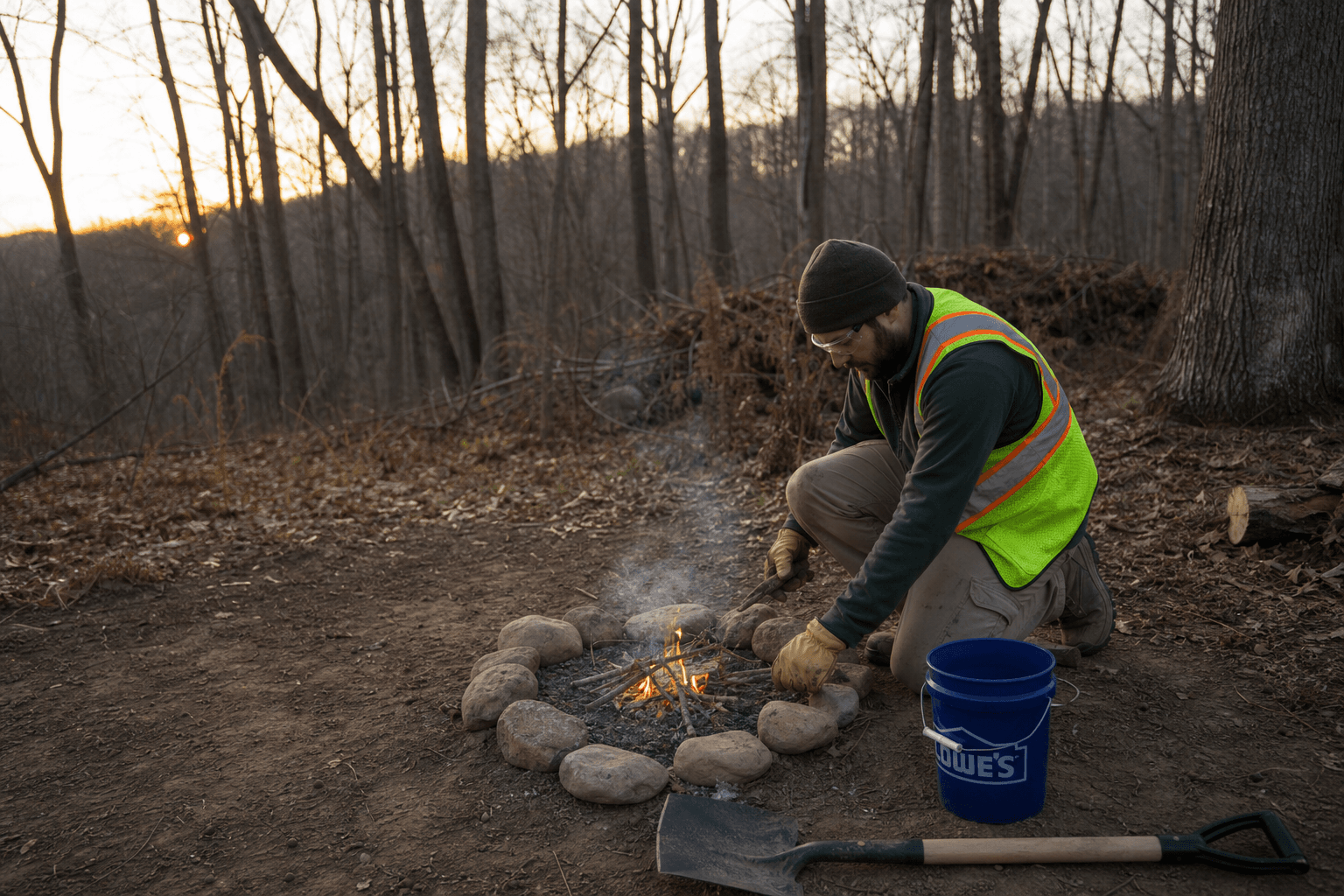
A survival fire is not a bonfire. It is the smallest flame that solves the job — warmth, light, boiling water, signal — without spreading into the woods you are trying to steward.
On private land at Wesley Woods, fire is a tool with rules. Read this before you strike a match near maple duff and leaf litter.
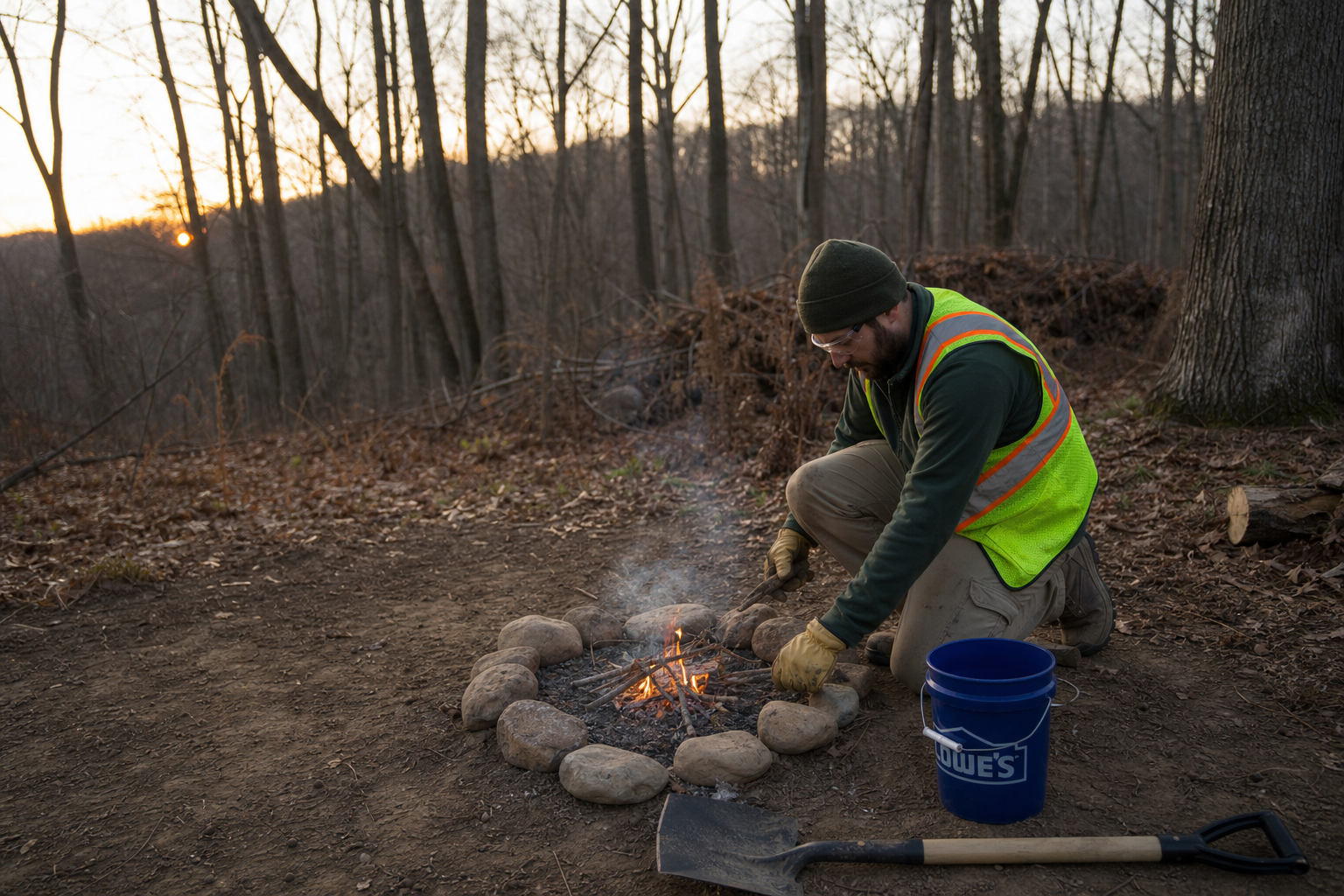
Pick the site
- Mineral soil or stone — not peat, not root mat, not leaf pack
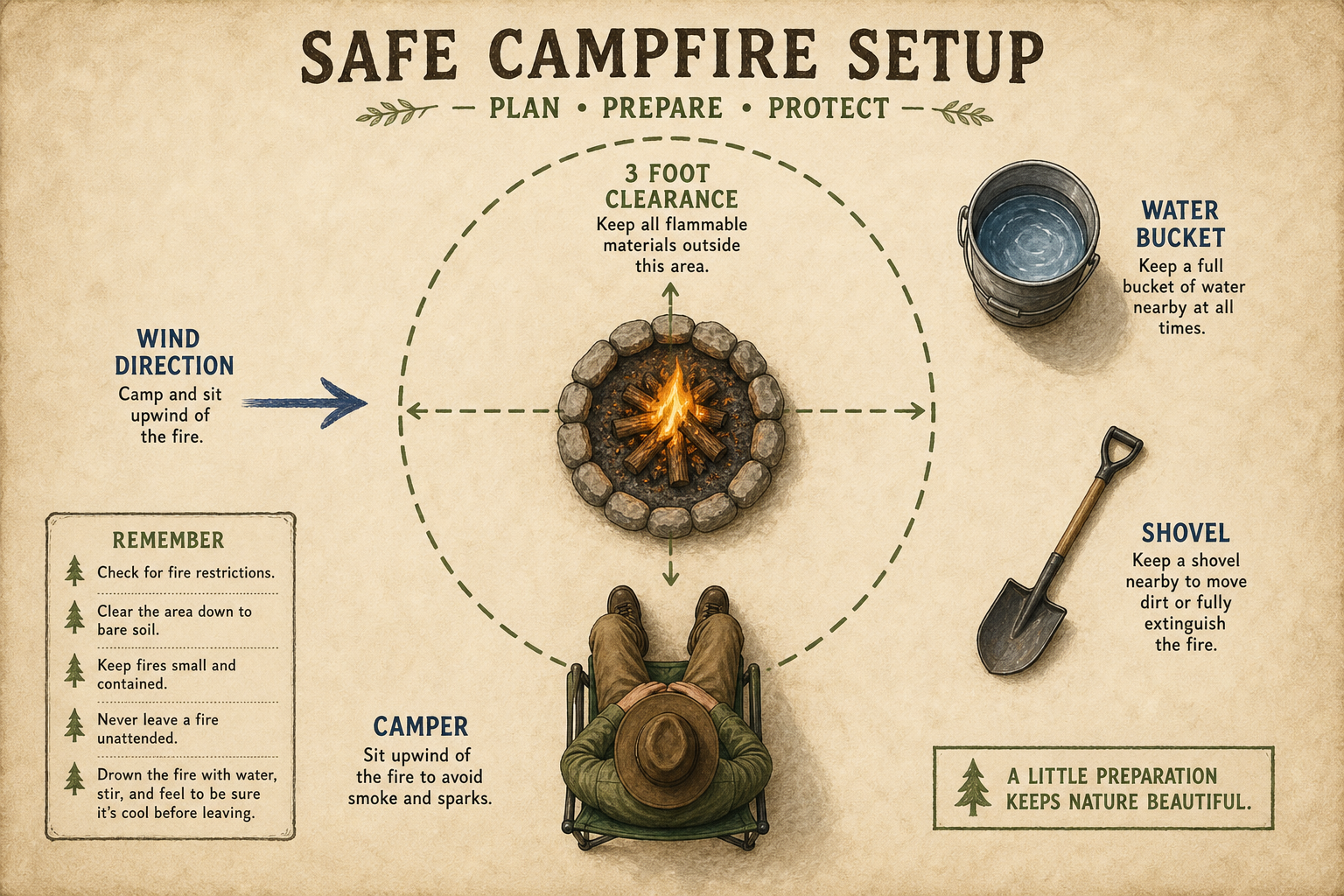
- Clear a circle — scrape down to dirt for 3 feet beyond the flame on all sides
- Look up — no low branches, no dead hangers
- Look around — stay 15 feet from logs, brush piles, and structures when you can
- Check wind — sit upwind; keep sparks from blowing into the treeline
If you cannot clear a safe ring, do not burn. Use a camp stove instead.
Build small — survival methods
Teepee — kindling leaning to a point; good for quick light, add pencil-thick sticks, then thumb-thick. Keep it knee-high or less for a survival fire.
Log cabin — parallel sticks square; stable and controlled for cooking.
Platform / base — dry sticks on wet ground so your tinder is not sitting in moisture.
Use only seasoned wood when you can — see how to season firewood. Green wood smokes, pops embers, and fights you.
Never use: gasoline, lighter fluid floods, tire rubber, or pressure-treated scrap.
Safety gear within arm's reach
Before you light:
- Water — bucket or charged hose to the edge of the ring
- Shovel — dirt to smother if wind kicks up
- Gloves — for adding wood without burns
- Headlamp — so you can see embers after dark
While it burns
- Keep the fire small enough to step over in one stride
- Never leave it unattended
- No burning during high wind or dry burn bans
- Watch children and pets at double your normal distance
- Do not throw leaf piles or vine debris on for fun — they flare and float sparks
Put it out — really out
The test: cold to touch.
- Let wood burn to white ash where you can
- Pour water — sizzle until it stops
- Stir ash and dirt with the shovel
- Pour again
- Hold the back of your hand above the bed — if heat remains, repeat
A fire you walk away from warm is a fire you do not own.
When not to burn at all
Skip open fire when:
- Ohio or local burn ban is active
- Leaf litter is dust-dry and wind is up
- You are under overhead lines or tree preservation zones under review
- You have not cleared the ring and staged water
Fire belongs in the toolkit — not on the news. Build it small, watch it close, kill it cold. That is survival fire done right.