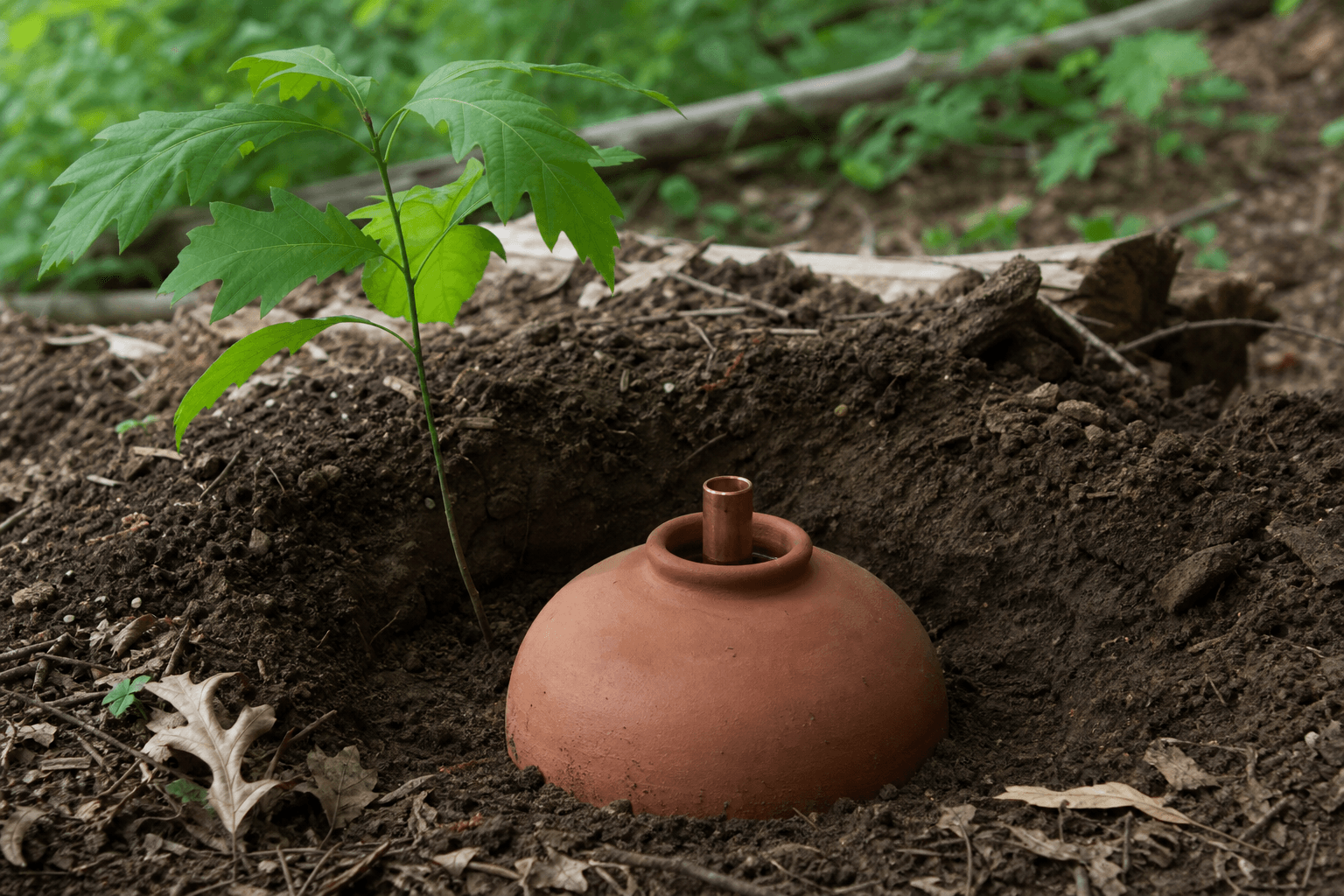
Sprinklers and drip line do not fit every woodland edge. Clay wash bowl irrigation is older tech: a buried porous vessel that bleeds water slowly into root zone soil — olla-style, adapted for restoration pockets.
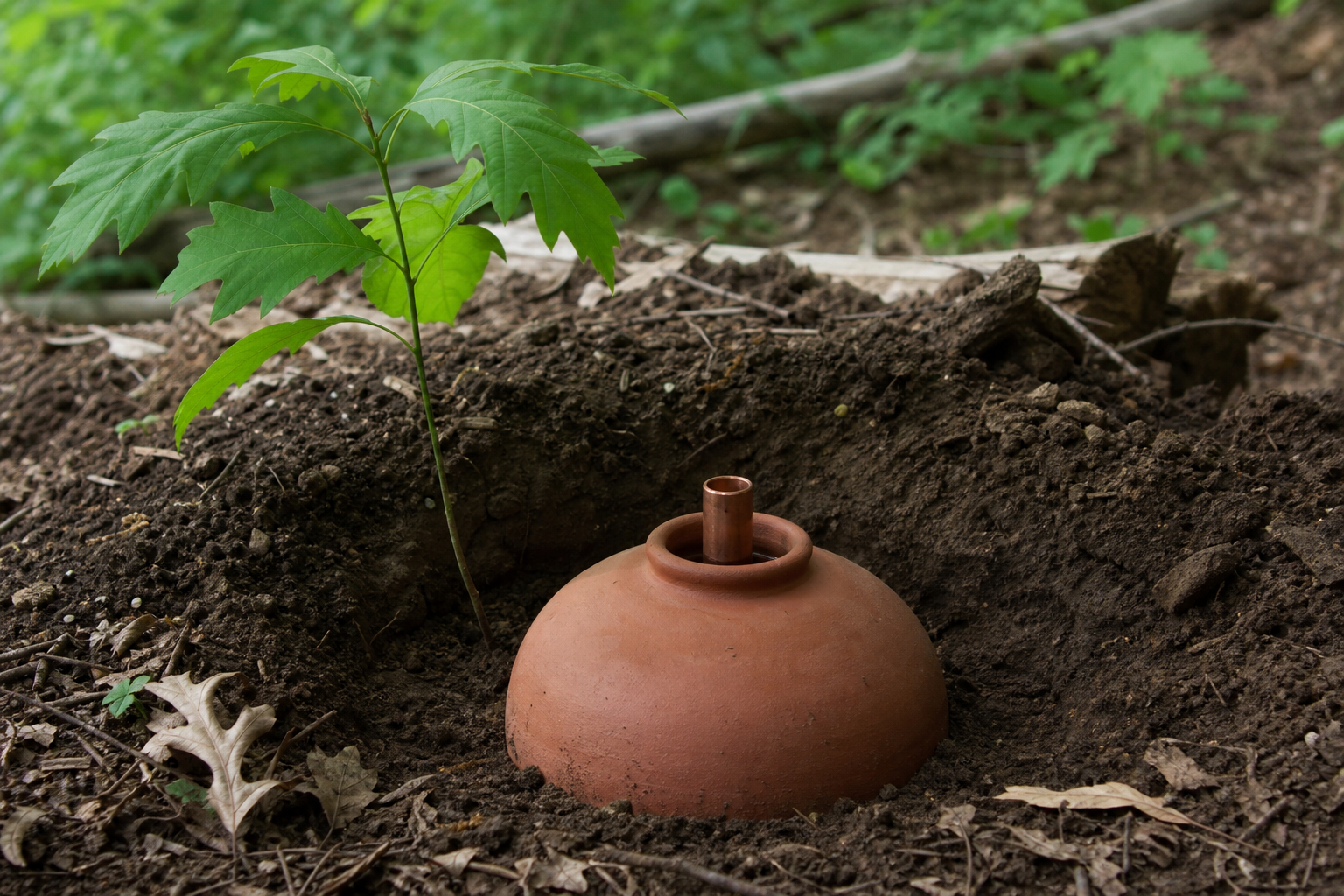
How it works
- Fire or pit-fire clay bowl — unglazed, thick-walled, holds 1–5 gallons
- Bury near roots — lip at or just below soil surface
- Fill by hand from bucket or hose at the bowl
- Soil pulls moisture through the clay wall over hours or days
- Copper tube or sleeve (optional) — clean outlet, reduces algae at the fill point; copper also limits some root intrusion at the lip
Where it fits at Wesley Woods
- New oak saplings in the maple clearing — see oak planting guide
- Apple grove toes near the creek — not in standing water
- Garden test plots in dark tilled soil where acorns emerged
Limits
- Not for 600-foot drainage runs — that is trench engineering
- Freeze risk — empty bowls in winter or pull them
- Deer and frost heave — mark locations
Low tech, low flow, right at the root. Fill it when you visit. Let clay do the rest.