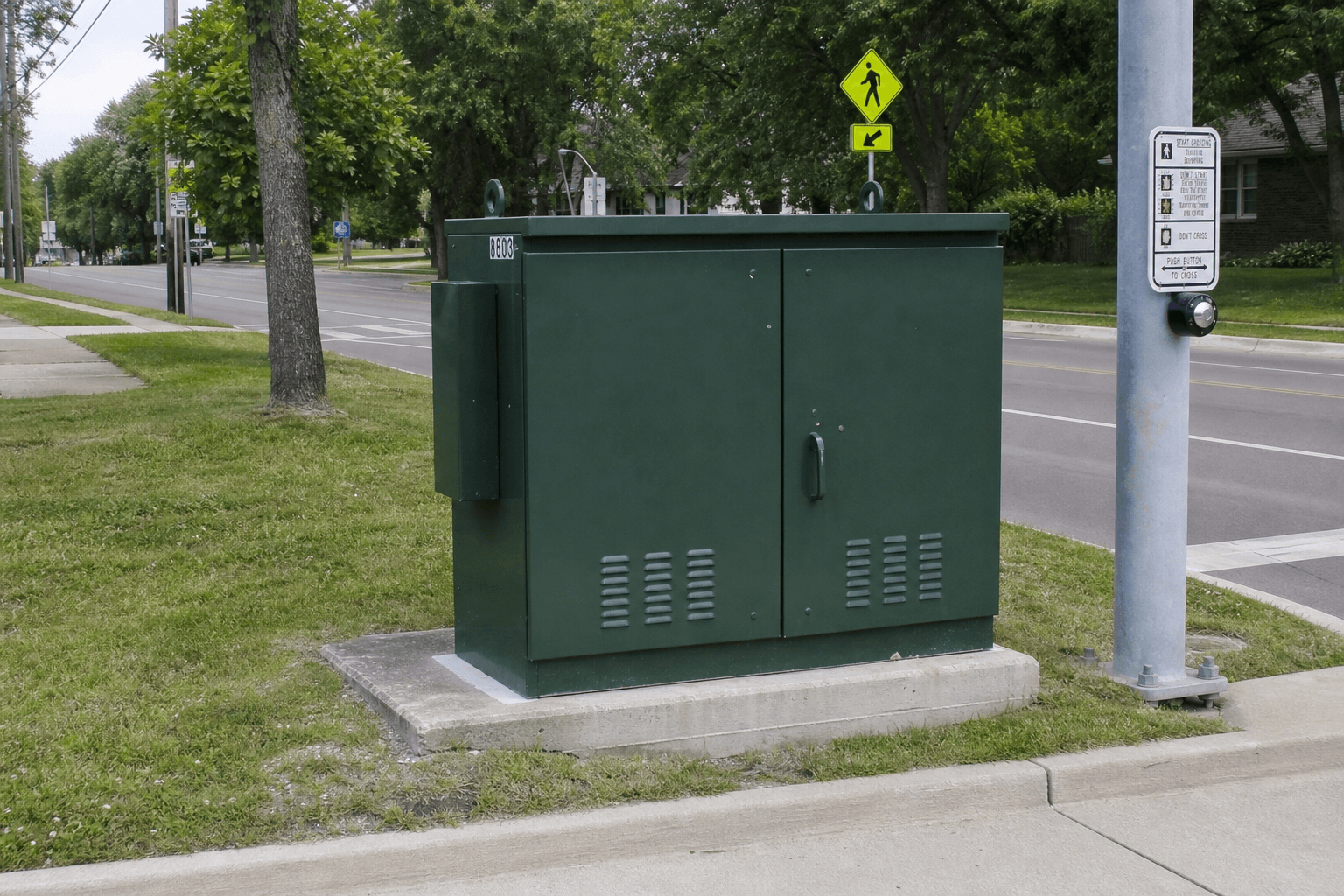
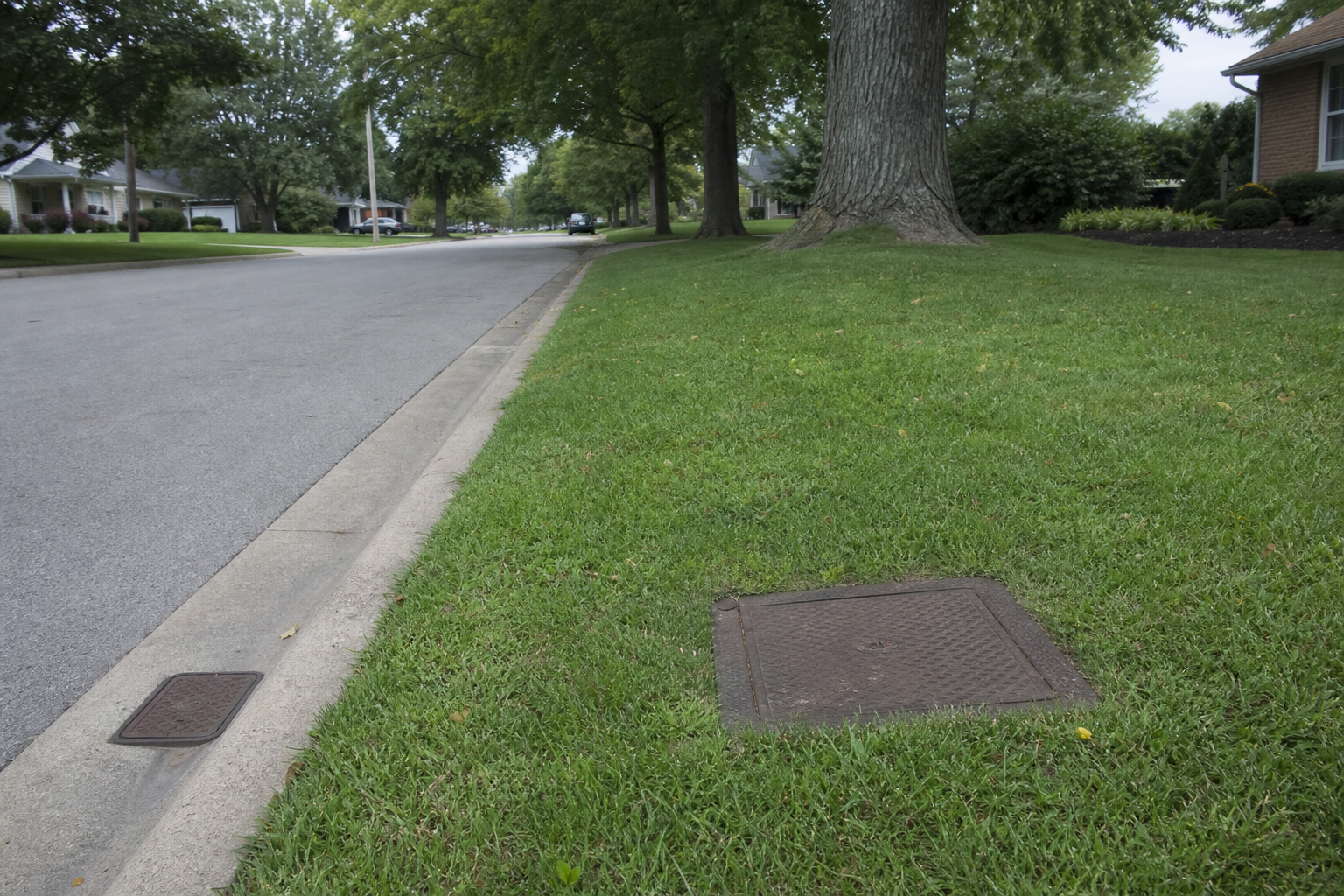
Walk the edge of Wesley Woods and you will see infrastructure in the grass — lids flush with turf, cabinets on pads, cables heading toward the intersection. One common piece is the traffic utility box: a locked enclosure for signal controllers, detectors, communications, or fiber splice gear.
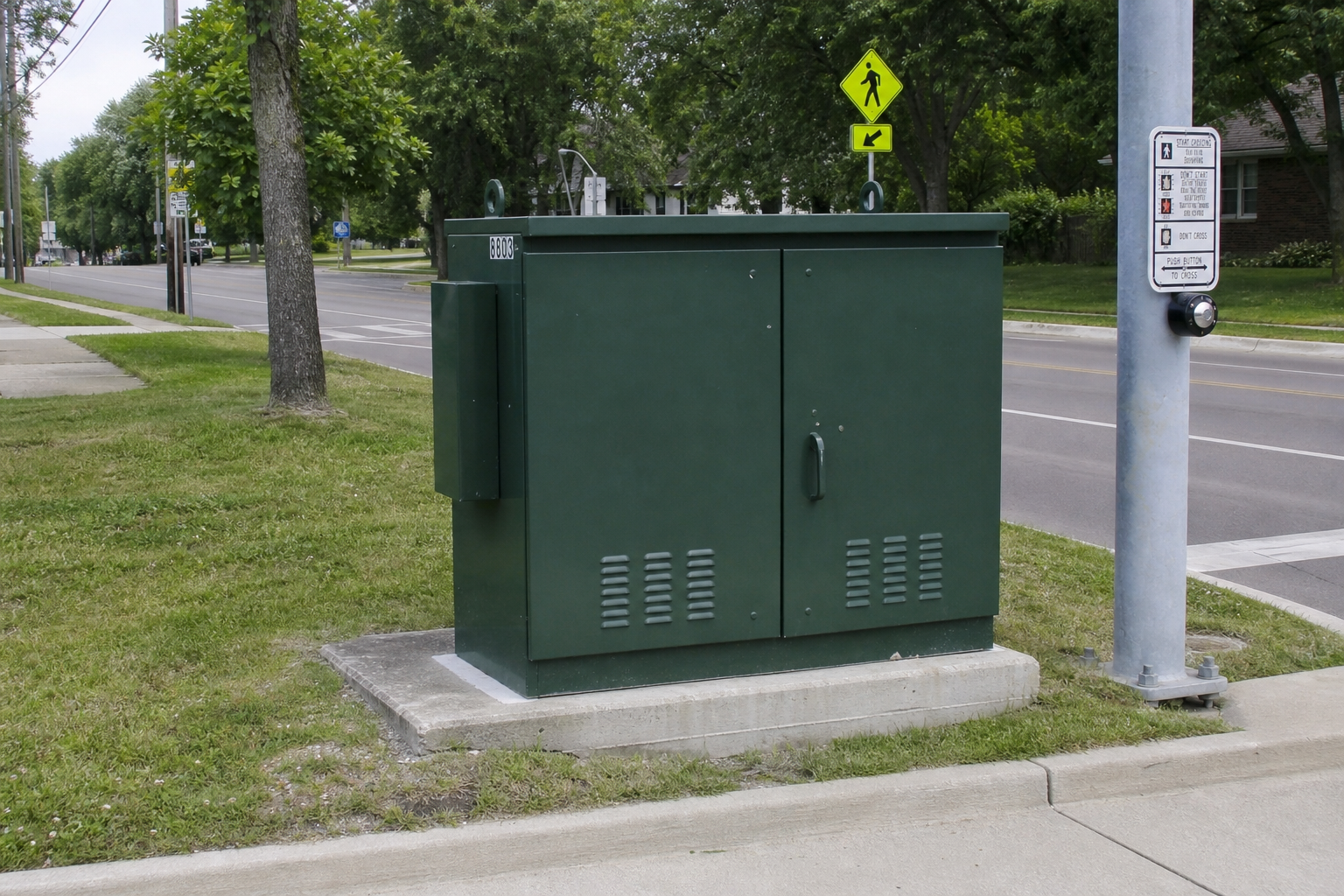
What it does
- Runs traffic signals — timing, detection loops, conflict monitoring
- Houses fiber or network gear for city systems, cameras, or interconnect
- Terminates cables between underground conduit and above-ground devices
- Provides access for utility and city staff — not general storage
Why it is in the ROW
The public right-of-way is the corridor for roads, utilities, and signals. Equipment must sit where wires already run — usually along the street frontage, not on private woodland interior.
Related: monument boxes and survey markers mark boundaries; traffic boxes mark operating systems.
What landowners should know
- Do not bury, pave, or plant over known utility locations — call 811 before dig
- Setback for fences and structures — city zoning and ROW agreements apply
- Access must remain for city crews — permanent beds or walls block maintenance
- Power is metered or fed from utility — not something to tap privately
On your site plan
When filing grading, tree, or drainage plans, show:
- ROW line
- Known boxes, manholes, and monuments
- Proposed trench routes that avoid conduit paths
Factual picture: the box is part of the street machine. Your restoration work stops at the ROW unless permits say otherwise — same respect you give storm drain connections and road funding context.