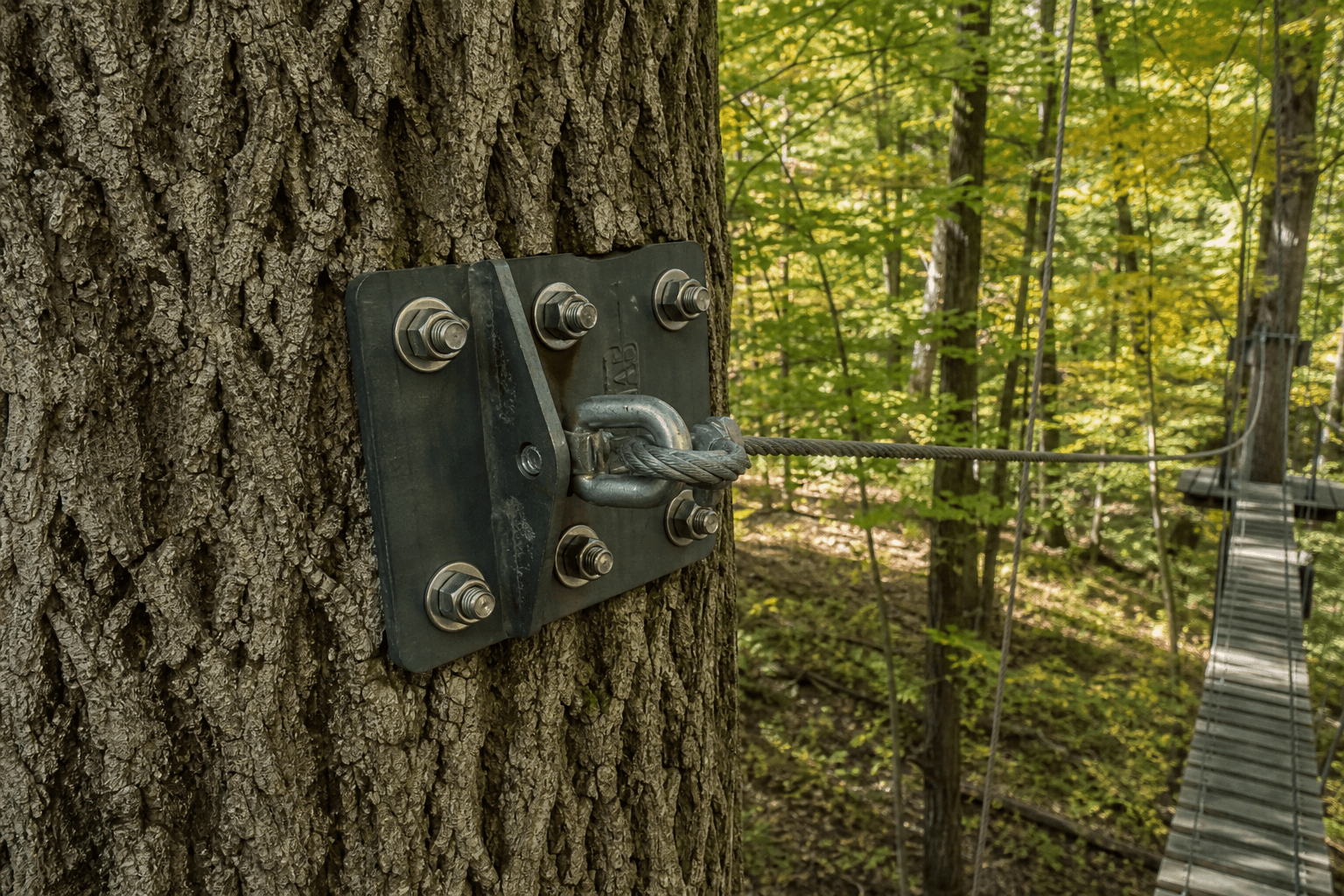
A mature oak does not read like a steel beam. It sways, grows, and checks with seasons. Still, builders and arborists have bridged two points with living trunks for decades — when the math and the biology both agree.
Load and species
Rough field thinking:
- Hardwood over softwood for point loads (oak, maple, hickory vs. fast-growing poplar)
- Measure diameter at attachment height — not ground dbh
- Dynamic load (people, wind gust) multiplies static weight — design for movement
TAB attachments
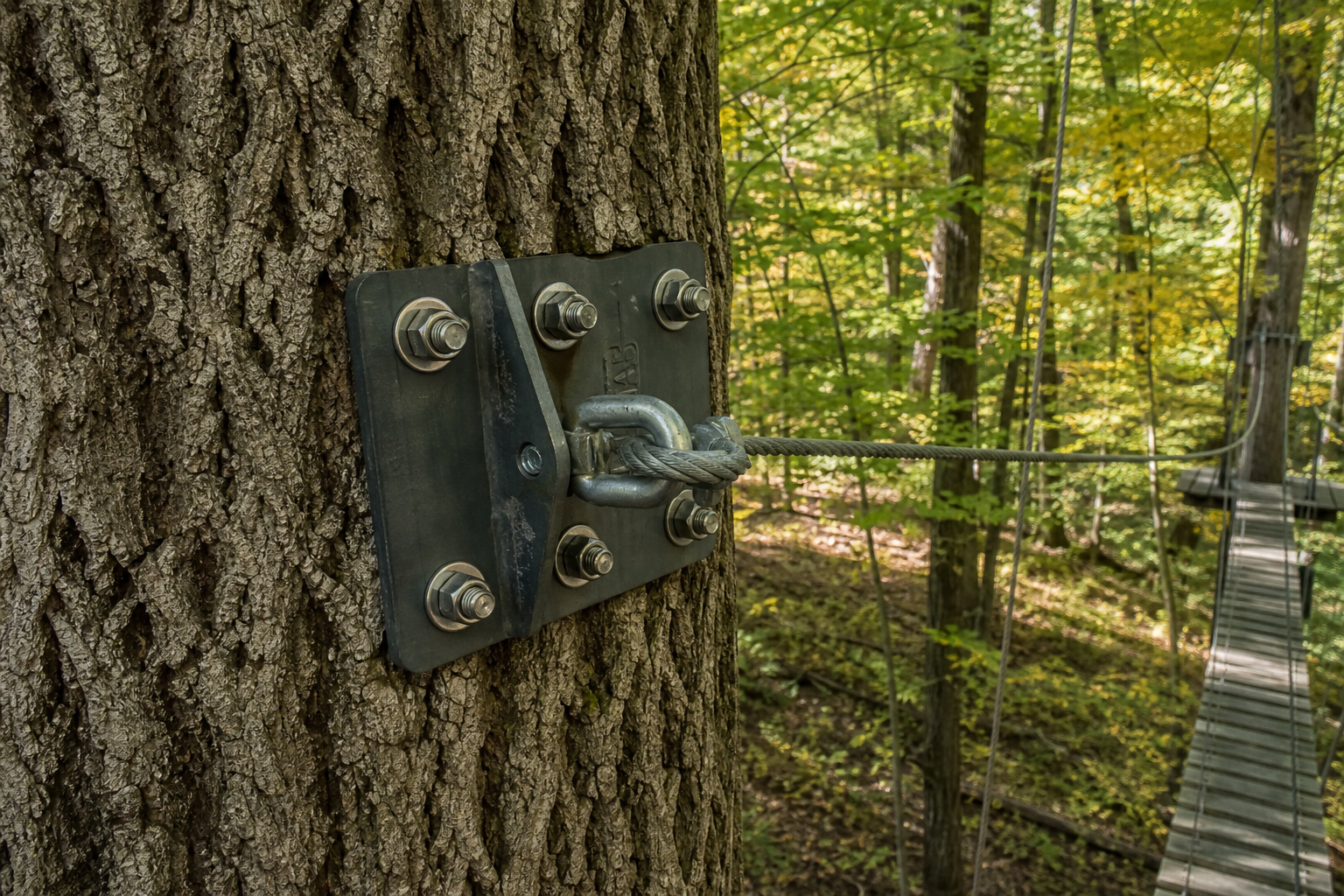
A Tree Attachment Bolt (TAB) spreads load through a thick trunk wall. Rules of thumb from experienced installers:
- One TAB per primary support limb or trunk face
- Keep multiple trees in the system so no single stem carries everything
- Inspect hardware every season — trees grow around steel
Natural platforms
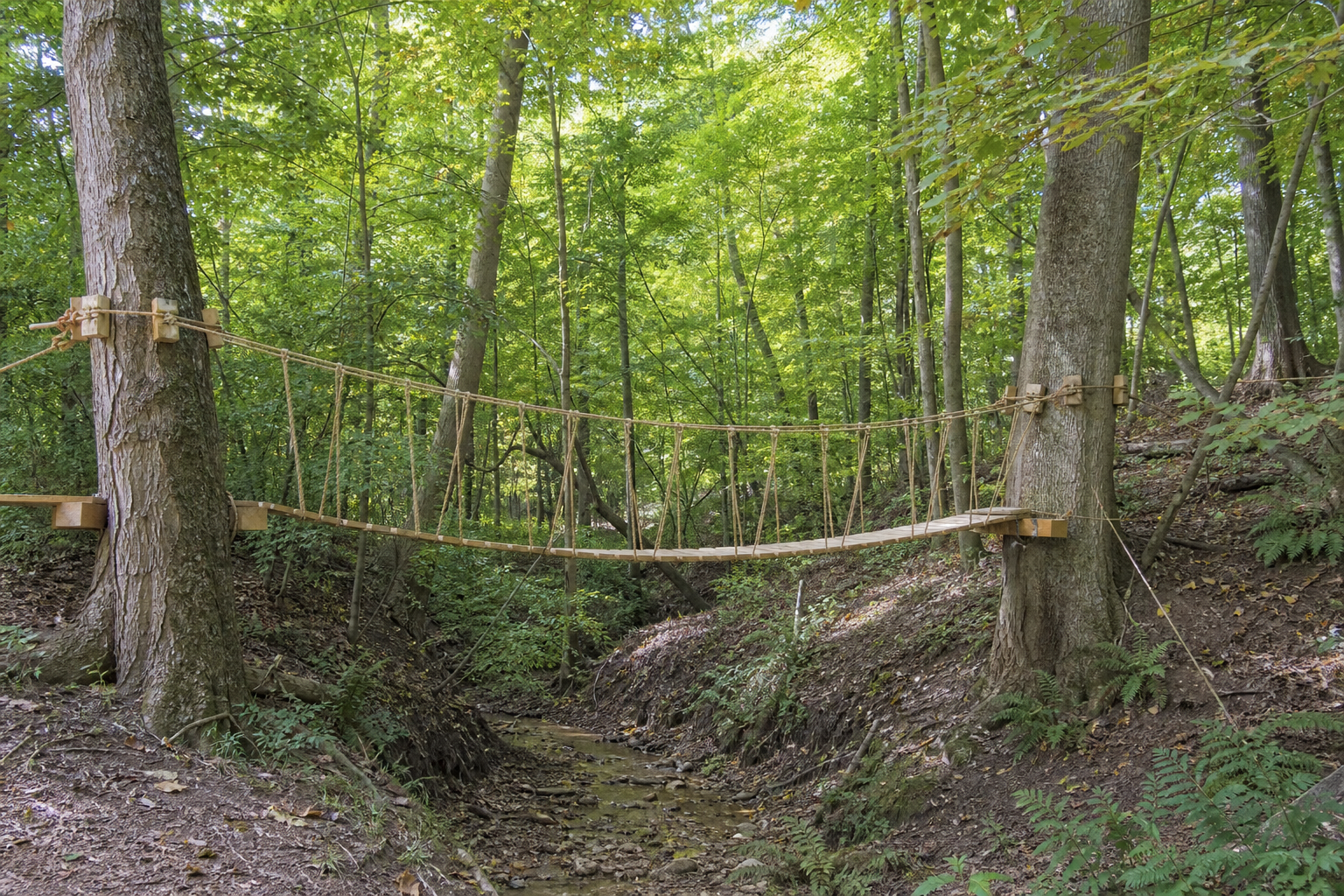
Sometimes the bridge is a log stringer between two living stems, decked lightly for foot traffic only — like our trail slope access work. Keep spans short, tiebacks flexible, and never guess on public-safety structures without an engineer.
Trees are foundations that breathe. Work with sway, not against it.