You do not need a botany degree to read a woodland. You need one good leaf, decent light, and a few patterns burned into memory. At Maple Wesley Woods and across Northeast Ohio, four broadleaf trees show up constantly — maple, oak, poplar, and river birch. They are easy to confuse from a distance. Up close, the leaves tell a clear story.
Sugar Maple — the five-pointed classic
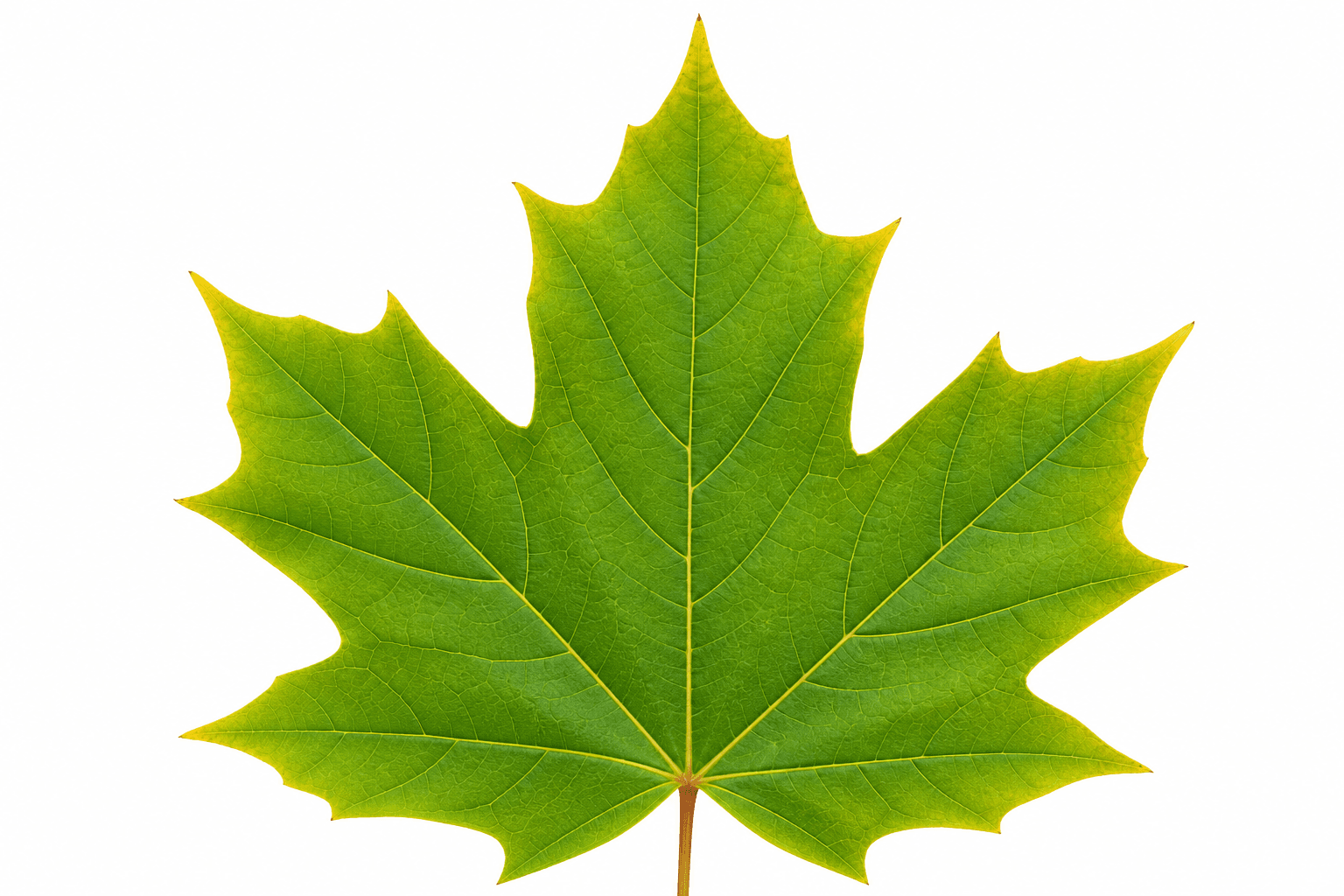
Sugar maple is the tree this property orbits around. Its leaf is the one on the Canadian flag — but Ohio-sized and very real in your hand.
Look for:
- Usually 5 lobes with pointed tips
- Smooth U-shaped valleys between lobes (not deep, sharp cuts)
- Opposite branching on the twig (leaves and buds in pairs)
- Fall color that runs orange to fire red on healthy trees
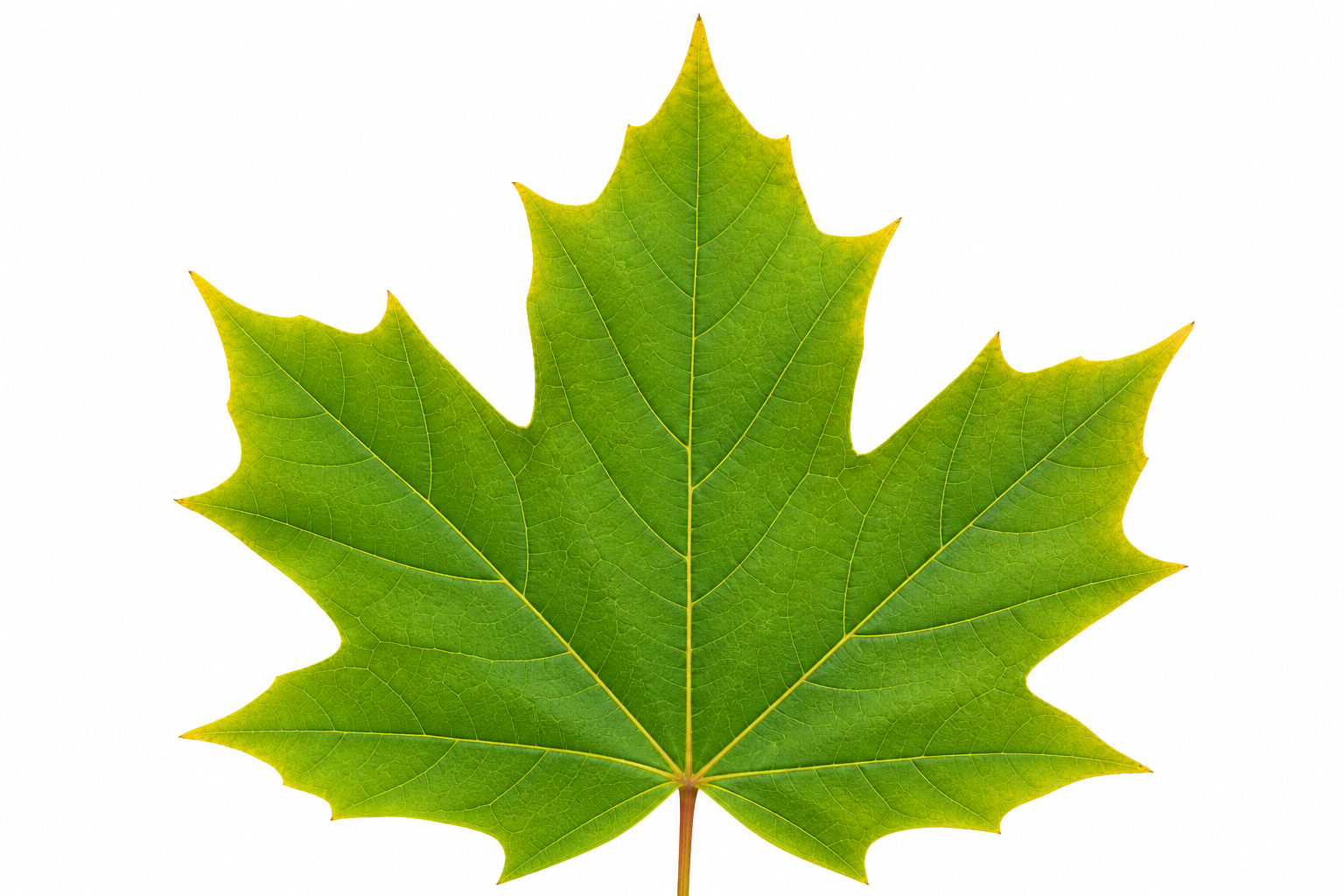
If you see a maple-shaped leaf on the trail at Wesley Woods, there is a good chance you are standing under a tree the Foundation is actively protecting in the maple canopy and vine cleanup work.
White Oak — rounded lobes, no sharp drama
Oaks are sturdy, long-lived trees with a different silhouette entirely. White oak is one of the most common native oaks in this region.
Look for:
- Rounded lobes — the tips look like fingers with soft ends, not spikes
- Lobes that feel balanced and symmetrical
- Alternate branching (one leaf per node, staggered down the twig)
- Acorns with a bumpy cap — if fruit is on the ground, that confirms it
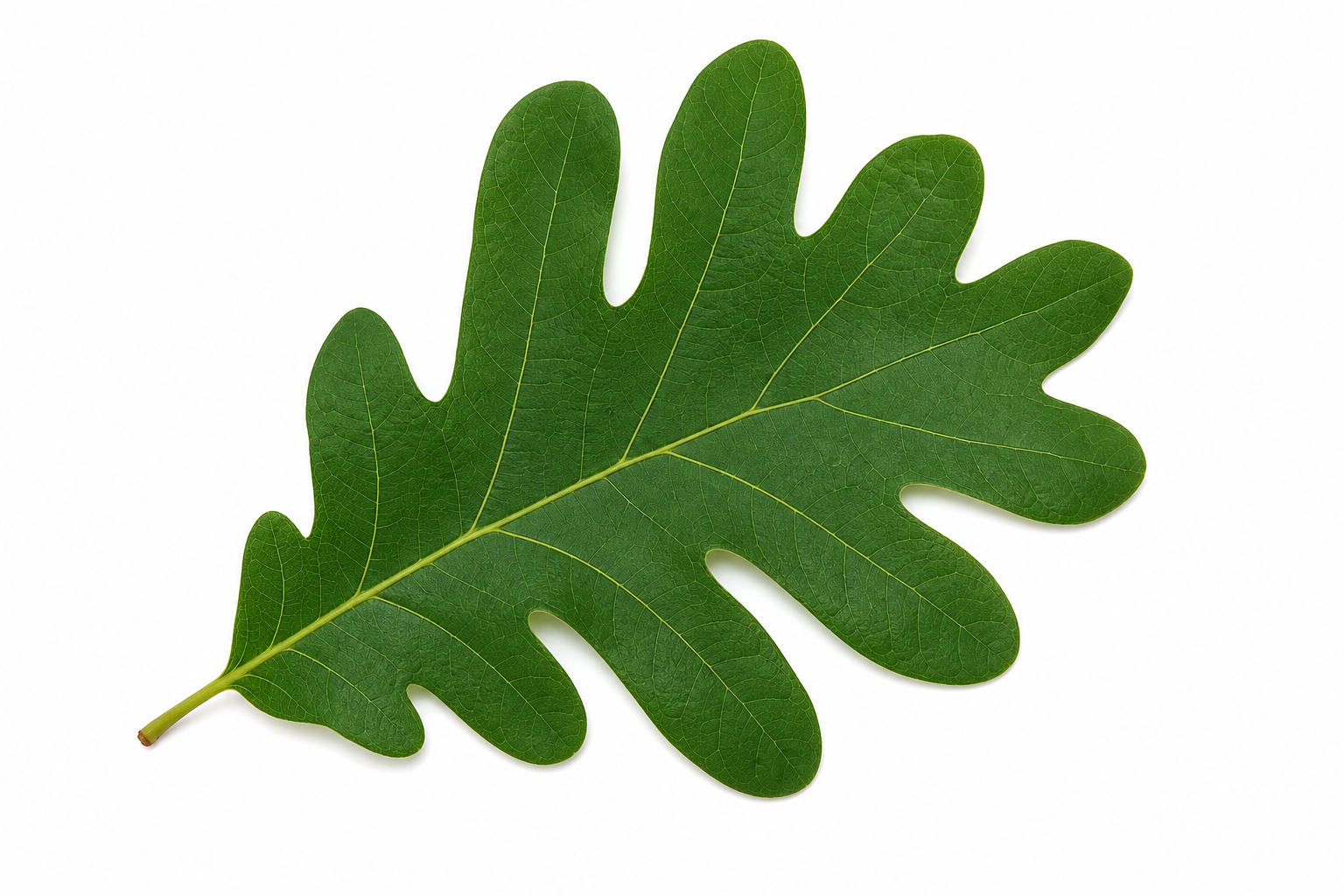
Oak leaves are usually wider and heavier than maple leaves. In summer they read deep green and leathery. In fall, white oak often turns burgundy-brown and holds on the tree longer than maples do.
Poplar / Cottonwood — the big triangle
When people say "poplar" on a Ohio job site, they often mean eastern cottonwood or a hybrid poplar. The leaf is hard to mistake once you see the shape.
Look for:
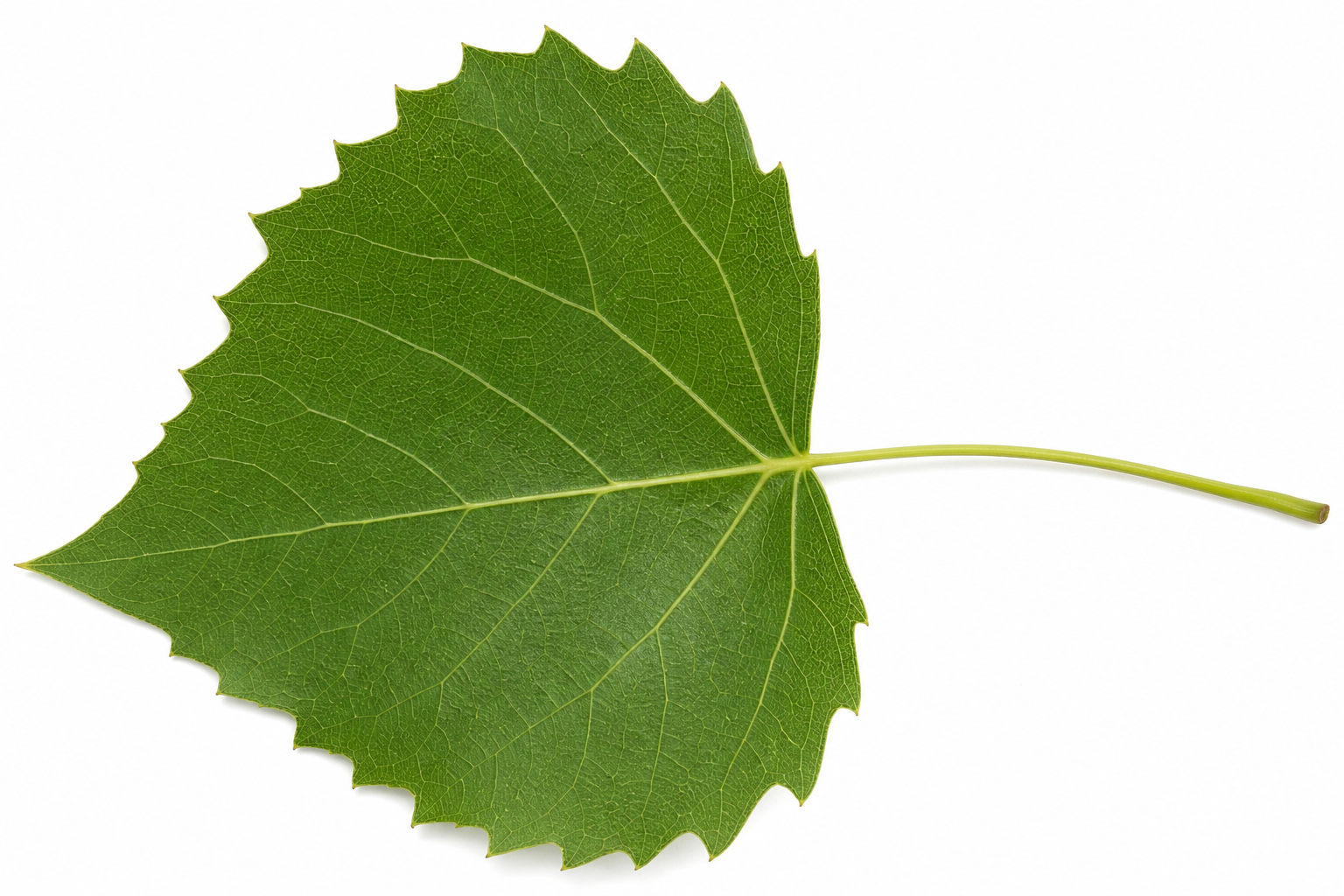
- Broad triangle or heart shape
- Coarse teeth along the margin
- A long, flattened petiole — the leaf stalk almost looks like it was pressed in a book
- Leaves that flutter in the slightest wind (that stalk is why)
Poplars grow fast near wet ground and disturbed edges. You will see them along creeks, low fields, and old fence lines — not usually as the dominant canopy tree on a mature maple slope, but common nearby.
River Birch — the long teardrop
This is the one that throws people off. The leaf does not look like maple, oak, or poplar at all.
Look for:
- Long, narrow teardrop or lance shape — often 7 to 9 inches on vigorous shoots
- Finely serrated edges
- Bright yellow-green color in spring and summer
- Peeling cinnamon-colored bark on the trunk (the real giveaway if the tree is mature)
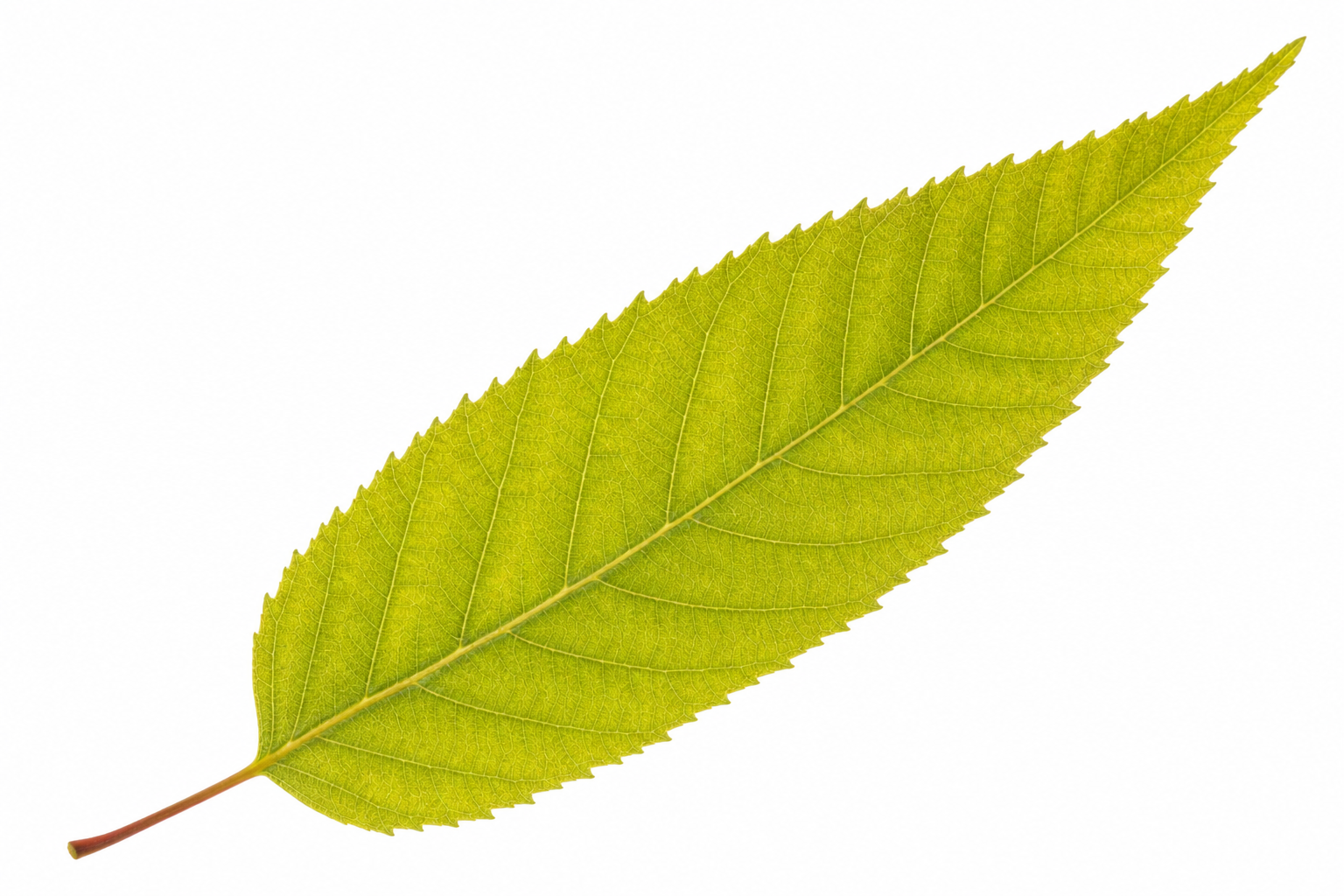
River birch loves slope toes, creek margins, and damp pockets. If you find a giant narrow leaf on the ground after a storm, check the bark before you call it a willow.
Quick comparison
| Tree | Leaf shape | Branching | Easy clue |
|---|---|---|---|
| Sugar maple | 5 pointed lobes | Opposite | Classic maple form |
| White oak | Rounded lobes | Alternate | Soft finger tips, acorns |
| Poplar | Triangle / heart | Alternate | Long flat leaf stalk |
| River birch | Long teardrop | Alternate | 7–9 in. leaf, peeling bark |
How to practice on site
Pick up one leaf of each type and line them on a log or bench. Maple and oak are the pair most people swap — remember pointed vs. rounded lobes. Poplar and birch are the pair people mix on wet ground — remember triangle vs. long teardrop.
Good identification changes how you steward land. You cut differently near oak root zones. You prioritize maple canopy protection. You know which seedlings to favor and which fast colonizers to manage.
That is the whole game: look down, read the leaf, then look up with a clearer picture of the forest.