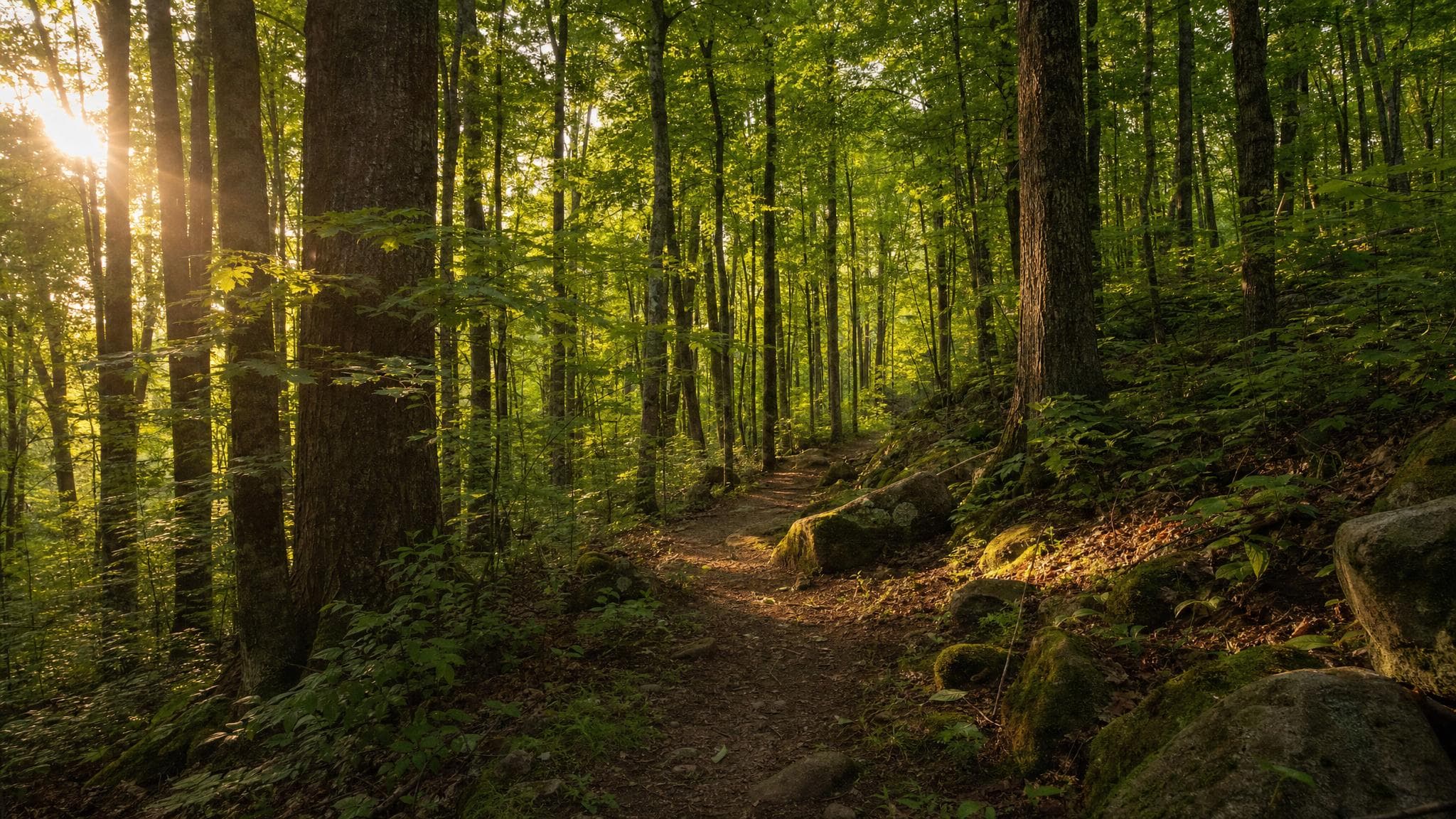
Every fall someone asks the same question on a wooded lot: do I rake these leaves up, or leave them down?
At Wesley Woods, the answer is simple most of the time.
Usually up. Rake them up, move them off the trail, off young plantings, off drainage lines, and into a compost pile or a designated pile zone on the property. Sugar Maples drop a lot of volume. Left thick and wet, maple leaves mat together, hold moisture, smother what you are trying to grow, and turn a path into a slip hazard.
Down only when they are dry and papery. Seasoned leaves — the ones that have already dried on the ground, curled at the edges, and sound like paper when you step on them — can stay down or be spread down intentionally as a thin mulch layer. They break down differently than fresh fall drops. They breathe. They do not form the same dense wet mat.
That is the whole rule. Up for fresh and heavy. Down for dry and papery.
Why Up Is the Default
Fresh maple leaves from a mature tree come down fast and land flat. Rain sits on them. They stack. Within a week you can have an inch or more of packed material that acts more like a tarp than mulch.
On a private stewardship property like Wesley Woods, that causes real problems:
- Trails get slick and hold water on the surface instead of shedding it
- Native plantings under establishment get smothered before they can compete
- Low points along the creek margin stay wet longer than they should
- Tick habitat gets thicker in dense leaf litter where people actually work
Raking up does not mean sending leaves to a landfill. It means moving them to where they can compost hot and fast, then come back as soil. The full composting approach at Wesley Woods covers piles, turning, and nitrogen mixing — this article is just the first decision: up or down.
When Down Is Right
Dry, papery, seasoned leaves are a different material. You know them when you see them:
- Curled, brittle edges
- Light weight — a rake full feels like air compared to wet October drops
- They crackle underfoot instead of sticking together
- Often already partially broken down from weeks on the ground
Those leaves can go down in thin layers (one to two inches max) around established trees, on undisturbed slope away from trails, or as top mulch on beds where you want slow breakdown without a wet seal.
Do not confuse "down" with "ignore." Even papery leaves piled six inches deep will eventually mat. Spread thin. Place on ground that drains. Keep them off paths and out of planting crowns.
The Quick Field Test
Before you decide on a patch of ground, grab a handful.
Rake up if: leaves are damp, cling together, smell like wet forest floor, or pull apart in a solid sheet.
Leave or spread down if: leaves crumble in your hand, crackle dry, and fall apart individually when you drop them.
When in doubt on a managed property, rake up. You can always return finished compost later. You cannot easily undo a smothered planting or a flooded trail edge.
Where Each Direction Applies at Wesley Woods
| Zone | Direction | Why |
|---|---|---|
| Walking trails | Up | Safety, drainage, visibility |
| New native plantings | Up (fresh) / thin down (papery only) | Protect young plants |
| Undisturbed wooded slope | Down if papery; leave natural if light | Ecological function |
| Creek and low drainage | Up | Keep water moving |
| Compost zone | Up | Active breakdown |
| Street tree lawn edge | Up | Neighbor-facing neatness, no matting |
How This Fits Maple Season
Sugar Maples are the fan favorite on this property for a reason — fall color, canopy shade, the whole identity of the place. They also drop hard. Treating every leaf the same — always leave them, or always bag them — misses what the land actually needs.
Up is stewardship. Down is reward, but only when the leaves have earned it by drying out first.
"Fresh maple leaves are work," said a Foundation steward. "Papery ones are mulch. Learn to tell them apart and you stop fighting the forest and start working with it."
Rake up the wet mats. Let the papery ones lie. Compost what you lift. The maples will drop again next year either way.