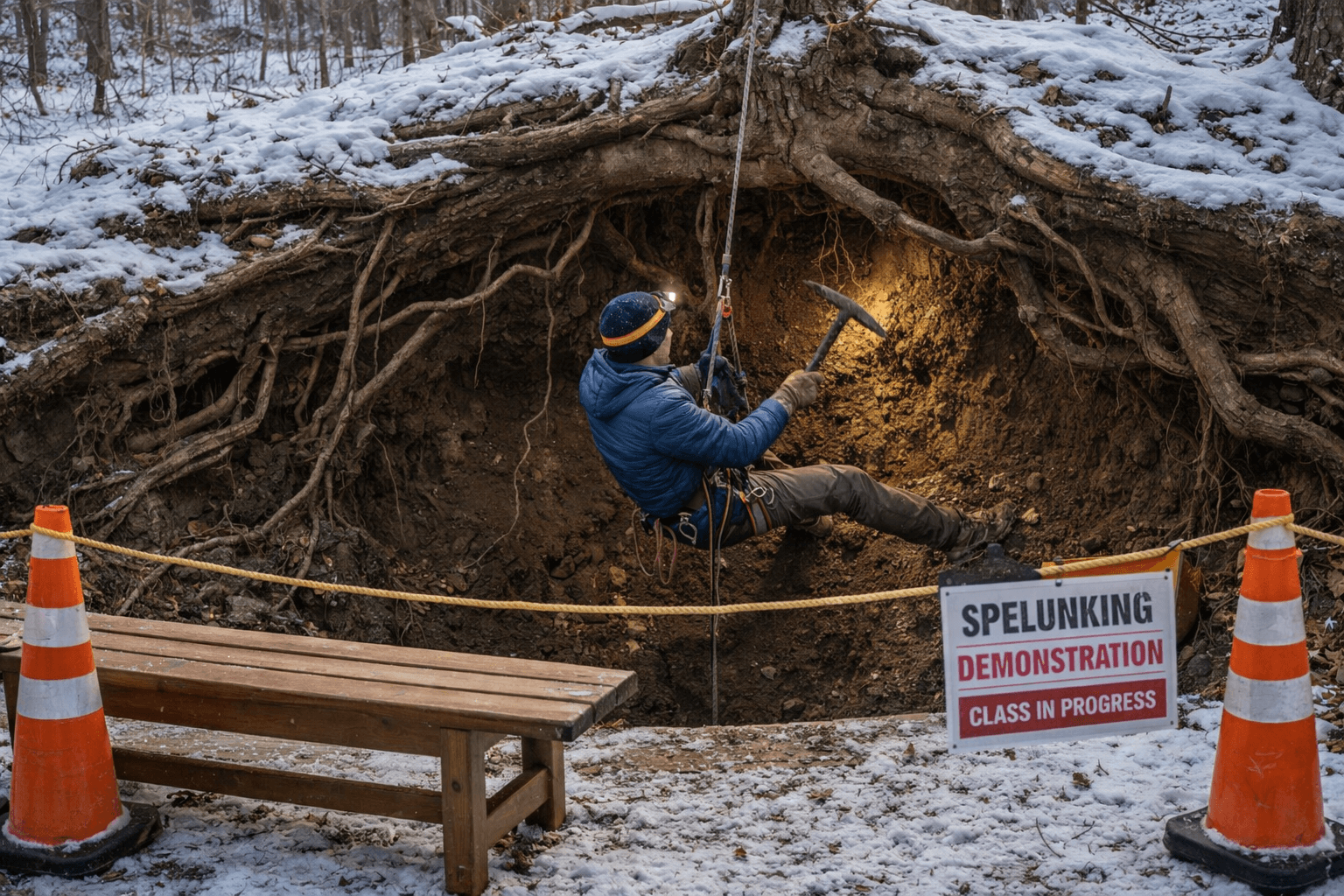
Wesley Family Foundation is launching a new Spelunking Safety program designed to teach safe exploration techniques for sloped and challenging terrain. The program emphasizes proper safety protocols while conducting important environmental work.
The program covers three main areas: erosion and soil testing, tree and root climbing safety, and trail carpentry. On sloped land, participants learn to conduct erosion soil testing and composting, including accessing under dirt through tree root systems. This work requires careful navigation of root systems to reach underground areas for soil analysis.
Safety is paramount in this program. We teach tree and root climbing safety with guidance from forestry public service experts who specialize in safe climbing techniques. These experts bring years of experience in navigating complex root systems and understanding the structural integrity of trees and their root networks.
The program also includes specialized carpentry training for trail heads and tails, building safe access points and structures that support exploration while protecting the natural landscape. These structures help create sustainable pathways for ongoing environmental monitoring and research.
"Safety comes first in everything we do," said a program coordinator. "We're bringing together forestry experts, public safety professionals, and carpentry specialists to ensure participants have the knowledge and skills to work safely in challenging terrain."
The program is designed for those interested in environmental research, soil health monitoring, and safe exploration practices. It connects to our Ground and Learn programs, providing hands-on experience in land stewardship and environmental science.
Participants will learn to assess soil conditions, understand erosion patterns, and safely access underground areas for testing and composting work. All activities are conducted under the supervision of certified safety experts.
The Spelunking Safety program represents our commitment to combining environmental work with rigorous safety standards, ensuring that important research and stewardship activities can be conducted safely and effectively.