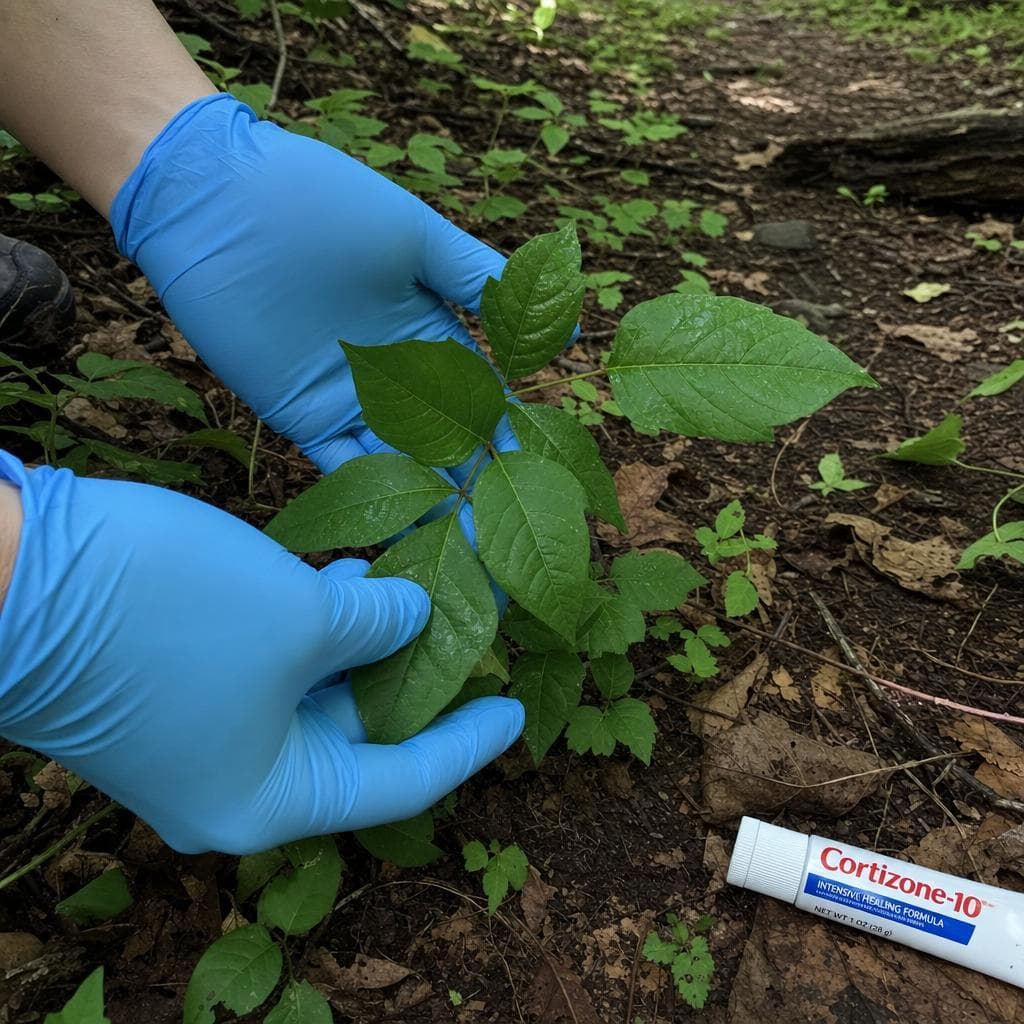
Poison ivy doesn't announce itself. It doesn't have a warning label. It looks, for most of the year, like a completely unremarkable green plant — which is exactly what makes it one of the most common causes of outdoor misery in the Midwest.
At Wesley Woods, we've cleared a lot of it. Foundation team members have learned, sometimes the hard way, what to look for and how to handle it. This guide is the condensed version of that education.
How to Identify Poison Ivy
The old saying is worth repeating: leaves of three, let it be. Every poison ivy plant, whether it's a low ground vine, a shrub, or a thick climbing vine going up a tree trunk, grows its leaves in clusters of three leaflets. That's the starting point.
Beyond the three-leaflet rule, here's what to look for up close:
Leaf shape and texture. The leaflets are pointed at the tip, slightly irregular at the edges, and often have a subtle waxy or glossy sheen — especially on new growth. They're not perfectly smooth and symmetrical; they look a little asymmetrical, which is part of what trips people up.
Color by season. In spring, new growth is often reddish or bronze before it turns green. In summer, it's fully green and easy to overlook. In fall, it goes vivid orange, red, and yellow — beautiful, and still absolutely capable of giving you a rash even after the leaves have fallen. Dried leaves and stems retain urushiol (the oil that causes the reaction) for months.
The climbing vine. When poison ivy grows up a tree, it produces a thick, hairy-looking vine covered in aerial rootlets. People call it "hairy rope." If you see a vine on a tree trunk that looks fuzzy or bristled — don't grab it, even without leaves present.
White berries. In late summer and fall, small clusters of waxy white or yellowish-green berries appear. Birds eat them and spread the seeds, which is a big part of why poison ivy shows up everywhere.
The Moment You Think You've Touched It
Time is actually the key variable here. Urushiol begins absorbing into skin within minutes. The faster you act, the less severe the reaction.
Step one: cold water and soap, immediately. Not hot water — hot water opens your pores and makes absorption worse. Use cold water and scrub with soap. Wash the area thoroughly. This won't prevent a reaction entirely if you've had contact, but it can significantly reduce severity.
Step two: change your clothes. Urushiol stays active on fabric. The shirt you were wearing, your gloves, your boots — all of it needs to be washed. Handle contaminated clothing carefully and avoid touching your face.
Step three: wash anything else that made contact. Tools, phone, dog fur, backpack straps. If you pet your dog after they ran through poison ivy, you can get a reaction from that contact. Secondary exposure is real and often the source of mysterious rashes.
Treating the Rash
The itching typically appears 12 to 72 hours after exposure. The rash itself is not contagious — you cannot spread it to another person, and scratching doesn't spread it to other parts of your own body (though your fingernails can introduce bacteria and cause infection). The delayed appearance at different spots is because skin absorbed different amounts of urushiol at different rates.
For mild to moderate reactions:
- Hydrocortisone cream (cortisone) — over-the-counter 1% hydrocortisone reduces inflammation and itching. Apply as directed. It won't make the rash disappear overnight, but it takes the edge off.
- Calamine lotion — the classic pink stuff. Dries out the rash, cools the skin, reduces oozing if blistering has occurred.
- Cool compresses — a damp cloth or cold pack applied for 15-20 minutes several times a day.
- Oral antihistamines (Benadryl) — particularly useful at night when the itching tends to get worse. The drowsiness is a feature in this case.
When to see a doctor:
- Rash on your face, especially near your eyes
- Severe blistering covering large areas
- Rash spreading or not improving after 1-2 weeks of OTC treatment
- Difficulty breathing (rare but serious — can occur if you burn poison ivy and inhale smoke)
A doctor can prescribe oral corticosteroids (prednisone) for serious cases, which will clear things up significantly faster than OTC options alone.
Always Work With Gloves
If you're doing any trail work, brush clearing, or land restoration in a wooded area — gloves are non-negotiable. Heavy-duty nitrile or rubber-coated garden gloves provide a real barrier. Thin cloth gloves don't.
After working in an area where poison ivy might be present, remove gloves carefully (peel them off from the inside out), and either dispose of them or wash them thoroughly before reuse. The same applies to long sleeves and pants. Barrier clothing is your first line of defense, not an afterthought.
The General Rule: Spiky, Thorny, or Red — Stop
Poison ivy is the most common hazard at Wesley Woods, but it's not the only one. A practical rule for anyone who doesn't have a botany background:
If a plant has spiky or thorny leaves, step back. It could be Japanese barberry (invasive, extremely thorny, documented on the property), multiflora rose (another thorny invasive), or something else entirely. None of them are worth a puncture wound or worse.
If a plant has red, magenta, or unusually vivid stems or leaves, be cautious. Pokeweed — which grows on and near the Foundation property — has deep magenta stems and is toxic if ingested. Elderberry can look similar to some edible plants but requires positive ID before handling. Reddish new growth on a three-leaflet plant is probably poison ivy.
The move in either case is the same: take a photo, leave it alone, and call the city. Strongsville's Parks Department and city arborist are free public resources. They'd rather help you identify a plant than deal with a report of someone getting hurt on a trail.
The Bottom Line
Poison ivy is manageable if you know what you're looking at. Learn the three-leaflet rule. Wear gloves. Act fast if you've had contact. Treat with cortisone and cold compresses if the rash shows up anyway. See a doctor if it's severe.
And when in doubt about any plant — especially anything spiky or red — put your hands in your pockets and make a phone call first.