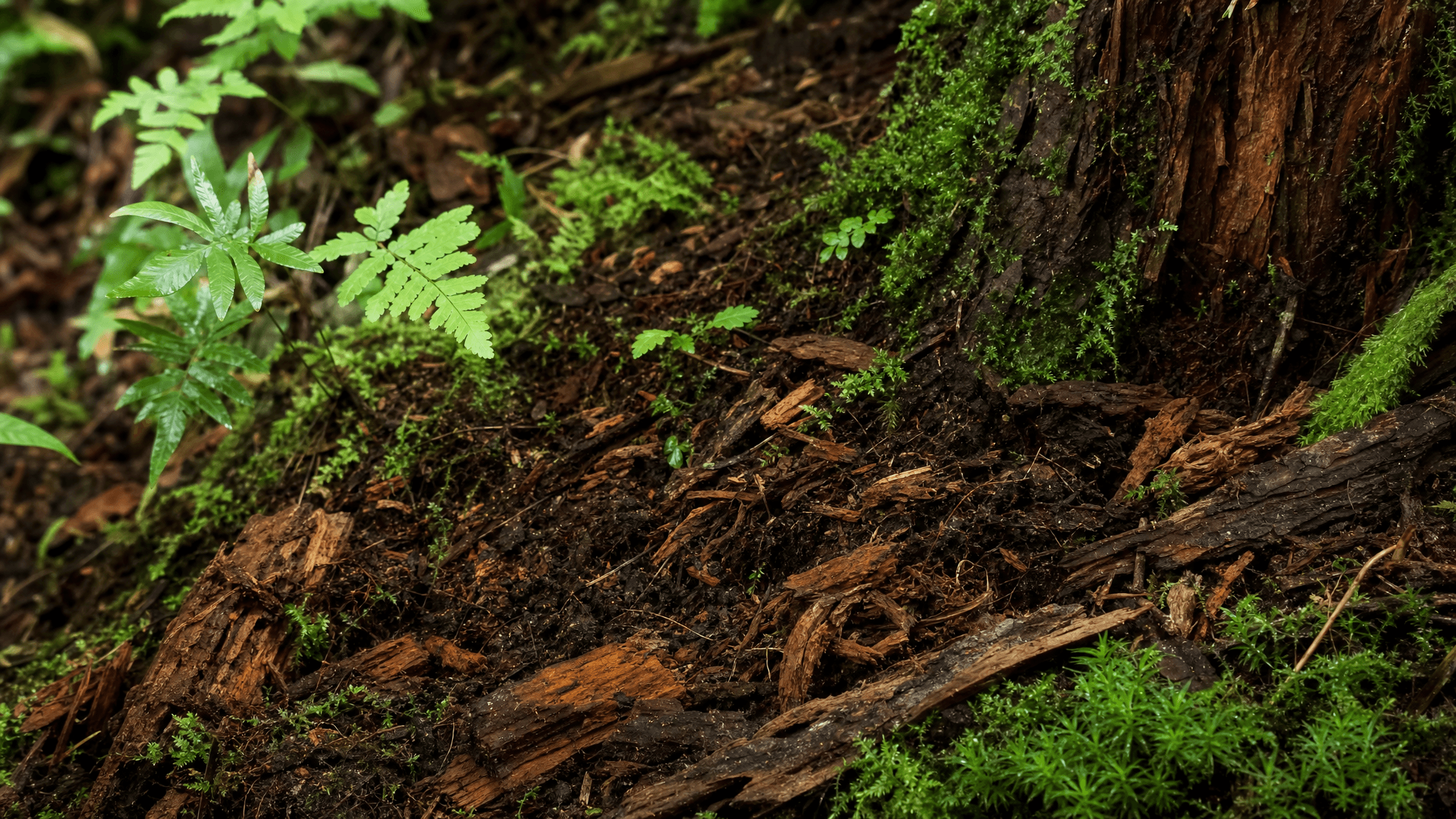
One of the most satisfying discoveries at Wesley Woods is how much the land provides on its own. When a fallen log or dead branch starts to break down, the outer bark loosens and the wood underneath begins to soften and fragment. At that stage, a simple metal rake is all you need to turn it into usable, high-quality natural mulch — no chipper, no machinery, no hauling.
The material that comes off is genuinely good. Rich reddish-brown wood fragments, bark layers, and fine woody fiber that smells fresh and earthy. It goes directly onto the forest floor where it belongs.
How It Works
When dry wood reaches the right stage of decomposition, the cellular structure has already started to break down. The bark separates from the wood, and the interior wood has begun to soften into loose fibers and chips. At that point:
- Find the right log — look for logs or branches that are dry, slightly crumbly, and where the bark peels or flakes easily
- Work it with a rake — a few passes with a standard metal garden rake breaks the outer bark loose and fragments the decomposing wood into mulch-sized pieces
- Spread it in place — rake the material out around the base of nearby trees, along trail edges, or over bare soil patches
- Let it settle — within a season, the mulch continues breaking down into the soil, feeding the root systems beneath
No chipper. No truck. No cost. The forest floor does most of the work — you just help it along.
Why It Matters for the Land
Repurposes existing material on-site. Every piece of decomposing wood that gets converted to mulch stays in the system. Nothing leaves the property. The nutrients locked in that wood — calcium, magnesium, potassium, carbon — cycle back into the soil instead of sitting in a brush pile or being hauled away.
Suppresses invasive weeds. A fresh layer of wood mulch around the base of trees and along trail edges shades the soil surface, reducing germination of invasive weeds like garlic mustard and Japanese barberry seedlings. It is one of the most low-effort weed suppression tools available.
Retains soil moisture. The mulch layer slows evaporation from the soil surface, keeping root zones cooler and more consistently moist through dry stretches — especially important for the Sugar Maple root systems at Wesley Woods, which extend wide and shallow.
Feeds the fungal network. Woody mulch is the preferred substrate for many native woodland fungi, including the mycorrhizal species that form symbiotic partnerships with tree roots. Spreading decomposing wood material directly accelerates the rebuilding of the underground fungal network that healthy forest soil depends on.
Builds topsoil over time. Each layer of mulch that breaks down adds organic matter to the upper soil horizon. Over years, this is how woodland topsoil gets deeper and richer — one season of decomposition at a time.
A Note on Smell
Fresh-raked wood mulch from decomposing maple and mixed hardwood has a distinctive smell — clean, woody, slightly sweet. It is the smell of healthy decomposition, not rot. If the material smells sour or sulfurous, it has gone anaerobic (too wet, too compressed) and should be turned and aerated before spreading. Dry, well-aged wood mulch should smell good. At Wesley Woods, it does.
What We Are Using It For
At Wesley Woods, naturally raked mulch is going around the base of mature Sugar Maples, along the hand-built log trails on the 25-foot wooded slope, and in cleared areas where invasive species have been removed and the bare soil needs coverage while native plants reestablish.
It is free, it is already here, and the forest made it. That is hard to beat.