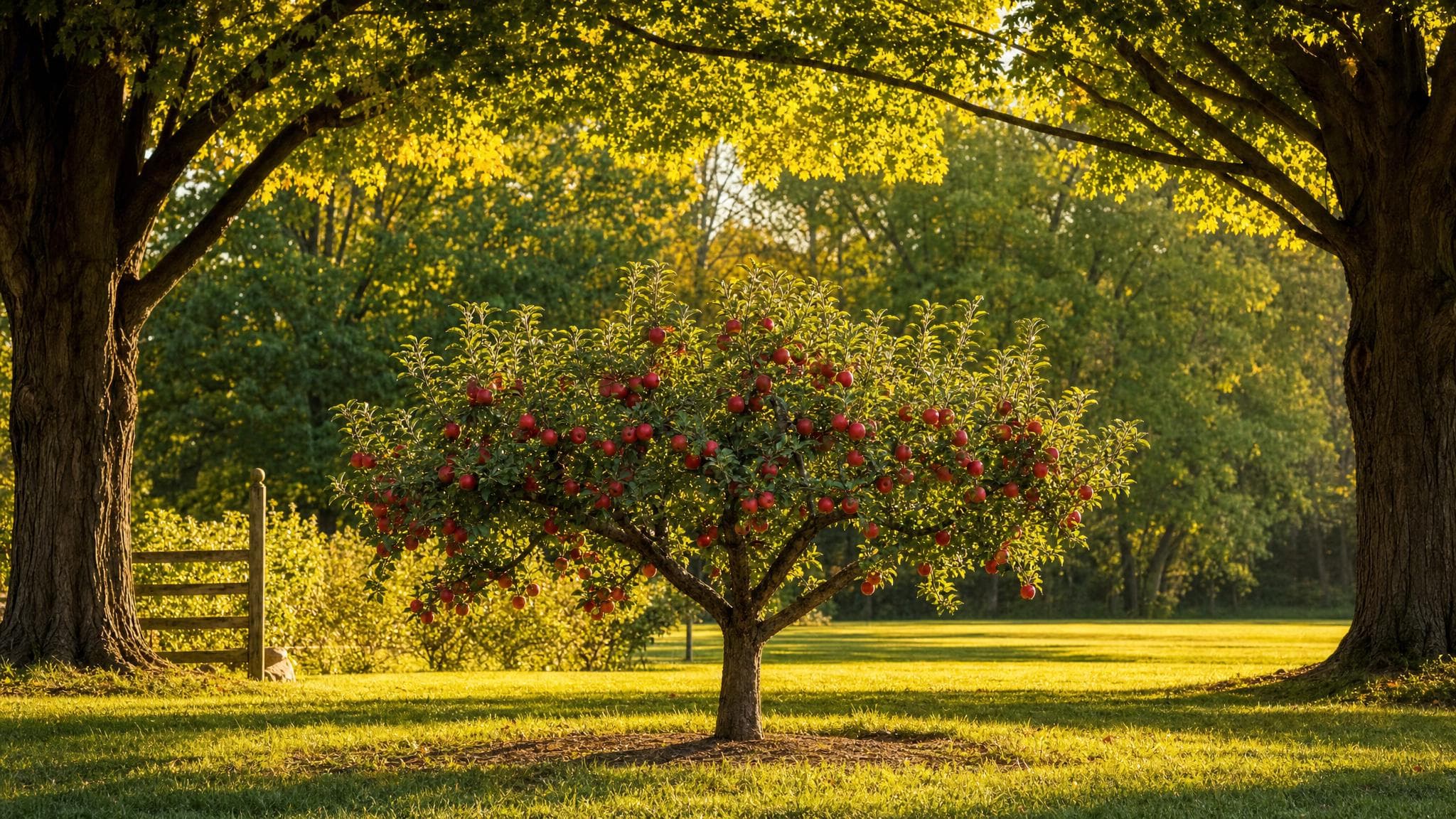
There is a particular kind of joy that belongs only to this moment: you are walking your property on a cool September morning, the leaves just beginning to hint at color, and you reach up — without thinking, without planning — and pull a ripe apple from a branch. You bite into it. It is crisp and sweet and faintly tart and cold from the night air. Nothing you have bought at a grocery store has ever tasted like this.
That is the whole argument for planting apple trees. Everything else — the pollinator benefits, the wildlife value, the property aesthetics — is a bonus. The core reason is that simple pleasure, repeated every fall for decades.
When to Plant Apple Trees
In Ohio and similar temperate climates, the best time to plant apple trees is early spring, just as the ground thaws and before the trees leaf out — typically late March through April. Fall planting (October into early November) also works well, giving roots time to establish before the ground freezes. Avoid planting in the heat of summer when young trees are most vulnerable to transplant stress.
Once established — which takes two to four years — a well-sited apple tree can produce fruit for 50 years or more. It is one of the most durable investments you can make in a piece of land.
When to Harvest
Harvest timing depends entirely on the variety. Early varieties like Lodi and Zestar ripen in late July and August. Mid-season favorites — Honeycrisp, McIntosh, Cortland — are ready September through early October. Late-season keepers like Fuji, Braeburn, and Northern Spy come in through October and into November, and many of them improve in storage for weeks after picking.
The simplest test: hold an apple in your palm and twist gently. If it comes free cleanly with a short tug, it is ready. If it resists, give it another week. Color and firmness matter too, but the twist test is the one you will rely on once you have a tree.
Sun, Slope, and Soil: Where Apples Thrive
Apple trees want full sun — at least six to eight hours per day is ideal. A south- or southwest-facing slope is close to perfect: the slope improves air drainage, reducing the risk of late-frost damage to blossoms in spring, and the sun exposure maximizes fruit development through the growing season.
Flat ground works fine as well, particularly if it is not a frost pocket (a low spot where cold air settles on still nights). What apple trees genuinely struggle with is deep shade. A tree tucked in the woods with filtered light will grow — slowly — but fruit production will be poor. Give them the open sky and they will give it back.
Soil should be well-draining and moderately fertile. Apple trees tolerate a range of conditions but dislike "wet feet" — standing water around the roots. If your site holds water after rain, either choose a different spot or build up the planting area slightly to improve drainage. A soil pH between 6.0 and 7.0 is ideal.
How Much Water Do Apple Trees Need?
Young apple trees — in their first two years — need consistent moisture while they establish. A deep watering once or twice a week during dry spells is more effective than frequent shallow watering; you want the roots to grow down, not stay near the surface.
Mature trees are surprisingly drought-tolerant once established. In a normal Ohio growing season with reasonable rainfall, a mature apple tree rarely needs supplemental irrigation. During an unusually dry summer, a deep watering every two to three weeks will support fruit development and prevent premature drop. Less is more — overwatering is a more common mistake than underwatering with established trees.
Two Trees Are Better Than One
Most apple varieties need a second apple tree nearby for cross-pollination. The two trees don't need to be the same variety — in fact, planting two different compatible varieties improves pollination and gives you fruit across a longer season. Crabapples count as pollinators too, so if you already have wild crabapples on your property, you may have better cross-pollination conditions than you realize.
The Real Reason to Plant Apple Trees
All of this is practical and worth knowing. But here is the honest truth: the best reason to plant apple trees on your property is not the yield data or the pollinator statistics. It is the experience of walking your land in autumn with nowhere specific to go, no task to complete, no phone in your hand — and finding fruit waiting for you in a place you put it years ago.
Land that feeds you is land you love differently. An apple tree is a promise you make to yourself: that this ground will be tended, that you will return to it, that there will be something here worth coming back for.
Plant one this spring. Walk out to it every fall. Eat the apple standing right there, looking at your property. That is the whole point.