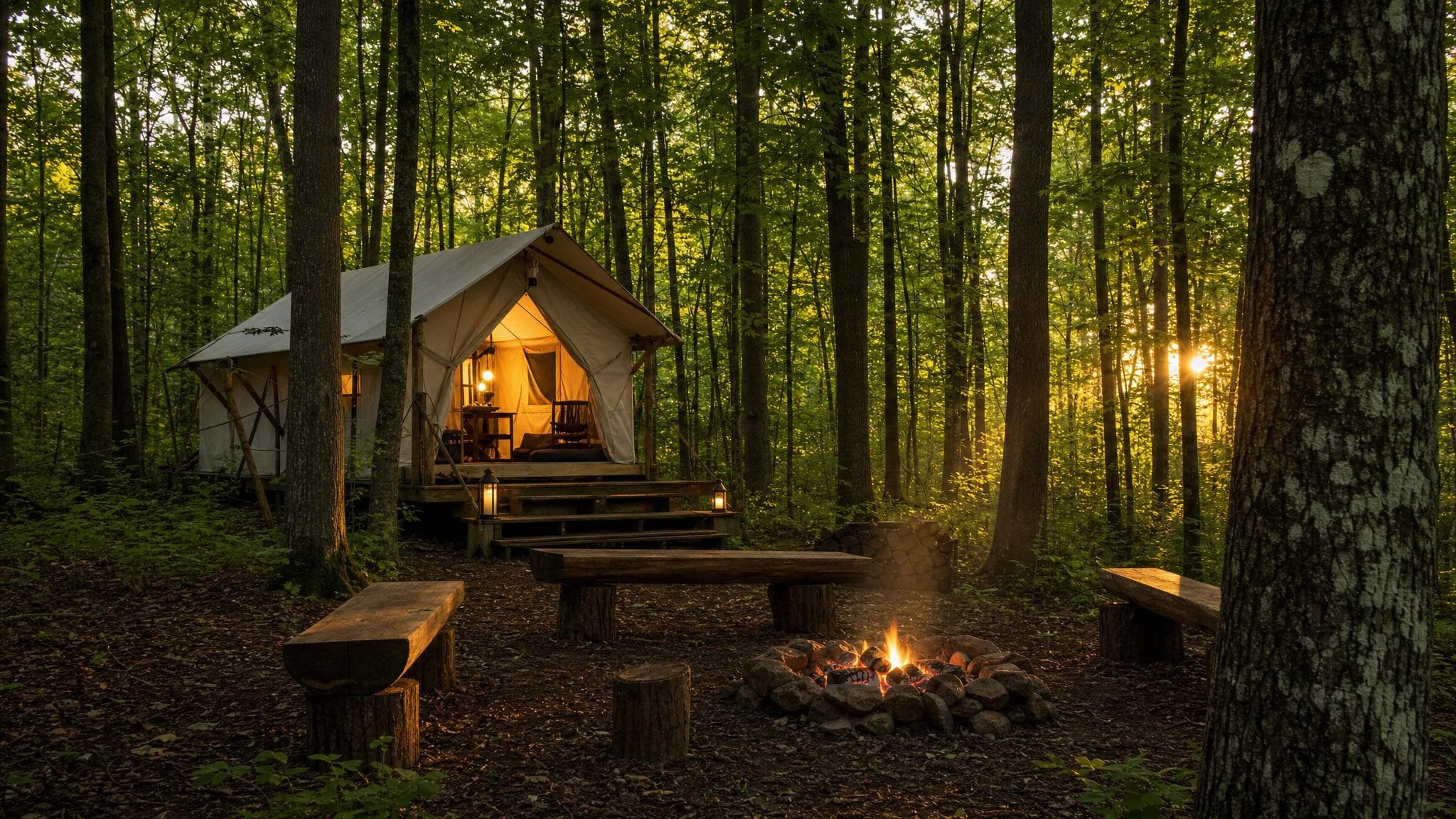
Ask the people behind the Foundation project what they're ultimately building in Strongsville, and the answer isn't simple — but it's consistent.
"A place to breathe," said one longtime steward of the Wesley Stump Family Foundation, gesturing toward the maple canopy overhead. "That's the whole point."
The Foundation's ongoing restoration of a wooded lot in Strongsville has been defined so far by concrete, hands-on work: poison vine removal, trail construction, orchard planning, and wetland stewardship. Behind each of those projects is a larger vision — a privately owned and managed woodland that is restored to ecological health and maintained as a functioning native landscape.
Private Land, Active Stewardship
Wesley Woods is private property. It is not a park, not a preserve open to the public, and not a development project. It is a half-acre of mature Sugar Maples, a creek, a wetland pond, and a steep wooded hillside that the Foundation is actively restoring and maintaining as a privately stewarded conservation property.
The improvements being built here — trails, retaining walls, log bridges, a bicycle charging station, a tool shed — are working infrastructure for private land management. They make it possible to steward this property over time: to reach every part of it safely, remove invasive species systematically, maintain drainage, and plant native species in the cleared areas.
"It's not about building something on top of the land," said a Foundation spokesperson. "It's about making the land itself the focus — and doing the unglamorous work of taking care of it."
What the Long View Looks Like
Long-term goals at Wesley Woods are straightforward and rooted in the land's own character:
Native plant restoration across the full canopy understory — replacing the invasive species that have dominated the forest floor with the native ground layer that belongs here: wild ginger, trillium, native ferns, spring ephemerals.
Wetland and creek health — maintaining the pond where yellow water lilies bloom, keeping the creek corridor clear and flowing, and managing the riparian margin as a functioning watershed feature.
Orchard development — the wild crab apples already present near the creek will anchor a productive, wildlife-supporting grove of diverse apple varieties, planted and maintained as part of the Foundation's private stewardship of the lower property.
Wildlife habitat certification — the slope and forest floor are being developed as certified white-tailed deer habitat, with native browse species, maintained corridor, and documented habitat features.
Strongsville, with its mix of established residential neighborhoods and preserved green corridors, is an increasingly relevant backdrop for this kind of work. As development pressure grows across Cuyahoga and Medina counties, the Foundation's work demonstrates that private land doesn't have to be cleared, filled, or subdivided to be well used.
"Land can give back in a hundred ways that don't involve a building permit," said one Foundation member. "We're trying to show what some of those ways look like."
The Wesley Stump Family Foundation acknowledges the work is measured in seasons, not months. But with each cleared vine, each planted apple tree, and each lily blooming on the summer pond, the vision gets a little more real.
"We're just taking care of something worth taking care of," said a Foundation representative quietly. "That's enough."