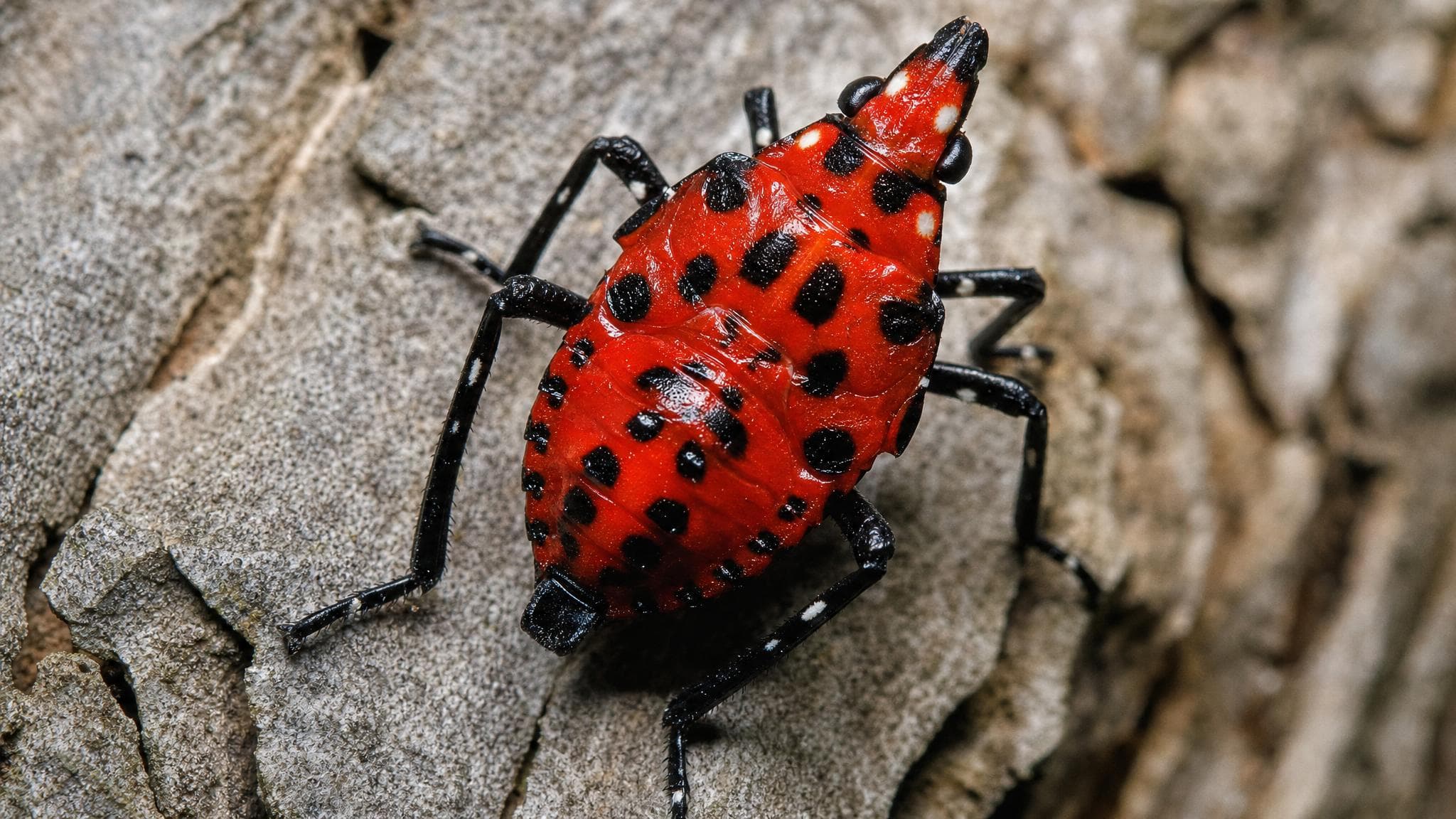
It's small, it's red, it has black spots — and your first instinct is probably to call it a ladybug and move on. But volunteers working the Foundation project property in Strongsville have been stopping in their tracks lately at the sight of a particular insect that, on closer inspection, is decidedly not the friendly garden beetle most people have in mind.
The bug in question: small, bright red body, distinct black spots, and — most notably — a pair of striking white eyes that set it apart immediately from the common ladybug's solid dark head. Reports from the property have described it appearing on bark, leaf litter, and low vegetation along the wooded slope and creek corridor.
What Is It?
The most likely candidate, according to regional entomologists, is the nymph stage of the Spotted Lanternfly (Lycorma delicatula) — an invasive planthopper species that has been spreading steadily westward across Ohio in recent years. In its fourth and final nymph stage before adulthood, the Spotted Lanternfly is vivid red with black spots and white markings that can appear eye-like, making it one of the more visually striking insects you're likely to encounter in a Northeast Ohio woodland.
Why It Matters
The Spotted Lanternfly is considered a serious agricultural and ecological threat. It feeds on the sap of dozens of plant species — including, critically, maple trees — by piercing bark and drawing out nutrients. Heavy infestations weaken trees, leave behind a sticky residue called honeydew that promotes sooty mold growth, and can contribute to the decline of otherwise healthy hardwoods.
For a restoration project built in large part around saving Sugar Maples, an established Spotted Lanternfly population would be an unwelcome development.
What to Do
The Ohio Department of Agriculture asks residents to report sightings through the state's online invasive species reporting portal and, where possible, to photograph and collect specimens. On private property, populations can be managed through targeted removal of egg masses (laid in fall on flat surfaces as a gray, putty-like smear) and approved insecticide treatments on host trees.
The Foundation is working with local extension resources to assess the population on site and determine next steps.
Of course, other red-and-black insects — including the Scarlet Lily Beetle, certain milkweed bugs, and some regional beetle species — can produce similar coloring. If you're unsure what you're looking at, photograph it before picking it up.
"The white eyes are the tell," said one Foundation volunteer. "Once you see them, you won't forget them — and you'll want to report it."
When in doubt: look, photograph, and don't touch.