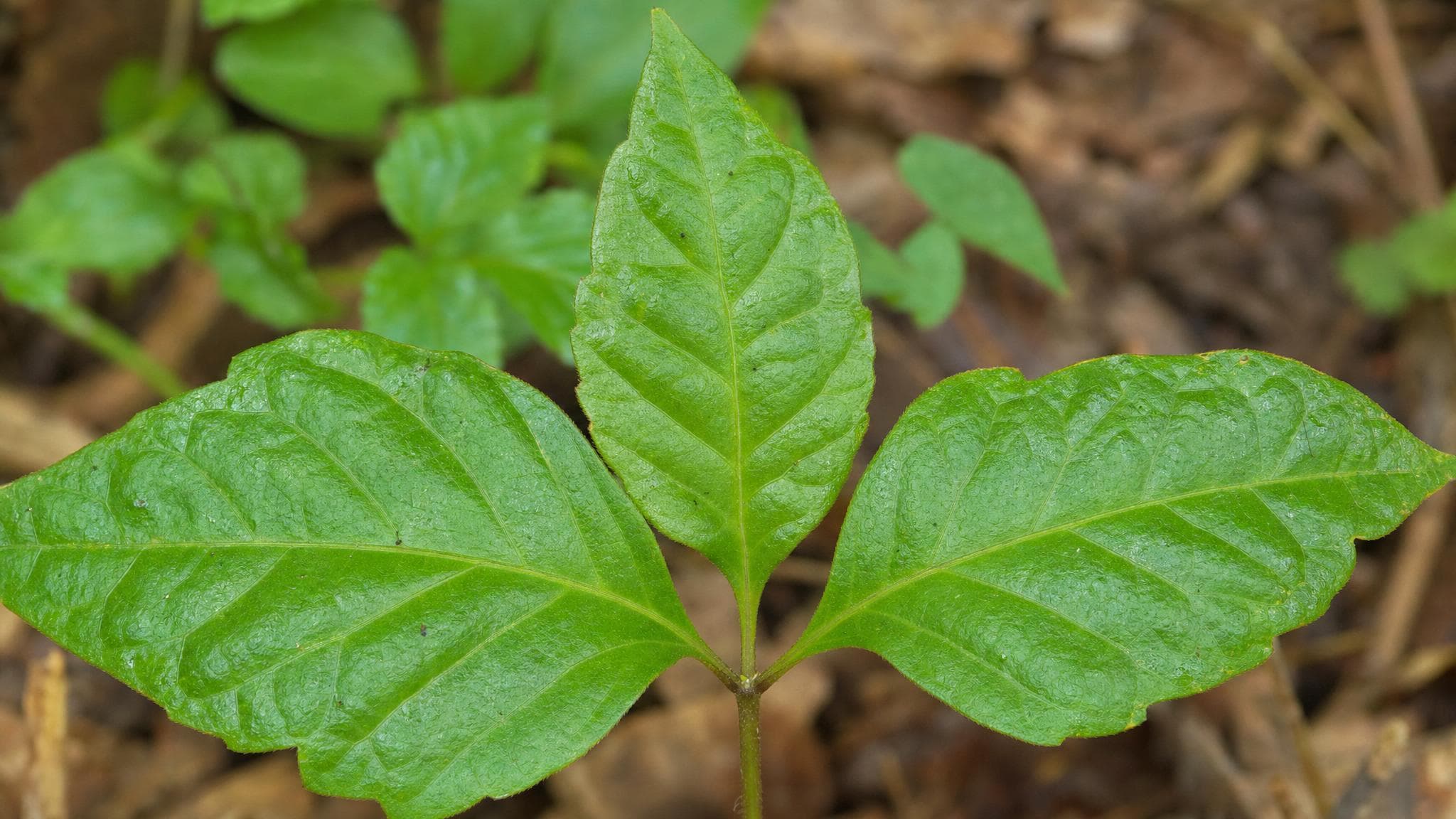
It's one of the oldest warnings in the outdoor handbook, and for good reason: the wooded properties of Northeast Ohio are home to several plant species capable of causing painful, lasting skin reactions — and most people walking into the woods can't reliably identify a single one of them.
As the Wesley Stump Family Foundation continues restoration work on its Strongsville property, Foundation team members are making plant safety education a standing part of every volunteer orientation. With foot traffic increasing on the site's new trail system, knowing what not to touch has become just as important as knowing what to plant.
Poison Ivy
Poison ivy is the most common culprit in the region and the one most likely to be encountered on the Foundation property. It grows as a ground vine, a shrub, or a climbing vine on trees — and it can look deceptively benign. The rule of thumb holds: leaves of three, let it be. Each leaf cluster contains three pointed, slightly glossy leaflets. In spring, new growth is often reddish. In fall, it turns a vivid orange-red. The hairy, root-covered climbing vines on tree trunks — sometimes called "hairy rope" — are a year-round giveaway even without leaves present.
Poison Oak
Poison oak shares the three-leaflet structure but features lobed, rounded leaves that more closely resemble oak foliage. It's less common in Cuyahoga County than poison ivy but not unheard of, particularly in disturbed woodland edges.
Poison Sumac
Poison sumac is the most potent of the three and tends to grow in wet, marshy areas — making the Foundation's wetland and creek margins a zone of particular awareness. It grows as a tall shrub or small tree with compound leaves of 7–13 smooth-edged leaflets arranged in opposite pairs, with a single leaflet at the tip. White or pale yellow berry clusters are a distinctive identifier.
What to Do After Exposure
All three plants contain urushiol, an oily resin that triggers allergic contact dermatitis. Reactions range from mild itching to severe blistering and can appear hours to days after contact. Importantly, urushiol remains active on clothing, tools, and pet fur — secondary exposure is common.
If you think you've touched any of these plants: wash the affected area immediately with soap and cold water, change clothing, and wash anything that may have made contact. Avoid touching your face. For significant reactions, consult a physician.
"We'd rather spend five minutes teaching identification than have a volunteer out of commission for two weeks," said a Foundation safety coordinator. "The land is safe and beautiful — you just have to know who the neighbors are."
Laminated identification cards are available at the trailhead.