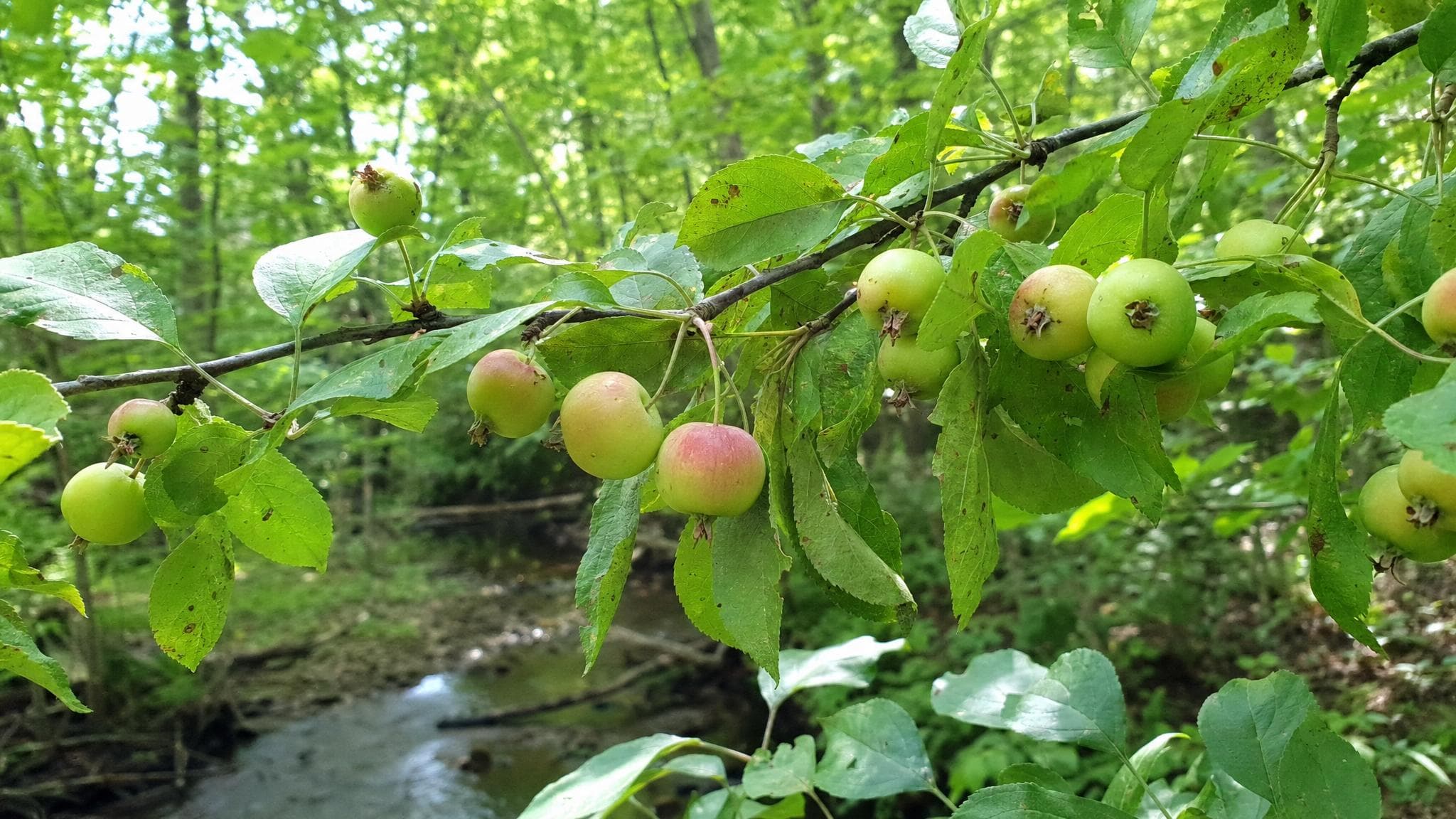
When restoration workers first began clearing sections of the Foundation project property in Strongsville, they weren't expecting to find fruit trees. But tucked along the lower edge of the wooded lot, not far from the creek and garden area, a cluster of wild green crab apple trees had been quietly doing what apple trees do — growing, blooming, and bearing fruit — entirely on their own.
The discovery has sparked one of the more exciting sub-projects under the Wesley Stump Family Foundation's umbrella this season: a full apple orchard enhancement plan that would build on the property's existing wild trees and establish a diverse, productive collection of true eating apple varieties alongside them.
"Finding those crab apples was a real gift," said one of the project's lead volunteers. "They told us the soil and the light conditions in that lower section are right for apples. We're not guessing — nature already voted."
The plan calls for planting a rotating selection of hardy Ohio-compatible apple varieties — including heirlooms and disease-resistant modern cultivars — in a loose, naturalistic arrangement near the creek corridor and adjacent garden area. Unlike a traditional commercial orchard planted in rigid rows, the Foundation's vision is a productive but wild-feeling grove that blends with the existing landscape rather than imposing on it.
The location near the creek was chosen deliberately. Fruit trees near a water source tend to establish more easily, and the riparian corridor creates natural biodiversity that benefits both the orchard and the broader habitat. Native pollinators — including several bee species documented on site — will find the apple blossoms a reliable early-season food source.
Wildlife benefits are also top of mind. Crab apples are already a well-known draw for migratory birds and white-tailed deer, and the addition of eating apples will extend that food availability through fall and into early winter, when natural forage is scarce.
Planting is expected to begin in the fall of 2026, with the first meaningful harvests anticipated within three to five years as trees establish and mature. The wild crab apples, for their part, aren't going anywhere — they'll anchor the orchard's heritage corner and continue doing what they've always done, quietly and without complaint.